Desert Online General Trading LLC
Dubai, United Arab Emirates
Desert Online General Trading LLC
Dubai, United Arab Emirates

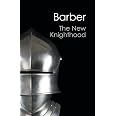
The New Knighthood: A History of the Order of the Temple (Canto Classics)
R**N
Well written
Only started reading and can tell it's worth buying if you want to get into the history of this topic
A**A
First Rate Templar History minus the conspiracy theories.
I recently read this summary of Templar History over the course of few days and it is excellent. The author is very clear about his sources of information, he comments extensively on their backgrounds and biases, and is very thorough in his treatment of the topic. He gives voice to both the the contemporary supporters and critics of the Templars from their earliest days to their later years. When the causes of events are uncertain, whether defeats, scandals, or the final suppression, he presents multiple possibilities and their probabilities of being correct.The best part is that the author never goes beyond the evidence available. There are serious gaps in Templar history. The most significant gap was caused by the destruction of the Templar archive in Cyprus during the Ottoman invasions in the sixteenth century. The author mourns its loss, but points out that it the Templar archives remained in Cyprus untouched for over a century after the suppression of the order without anyone in Christendom showing any interest in what they may contain. Had the Templars actually reinvented themselves as a secret order, someone among the thousands of surviving brothers would certainly have found a way to access, copy, or otherwise preserve the Templar archive in the century or so between the order's suppression and the Ottoman invasion.The overall impression of the Templars is as a very well organized, very well financed, and very high-profile religious-military order. Their primary founding mission was to guard pilgrims and pilgrim routes in the Holy Land, which they did very effectively throughout their history. But soon after their founding, they began to receive large financial donations from wealthy benefactors, and special privileges and exemptions from the Pope. Because of this, their role rapidly changed from mere pilgrim protection into a high-profile service organization having princes and kings as clients. As time passed, the situation in the Holy Land changed, the costs of crusading rose dramatically, and their costs outpaced their resources (in money, people, and goodwill). Facing a crisis of his own, Philip the Fair moved against an easy target.In the final chapter, Barber presents the origin of Templar mysticism as originating in the early 19th century Freemason pseudo-histories as the middle class struggled to deal with the consequences of the French Revolution. He shows the influence of contemporary critics of the Templars on later nineteenth century writers such as the fiction of Sir Walter Scott's Ivanhoe. He shows how multiple writers starting with Ramon Lull accepted the charges of blasphemy against the Templars on face value, and that created the seed for the myth that the Templars actually had heretical secrets.This book has given me a new appreciation and respect for the Templars.
T**R
Superb quality.
Great service,superb quality copy.
M**E
Dad
Great for my dad
L**N
Perhaps the Best History of the Templars to Date
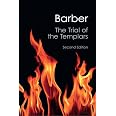
Over the past twenty or thirty years the Templars have become the subject of some really silly religious conspiracy theories which say more about the authors who espouse them than they actually do about the Templars themselves.Don't buy these religious conspiracy books about the Templars expecting to actually learn the history of the Order. Instead, get "The New Knighthood" and "The Trial of the Templars" by Malcolm Barber. Dr. Barber's "The New Knighthood" is perhaps THE single best history of the Order of the Poor Knights of the Temple of Solomon available, written by one of the Order's foremost historians (though Dr. Helen Nicholson's books are also extremely good). Particularly useful and interesting are detailed chapters chronicling the Order's founding, early years and explosive growth, and chapters on the suppression and dissolution of the Order as well as its transformation into modern fantasy through the spurious history and wild assertions of religious conspiracy theorists. The chapters on the Order's founding and early growth are especially fascinating.Barber's book is well-grounded in well-documented, scholarly fact; in those cases where the facts are unknown or open to differing interpretation, he tells you.Barber's books (and Dr. Peter Partner's "The Mudered Magicians: The Templars and their Myth") should be required reading for anyone about to write a religious conspiracy book involving the Templars.
Trustpilot
1 week ago
2 days ago