Some deliveries may take a little longer than usual due to regional shipping conditions.

DOWNLOAD THE APP


Customer Services
Copyright © 2025 Desertcart Holdings Limited
DOWNLOAD THE APP
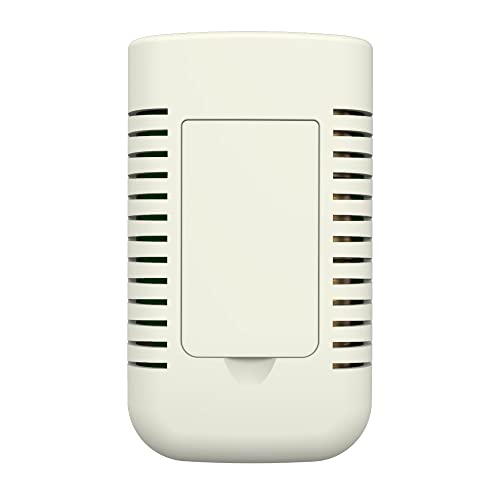
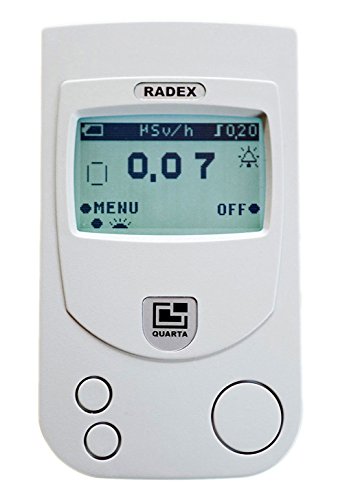


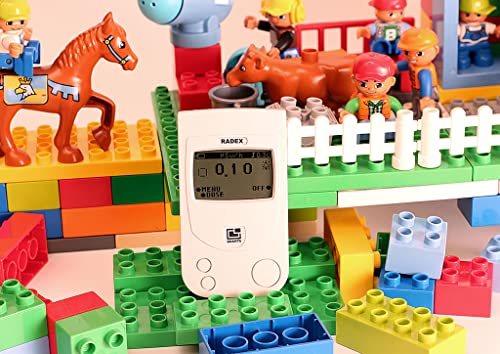




⚡ Stay ahead of invisible risks with RADEX RD1503+ — your pocket-sized radiation watchdog!
The RADEX RD1503+ is an upgraded, user-friendly Geiger counter designed for quick, accurate detection of beta, gamma, and X-ray radiation. Featuring a 40-second measurement cycle, a detection range of 0.05 to 9.99 µSv/h, and dual vibration/audio alarms, it combines professional-grade SBM20-1 sensor technology with smart firmware enhancements. Lightweight and intuitive, it’s perfect for millennials who want reliable radiation monitoring on the go without the complexity.
| ASIN | B005ZQ47AS |
| Batteries | 2 AAA batteries required. (included) |
| Date First Available | October 1, 2008 |
| Is Discontinued By Manufacturer | No |
| Item Weight | 3.2 ounces |
| Item model number | WE-PBNS-P0JI |
| Manufacturer | Quarta Rad |
| Product Dimensions | 4 x 2.3 x 1 inches |
O**.
A fine device for common folks, ie non-professionals, with a good bang for your buck.
Final verdict (long version) - it’s easy to use (because of large buttons and a large screen); - fairly accurate (depending on the level of radiation); and the main limitations are: - no data transfer - limited detection range (up to 9.99, which is good enough for everyday stuff). I have other RADEX devices and I know my way around a geiger counter / radiation detector. I test them all and compare results against uranium glass, a beta-radiation source, as well as just a common household kitchen countertops made of granite. All these units are calibrated using Cesium-137 isotope, which is the most common byproduct of a nuclear disaster. So that’s good. On the other hand, the sensor (a Geiger-muller tube SBM-20-1 in this case) won’t be as precise with other sources of radiation such as Uranium, Strontium or Radium. Also, don’t expect these units to detect electromagnetic non-ionizing waves like microwaves, wi-fi or a smartphone, because those are a totally different types or radiation (see light, etc.). At the same time this not a big deal and almost trivial for a non-professional who does not give a damn about isotopes or the physics of radiation and simply want to know “if it’s hot or not”. The good thing here is that the higher radiation levels are, the more accurate this unit gets, so that’s good. Another good thing is that as soon as you turn it on, no additional setup is required. Push the ON button, wait for 15 seconds, get your first reading. Wait another minute for the most accurate measurement available. I emailed their customer support, got a walk-through. It really is fine for 95% of the people out there looking for a radiation detector “just in case” or simply out of curiosity. Sensitivity is fine against several the samples I tested it on, same goes for accuracy across multiple radiation levels and reliability in field conditions. Just try not to get it wet.
G**L
Small, Inexpensive, Works exactly as advertised
The first thing I did is a test. And it worked! A test was to see how this Geiger Counter works around the house, at work (major construction project) and with geological samples I know to be slightly radioactive (natural granite, for example). It works. It does exactly what is promised and you can see the Geiger reacting to its surroundings in real time (a small graphic is pictured on the side of the screen). Pros: The price is much lower than anything else I've seen on the market. Almost any other Geiger is circa 400 dollars. Seriously. This one takes active readings, vibrates (or clicks) if those readings are higher than the threshold level. Has background lighting so you can see the screen in a dark basement, and measures in new micorsiverts as well as in roentgens (the ones I'm more familiar with). Sensitive to the materials I have tested it on. Cons: It is not initially clear which way the batteries should be inserted. Apparently both AAAs should be facing the same way - the + side up (which is unusual). Also, there is a graphic on the side of the screen in the shape of a square that keeps drawing the lines as the Geiger is taking readings. You get the most accurate reading after 40 seconds or so when the entire square is drawn out. This took some trial to understand and is not apparent from he manual. Conclusion: a solid, rugged little instrument that is inexpensive and does the job right. I have tested it back and forth and so far I'm happy with the results. A solid recommendation.
O**T
Really depends on what you need it for. Hardcore preppers probably want to keep looking.
Probably the nicest Geiger counters you can get for the price. Acquisition is fairly slow and the interface is a tad clunky, but it is not difficult to figure it all out. The styling is cheap, but then, it's not exactly a fashion accessory. It is not particularly rugged, so you don't want to drop it on the ground or expose it to elements. But before you buy, make sure that the upper range of the unit (9.99 uSv/h) fits your intended use. If you are interested in testing foods and detecting other weak sources of radiation, it may fit the bill. On the flip side, if you are buying it to be able to assess the consequences of a major nuclear accident nearby, you may find it the device to be inadequate, since it maxes out at a level that can be still pretty safe for extended periods of time. At 9.99 uSv/h, you're still under 90 mSv after a full year, and that probably won't even increase your cancer risk, let alone causing more serious effects. So, if you're crossing a post-apocalyptic radioactive wasteland, and want to be able to tell mildly radioactive spots from the ones that can kill you in a matter of hours or days, this is not the tool to have in your bag. Radex One and Radex RD1212 units go all the way up to 999.9 uSv/h and may be a better deal in that sense (although even 999 uSv/h is not immediately life-threatening).
F**S
Can't get directions for using the dosimeter
I'm sure that this unit works fine; I have been testing the atmosphere in my home and intend to take it on a walk on the beach, but I want to be able to test food-especially fish, as I'm on the Left coast and am worried about radiation from Japan. However, I cannot decipher from the manual, and have not found a video yet that explains how to use the dosimeter. Most manuals only tell you "push this button and it does this", etc.; so I don't understand how to determine the actual dose of radiation I would receive from a food item. I even wrote the seller and asked this question, and all I got back was a lecture about whether it's really possible to detect radiation in food without a lab, etc.and other nice facts, but no actual directions on how to use the dosimeter. So, I'm still kinda dead in the water on that part of it; Maybe some readers of this review do understand it and can comment with some practical direction; then, once I know how to use it, I may upgrade as well as update my review. Thank you, amazon community!
Trustpilot
1 week ago
2 weeks ago