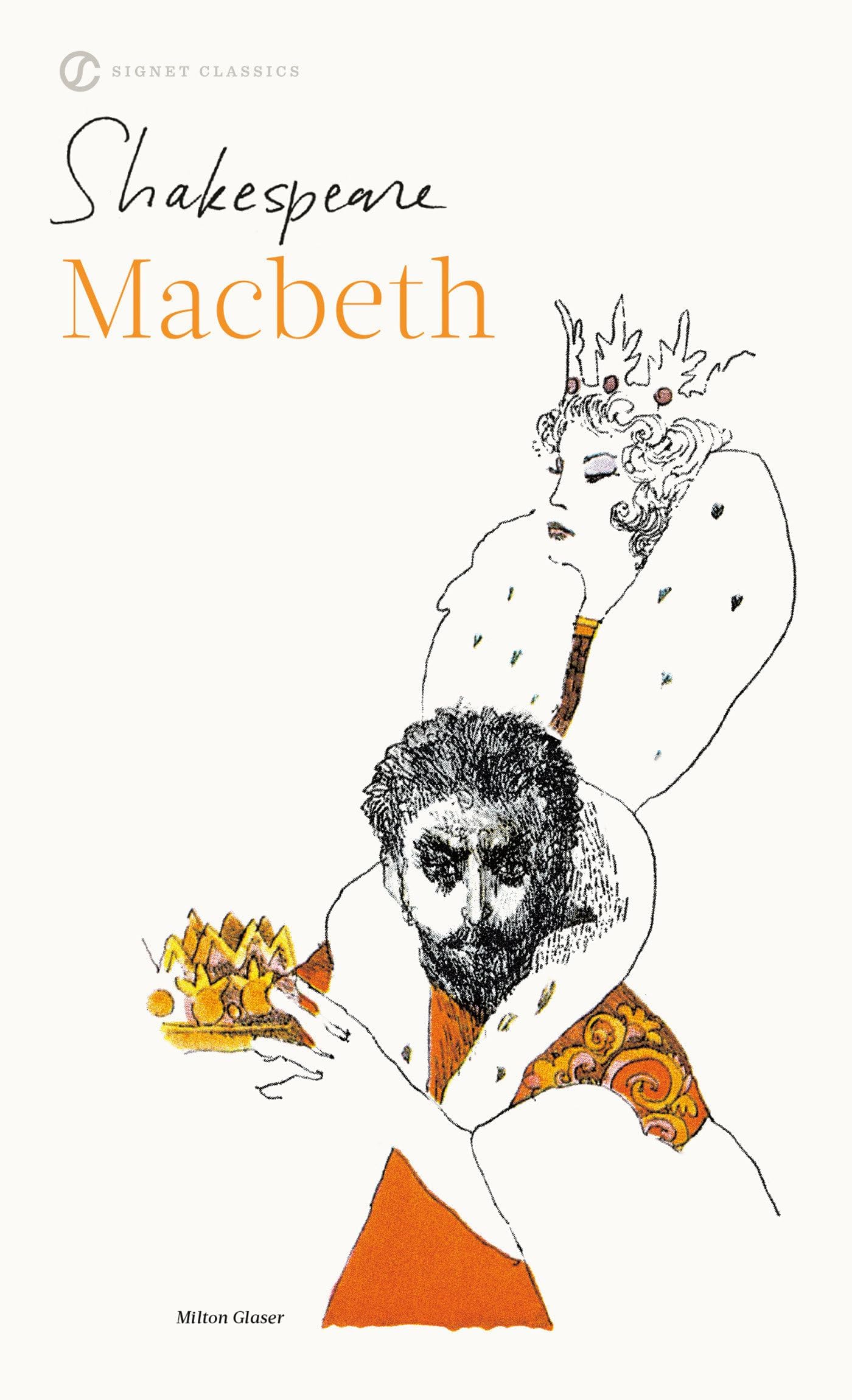

Macbeth (Signet Classics) [Shakespeare, William, Barnet, Sylvan] on desertcart.com. *FREE* shipping on qualifying offers. Macbeth (Signet Classics) Review: It can be tough at the top... - Lies, deceit, treachery, poison, knives in the night, justified paranoia, guilt, revenge... it is all there, and more, in this classic story of how the lust for power can literally drive people crazy. It can also kill them. I first read this play of William Shakespeare as a high school reading assignment, the way the vast majority of people do. Lo’ these many years later, I’ve undertaken a project of re-reading a lot of those H.S. reading assignments, including the plays of Shakespeare, in part to determine how much I missed the first time around, which, in two short words is normally: a lot. The play is set in Scotland. The king is Duncan. His not faithful lord, called “thane” in Scotland at the time, is Macbeth. And he has a wife who has become a symbol of all wives who relentlessly push their husbands to be “successful,” and who is normally addressed with the misnomer of “Lady.” (“That’s no lady, that’s my wife”...but I digress). As Cliff Notes will tell you, Duncan is murdered in his sleep, with those proverbial “long knives.” Macbeth skillfully diverts the blame to his body guards, who are conveniently also killed (a death man tells no tales) while also casting suspicion on Duncan’s sons, who have fled for their lives to further shores. How many times, throughout all the cultures and civilizations of the world, has this scenario basically unfolded? Throughout many of his plays Shakespeare utilizes elements from the ancient Greek plays, such as prophecy and a “chorus” that predicts future events, often esoterically. In this play, Shakespeare uses three witches around a cauldron, stirring, and if there is one line that most people remember from the play, it is the first line of their chorus: “Double, double, toil and trouble.” A fellow desertcart reviewer noted a quip that Shakespeare’s plays are simply quotes strung together, a humorous way of noting that many portions of the play have entered the popular, albeit intellectual portion, of our culture. For example, after the first Iraq War (yeah, I know, it is hard to say which one was the first one now), the cover to the “The Economist” featured the line: “When the hurlyburly’s done.” My first high school reading failed me, and I had no idea this was a reference to a line in Macbeth’s opening scene, with the second line being: “When the battle’s lost and won.” And is that battle lost or won? Proving the enduring relevance of Shakespeare in so many settings, later in the same scene he writes: “Her husband’s to Aleppo gone, master o’ the Tiger.” I haven’t seen “The Economist” use that line to refer to its British citizens going to fight for ISIS. Another quote that I remembered, and life experience has proven to be so true: “Sleep that knits up the ravel’d sleeve of care.” Hum. Another quote that life experience proves true: “Lechery, sir, it provokes and unprovokes: it provokes the desire, but it takes away the performance. Therefore much drink may be said to be an equivocator with lechery: it makes him, and it mars him... makes him stand to and not stand to...” Finally, so that I literally don’t quote the entire play, another classic scene that personally resonated, due to my travels, was Lady Macbeth’s efforts to wash the blood off her hands, and she proclaims: “All the perfume of Arabia will not sweeten this little hand.” Another excellent, still so relevant play of Shakespeare, that needs to read more than twice. 5-stars, plus. Review: Shakespeare's Definitive Statement on Evil - The ultimate play on evil. This is a shorter Shakespeare play, but it’s so powerful and intense. Shakespeare has other really good plays that are partly about evil, like Othello, but what’s so amazing about Macbeth is that evil seeps out of the characters and into the world itself. Macbeth throws us into a dark world, and, unlike in Lear, there are no bright spots to save us. I love the Signet editions. They have good cover art, attractive jackets, good footnotes, readable font, and useful supplementary material. These editions are my favorite to use when reading the plays.

| Best Sellers Rank | #104,059 in Books ( See Top 100 in Books ) #32 in Tragic Dramas & Plays (Books) #345 in Classic American Literature #1,458 in Classic Literature & Fiction |
| Customer Reviews | 4.4 out of 5 stars 5,672 Reviews |
J**I
It can be tough at the top...
Lies, deceit, treachery, poison, knives in the night, justified paranoia, guilt, revenge... it is all there, and more, in this classic story of how the lust for power can literally drive people crazy. It can also kill them. I first read this play of William Shakespeare as a high school reading assignment, the way the vast majority of people do. Lo’ these many years later, I’ve undertaken a project of re-reading a lot of those H.S. reading assignments, including the plays of Shakespeare, in part to determine how much I missed the first time around, which, in two short words is normally: a lot. The play is set in Scotland. The king is Duncan. His not faithful lord, called “thane” in Scotland at the time, is Macbeth. And he has a wife who has become a symbol of all wives who relentlessly push their husbands to be “successful,” and who is normally addressed with the misnomer of “Lady.” (“That’s no lady, that’s my wife”...but I digress). As Cliff Notes will tell you, Duncan is murdered in his sleep, with those proverbial “long knives.” Macbeth skillfully diverts the blame to his body guards, who are conveniently also killed (a death man tells no tales) while also casting suspicion on Duncan’s sons, who have fled for their lives to further shores. How many times, throughout all the cultures and civilizations of the world, has this scenario basically unfolded? Throughout many of his plays Shakespeare utilizes elements from the ancient Greek plays, such as prophecy and a “chorus” that predicts future events, often esoterically. In this play, Shakespeare uses three witches around a cauldron, stirring, and if there is one line that most people remember from the play, it is the first line of their chorus: “Double, double, toil and trouble.” A fellow Amazon reviewer noted a quip that Shakespeare’s plays are simply quotes strung together, a humorous way of noting that many portions of the play have entered the popular, albeit intellectual portion, of our culture. For example, after the first Iraq War (yeah, I know, it is hard to say which one was the first one now), the cover to the “The Economist” featured the line: “When the hurlyburly’s done.” My first high school reading failed me, and I had no idea this was a reference to a line in Macbeth’s opening scene, with the second line being: “When the battle’s lost and won.” And is that battle lost or won? Proving the enduring relevance of Shakespeare in so many settings, later in the same scene he writes: “Her husband’s to Aleppo gone, master o’ the Tiger.” I haven’t seen “The Economist” use that line to refer to its British citizens going to fight for ISIS. Another quote that I remembered, and life experience has proven to be so true: “Sleep that knits up the ravel’d sleeve of care.” Hum. Another quote that life experience proves true: “Lechery, sir, it provokes and unprovokes: it provokes the desire, but it takes away the performance. Therefore much drink may be said to be an equivocator with lechery: it makes him, and it mars him... makes him stand to and not stand to...” Finally, so that I literally don’t quote the entire play, another classic scene that personally resonated, due to my travels, was Lady Macbeth’s efforts to wash the blood off her hands, and she proclaims: “All the perfume of Arabia will not sweeten this little hand.” Another excellent, still so relevant play of Shakespeare, that needs to read more than twice. 5-stars, plus.
J**F
Shakespeare's Definitive Statement on Evil
The ultimate play on evil. This is a shorter Shakespeare play, but it’s so powerful and intense. Shakespeare has other really good plays that are partly about evil, like Othello, but what’s so amazing about Macbeth is that evil seeps out of the characters and into the world itself. Macbeth throws us into a dark world, and, unlike in Lear, there are no bright spots to save us. I love the Signet editions. They have good cover art, attractive jackets, good footnotes, readable font, and useful supplementary material. These editions are my favorite to use when reading the plays.
F**9
Ill-begotten ambition
The New Folger Library editions of Shakespeare are resourceful in helping to make the language of Shakespeare's plays a little easier to digest , with footnotes on the opposite page of the actual text. I like this, and these are a great tool for students in secondary school or college with the study of the play. As far as this play itself, Macbeth is one of the darker works from Shakespeare, with its main themes being ambition, greed and the ill effects of wanting power. Like most Shakespearean tragic heroes, Macbeth is given an omen in the early portion of the play, chalks it up to fate, and follows it until the bitter end. The weird sisters plant the seeds of kingly stature high in Macbeth's sights, and he sees plans to make the crown his. However, Macbeth is not as sinister as you would suspect, and it is his wife, Lady Macbeth, that pushes him towards his envious goal. Shakespeare truly created a wicked woman when he created Lady Macbeth, as she has no qualms about disposing of whoever is in the way to her husband's "entitled" crown. However, as you would imagine in a Shakespeare tragedy, no wrong deeds goes unnoticed, and what fate gives, fate will easily take away also. Shame and guilt creep into the lead character's conscience, and he envisions specters and ill-seeming visions. Although confident that he will keep his crown, he has paranoias about it, and must continually destroy to the infinite degree to keep it. He can only keep his deeds secret for so long. Much of the power is watching what seems to be the downfall, the train wreck of Macbeth's character, not because of its morbidity, but because he also speculates and theorizes about his misdeeds and has deep insight into his decline, giving some epic speeches towards the end of the play. Every Shakespeare play has a moral, and perhaps one moral to take from Macbeth is "watch out what you wish for." Perhaps Macbeth's own lines signify the essence of ill-gotten ambition which turns into nothing but his demise, "Life's but a walking shadow, a poor player/ That struts and frets his hour upon the stage/And then is heard no more." While Macbeth is one of the more pessimistic dramas from the Bard, it has fantastic, memorable lines and a story that most will be engaged with. Shakespeare teaches us universal truths in his plays, and Macbeth is no exception.
R**.
Two wolves tearing in pieces a man till his end. (AmazonClassics Edition)
Three sisters play with Macbeth, maybe they're three witches that for their amusement, simulating being fate, tell to Macbeth not what will happen but what he as a man of power (not so secretly) wants. Or maybe they are only three old women and their witchcraft is in Macbeth's head along with phantoms and voices of guilt that nobody else sees. I loved so much how a mad world (as a psychological wolf) and a supernatural world (as a magic wolf) overlap and crash to devour Macbeth as if he were a simple snack of meat. Power taxes him more and more, and his king's illness of madness is not uncommon in history, but rather seems a consequence and requisite in order to play with countless lives. This AmazonClassics Edition has, as always, nice typography, design and formatting. The edition is not bothered by studies or other interruptions, just a succinct biography at the end. As so is perfect. The X-Ray function is useful but it has a couple of errors to polish: I found that each time I search for the entries for Macbeth or Macduff X-Ray takes me instead to Lady Macbeth or Lady Macduff.
B**F
A classic play
This was an interesting read. I don't wonder at the superstitions surrounding the performance of this "Scottish Play". After seeing so many references to it I had to give it a look see.
S**T
NOT FOR CHILDREN OR FAINT OF HEART
I am not very familiar with great literature, therefore I approached this recording only out of a sense of cultural obligation. But, Shakespeare is everything my teachers tried to tell me. As a skeptic, I was not prepared for the depth of hell these staggering actors and superlatively effective sound effects would take me. If you remember the terror you felt at the age of ten when the dinosaurs in Jurassic Park were sniffing around to eat the actors, this is how you will feel as an adult about the psychological demons haunting the souls in Macbeth--horrified from opening to ending. Now that I get it, maybe great art is not for me. Dinosaurs don't come close to that damn red spot.
C**R
Good Kindle Edition
This is in reference to Macbeth (AmazonClassics Edition. Good kindle edition with no obvious typos and a good table of contents with the acts and scenes. Other than that, it’s Macbeth. You probably know whether you want to read it or not.
I**G
iconic classic
first time rereading in over 10 years and things i forgot: > toxic masculinity > witches' iconic lines > moving trees (confessions of georgia nicolson, anyone?) read this in preparation for my Lady Macbeth arc bc i wanted to have a good hold on the original source material again before getting into that. can't wait to see wait Ava Reid did with it!
Trustpilot
2 weeks ago
3 weeks ago