
DOWNLOAD THE APP


Customer Services
Copyright © 2025 Desertcart Holdings Limited
DOWNLOAD THE APP
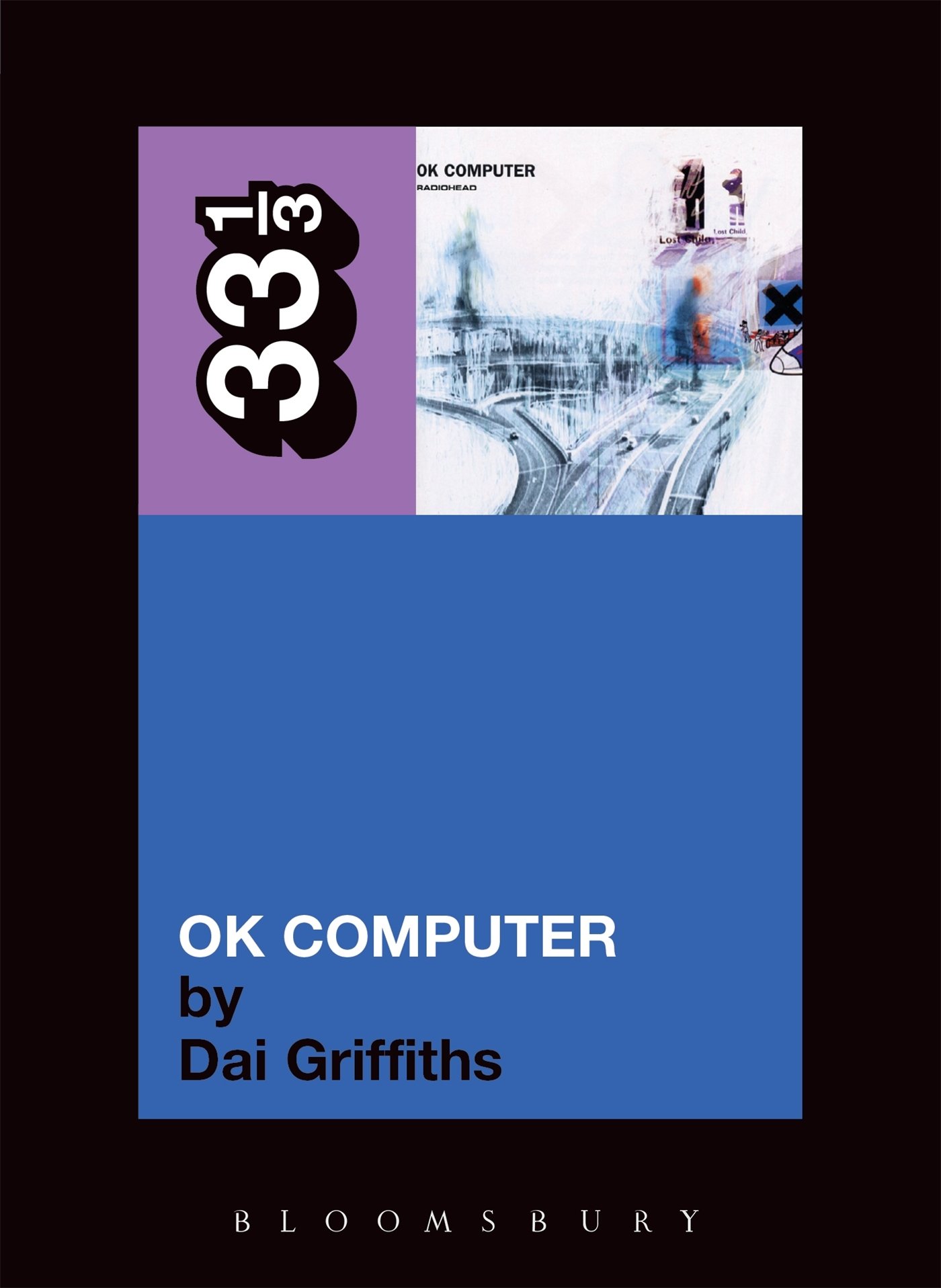
🎶 Unlock the secrets behind OK Computer’s genius – don’t just listen, understand!
Radiohead's OK Computer: 15 (33 1/3) by Dai Griffiths is a thoughtful, academically inclined exploration of the iconic album, blending passionate commentary with contextual analysis. While it has mixed reviews, it remains a respected resource for fans and scholars seeking deeper insight into the album’s cultural significance and creative process.
| Best Sellers Rank | 225,271 in Books ( See Top 100 in Books ) 314 in Digital Lifestyle 663 in Music History & Criticism (Books) 976 in Popular Music |
| Customer Reviews | 3.9 out of 5 stars 93 Reviews |
M**N
Worth A Read
I believe that the previous reviews of this book are somewhat unfair and unfocussed, condemning this book as eith nonacademic or soullessly clinical. I would like to interject however, as I believe both outlooks to be flawed as they seem to skew the content to the point where I was not sure if I was reading the same book as other reviewers. A previous review states that the book is nothing more than florid prose and statements of track lengths and key signatures, which I would denounce as being wholly inaccurate. Griffiths seeks to contextualize OK Computer in the time period that it was released, raises some quite valid points and is overall very passionate about her subject matter, writing in a style reminiscent of Paul Morley's "Words and Music". Is this book perfect though? In a word 'no': Griffiths could definitely have expanded on some sections of her material although there is a reasonable amount of in-depth analyses present. Her love of lengthy and at times questionable quotation was somewhat of a hinderance, but not necessarily the death of this book. I gave this five stars to offset the somewhat unfairly over critical rating given by previous reviewers. Although I find the star rating system somewhat redundant I shall simply say that this book is worth reading. If you're looking for some analysis into the career of 'Radiohead' or contextual analysis of OK Computer you can do a lot worse than 33 1/3's "OK Computer". I would not however, suggest completely ignoring this book as I have found it a valuable asset into further understanding of the bands creative intention and the entity that is "OK Computer".
M**.
Waste of time
The author spends most of the book droning on about “what is an album?” before quickly running through all the songs in a very half-arsed manner. Contains nothing interesting or insightful about OK Computer, this is by far the worst 33 1/3 book I’ve read.
A**N
honest
The book is good if you are looking for an analysis into cover, length of songs, a description of lyrics and music and a politicsl discussion into how the album situates itself in 1997. However it does not feature music analysis to any extensive degree and I fear that other books by Simon Frith will take you closer to understanding the music itself. Well written is however certainly the case. By Allan Nellemann
M**S
Passionless and academic
I was looking for a companion piece to OK Computer, so that I could learn more about the making and recording of the album. When I fall in love with an album, I like to learn the minutiae and trivia to bring it to life a little more. This book did not provide that. It did present an interesting socio/musicological framework, but I studied Sociology at A level and had no desire to step back into that particular world. The book is dry, lifeless, as lacking in feeling as the voice on "Fitter, Happier". Disappointing.
J**H
If you like OK Computer, give this book a miss.
I find 33 1/3 books very hit or miss. This is the worst I've read by far. The first 45 pages discusses album formats in general, rather than OK Computer. Wade through that and you'll find numbers. Song lengths. Remix lengths. Verse/chorus patterns. The number of times people or places are mentioned. But very very little of interest. Incredibly, this book made me want to not listen to OK Computer. Stick the album on instead.
C**W
Not just another cut and paste
I think some 'critics' have rather missed the point. Griffiths' book isn't necessarily aimed at 'the average Radiohead fan'. They have their own forums, where they can argue about how much Coldplay sux, and sneer at people whose favourite Radiohead song is 'Creep'. Griffiths has the perspective of someone who likes the music, but whose critical faculties offer him a perspective slightly different from that of a drooling fanboy. He offers critical objectivity, rather than breathless superlatives. So many books about rock music get bogged down in the words and actions of the musicians, who aren't necessarily that interesting. Griffiths focuses on the music, and the cultural context that supports it. If you'd rather be discussing how kewl Jonny's arm brace is, maybe you should stay away.
C**N
An infuriating read
The beauty of the 33 1/3 series is that albums can be explored via different approaches. In depth interviews for Doolittle, fictional character-led stories as with Music From Big Pink, but this is just drivel. I gained zero insight from this rudderless venture. I tend to read books on albums I have no connection to, I don’t want my bias affecting the book’s point and hopefully I’ll have a new album or artist to appreciate after. This was my intention with Ok Computer, I am more of a Kid A sort of listener. The writing flits between feeling like an academic paper that’s true purpose is to look down on the reader and an opinion of an individual who themselves are clueless to the subject of music - “wordy” versus “non-wordy”. There is a half-baked data-driven approach to understanding the album but there is no analysis of this data, no payoff for the reader. I’m glad I bought this book second hand, as if I’d paid full price I’d have been even more livid.
M**H
Ideological Fanaticism
I, unfortunately have to agree with the majority of the reviews. Kudos to those who give this book a high rating. I'm too familiar with the 33 1/3 series, so I'll only talk about this book. Dai Griffiths is obviously a RadioHead fan. My biggest issue is his analysis of the album doesn't actually prove his thesis: that this album is one of the greatest of all times. For many readers of this book, musical analysis is nonsensical. I, however, understood relatively all of it, because I am a classically trained musician. Yet, the way I feel about the music analysis is the way I feel about the rest of the book. Just because one can analyze the music, or the album, doesn't make the music or album great. His analysis meant nothing to me. Unless you are a huge RadioHead fan, have a basic knowledge of music theory, have an appreciation for obscure poetry like prose or beat poetry, and are familiar with both classical music and alternative rock (in which case, this is the book for you), you won't understand all the references, and you most likely won't enjoy the book.
Trustpilot
2 months ago
5 days ago