
DOWNLOAD THE APP


Customer Services
Copyright © 2025 Desertcart Holdings Limited
DOWNLOAD THE APP
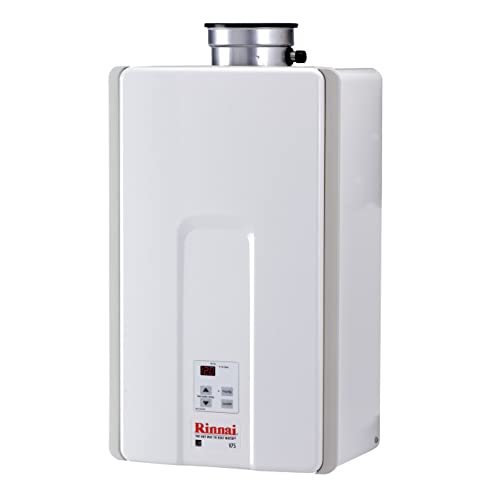


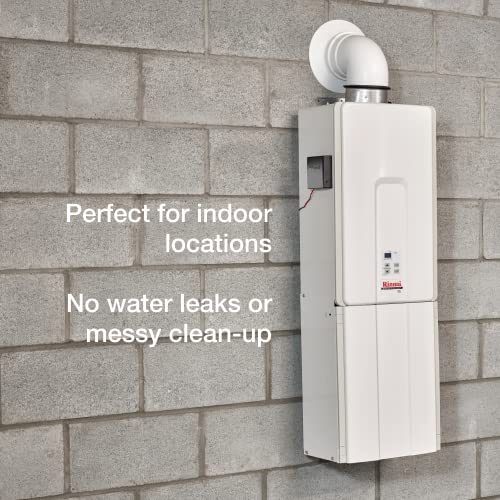


🔥 Never run out of hot water again — smart, efficient, and built to impress!
The Rinnai V75iN Indoor Tankless Hot Water Heater delivers up to 7.5 gallons per minute of continuous hot water powered by natural gas. Featuring smart Control-R 2.0 app integration, it offers remote scheduling and vacation mode for modern convenience. With a robust 120-month heat exchanger warranty and advanced safety features like leak detection and temperature lock, this energy-efficient unit is designed for reliable, long-lasting performance in any home.






| ASIN | B0084CPEQQ |
| Batteries Required? | No |
| Batteries included? | No |
| Colour | V75in - Natural Gas/7.5 Gpm |
| Customer Reviews | 4.3 4.3 out of 5 stars (241) |
| Date First Available | 1 Jun. 2012 |
| Flow rate | 7.5 Gallons Per Minute |
| Included Components | Water Heater |
| Item Package Quantity | 1 |
| Item Weight | 20.7 kg |
| Item model number | V75IN |
| Manufacturer | Rinnai |
| Part Number | V75IN |
| Plug profile | Wall |
| Product Dimensions | 35.66 x 23.55 x 68.33 cm; 20.68 kg |
| Size | L |
| Special Features | Energy Factor of .82 for both gas types, Enhanced scale detection lessens possibility of serious, long-term damage to unit, Leak detection shuts off water to unit to limit property damage, Temperature Lock, Temperature range with controllers: 98ºF - 140ºF |
| Style | V75iN - Natural Gas/7.5 GPM |
| Voltage | 120 Volts |
B**.
Bought this unit in replacement for the 10 year old R53C unit I had. Very happy, more flow then the old one and no issues with low flow taps not kicking in the hot water heater. Also no issues with running multiple devices of hot water at the same time, just a slight pressure change but not cold or hot shock in the shower tub etc. Would recommend to anyone, very impressed with the speed of shipping.
P**O
Work so nice!
S**R
Tl;Dr version: READ THE INSTALL MANUAL before buying. I've scanned through some of the negative reviews for this unit and it's very clear a good percentage of them simply did not read the manual before buying and just assumed it would be a simple drop in replacement. Bad assumption. The manual spells out all the requirements and every additional item you will need to buy. Before you even try to answer the question of whether or not you can install this yourself, call your local city clerk and see if a permit is required to replace a water heater. If it is, then you're dead in the water before you even begin. You'll need it professionally installed. But if that's not the case... Things you need to know before purchasing: 1) Read the manual! Especially the section regarding gas line requirements. Depending on how far your water heater will be from the gas line point of entry, how many bends there are to get there, and the pressure supplied to your house, there is a chance that you will need to replace every bit of pipe between the meter and the water heater. 2) The gas inlet on the water heater is 3/4". Even if the rest of the pipe meets the specification, if you are putting this where a tank water heater used to be, the leg of pipe supplying it was probably 5/8" and will need to be replaced. 3) It requires an electrical outlet. It has an electronic ignition, and is controlled by a circuit board. It's basically a furnace that heats water instead of air. 4) You will NOT be able to use your existing tank water heater's vent pipe. You might be able to use the same hole in the roof (or wherever it exhausts to), but the pipe itself will have to be replaced. The replacement pipe is not cheap! Also, read the manual regarding pipe requirements. If it is so long or has so many bends, you will have to deal with condensate. Common questions regarding this particular line of water heaters: Q:) What is the difference between the Value series of Rinnai water heaters, and the Luxury series? A:) The Luxury series includes a built-in recirculation pump, and includes bypass valves. If you don't intend to use a recirculation pump, skip the Luxury model and purchase the bypass valves separately. Q:) So do I need a recirculation pump? A:) No one needs a recirculation pump. It is an add-on that gets hot water to your taps faster than you would be able to do so without one, but it is never a necessity. Q:) Should I get a mid-efficiency non-condensing or high-efficiency condensing tankless heater? A:) Unless you use a large amount of hot water, the efficiency gains you will realize with a condensing unit over a non-condensing unit are minimal. Condensing units are more complex, meaning more parts to worry about; they require both an inlet and and exhaust pipe (although there are adapters to combine them into a coaxial pipe); and you will be forced to deal with condensate, which is not a small task, as it is acidic. IMO unless you really have a need for that extra bit of efficiency, skip the condensing unit. Q:) Can really I run my own gas line? A:) Yes! Actually running the gas line was one of the easier tasks for me. You can purchase pre-threaded lengths of pipe from your local big-box hardware store, as well as the "pipe dope" sealant. Just make sure you plan your route beforehand, and draw it out so you'll know how many corner adapters and T adapters you'll need. Don't forget to include a trap. Usually if you find you need a section of pipe a certain length that isn't carried, you can build a pipe you need by coupling two other sizes together. I was able to complete the entire project without requiring any custom lengths of pipe. You'll definitely need at least two large pipe wrenches, however, and you'll want to learn how to properly check for leaks, of course! Q:) What was the hardest part of installing the water heater? A:) The exhaust pipe. In my case, I decided to avoid the hassle of trying to follow the existing vertical pipe, and used a 21" Rinnai kit to exhaust out the side of my house. If you have the option to exhaust out the side, this is going to be the cheapest and easiest way to go. BUT, you will have to make a 5.5 inch hole in the side of your house for the pipe to fit through. My house had thicker-than-average brick, so making that hole in the side of my house was like an entirely separate project. I ended up buying a 5.5 inch core drill bit (from Amazon) just for the task. So, with all of this in mind, what are some tips? Well, obviously read the manual first! But what else? 1) First off, if you are replacing a tank water heater, the first thing you should consider is, "Do I really need/want to put this tankless water heater where the existing water heater was?" Of course everyone's situation varies, but more often than not, you can save yourself a lot of headache and work by putting the tankless on an exterior wall or near an exterior wall, instead of trying to put it where the tank one was. Once you realize that you're not going to be able to use the existing tank heater's exhaust pipe or gas supply line, there's really no reason to keep it in the same place. In my particular case, I freed up a huge amount of space in my basement laundry/bath room by removing the tank heater and putting the tankless above my toilet. 2) Think about where you want to mount the heater, and determine if you'll need to build a mounting plate. In my case it worked out perfectly and I was able to screw the heater directly into a stud. But you may not be so lucky. 3) Look at where you plan to mount the heater, and think about where the exhaust will have to go. Then, read the manual, and make sure you can vent the exhaust while meeting all of the requirements regarding clearance to ground, clearance to another opening or window in the house, etc. 4) Look at the available exhaust kits and pipes and determine what you'll need beforehand, and take note of the cost. It's not cheap stuff. Also, keep in mind you may have to cut a piece of this special pipe, and there is a specific way it has to be cut. Check YouTube for the Rinnai Guy. So, can you really do this on your own? That really depends on you, and your mindset. For a lot of people, installing one of these might seem do-able at first, until they realize exactly how much will need to be done, then it may pretty quickly feel like they have bitten off more than they can chew. But if you are the type of DIYer that is confident in being able to rise to any task, then yes it can be done.
C**.
Installed this in November 2018. Been hassle free, working perfectly since then. Love the endless hot water, and being able to refill the hot tub with hot water is great. We have extra hard water, so I flush it with 3 gallons of pure food grade vinegar every 6 months. This is critical, but also really easy, once you set up isolation valves and get a good little pump and a 5 gallon bucket. I flush with the heat on, set to lowest temp, only takes 20 min to run clear. New instructions say to run it cold with heat off, last unit we had in 2001 said to let it heat the vinegar for faster cleaning. Not an easy DIY install, especially the gas line upgrade. I had to run 60ft of 1 inch gas line at the last house, was a difficult job. Many cities don't allow homeowner gas line work, I got lucky and was able to get permits in 2 cities over the years. Vent kit install was fairly easy, out a side wall, cut a big hole in the wood rim joist. Needed to drill and saws all through 6 inches of wood, took a while, but pretty basic. You need to do a lot of planning and make sure your vent is not too close to a window. Check with your city first to learn their requirements, they can vary a bit. Lots of plumbing had to be moved/replaced, as we moved the location about 8 ft away from the old one. Even with all the work, the payoff is worth it. Endless hot water, lower gas bill, and about an extra closet of floor space gained. That was huge in a small living space.
K**T
3.5 years after purchasing I love this product. Easy to install for a VERY handy homeowner. water is instantly hot and easy to control temp. I can run the shower and washer at the same time. I can fill my tub and never run out of hot. It's quiet and efficient. I am happy with this product and writing this review without incentive because it's actually a good tankless water heater
Trustpilot
1 week ago
2 weeks ago