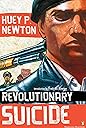

Revolutionary Suicide: (Penguin Classics Deluxe Edition) [Newton, Huey P., Anderson, Ho Che, Newton, Fredrika] on desertcart.com. *FREE* shipping on qualifying offers. Revolutionary Suicide: (Penguin Classics Deluxe Edition) Review: Review - Huey Newton was not an exceptionally bright man. As he acknowledges his IQ was ranked at 74 (albeit, the ability of the IQ test to really get at the ingenious essence of man is dubious). His philosophy, and philosophizing, is frequently superficial, layman, and lacking depth. To top it off, one would have to be extremely credulous to walk away from this book believing a lot of the things Huey Newton says, ranging from his deep understanding of analytic philosophy, to dialectical materialism guiding his praxis, from his lack of toleration for all drugs, and his ability to keep calm in the face of pressure, I can safely say, I disbelieve all of it. But what I don't disbelieve is that blacks in the United States have grown up under violently racist conditions, treated as barbarians, ignoramuses, and 3rd class citizens, barely worthy of anything tangible outside of slave shackles. Blacks have been and are tar and feathered in a school system that has no patience for them, and ridiculed and sacked in a capitalist market that only exploits racism as a means for paying whites less because a black men will do the work for less than subsistence wages. This is a system that thrives off inhumane forces that quell any chance of autonomy and dignity, and Huey Newton was first and foremost a victim, before he was a revolutionary. The real exceptional fact of Newton's life is that, as he remarks, despite his Fathers three jobs (of which he always losing and being hired on to new ones), and his seven or eight siblings, he had a loving family, and parents who were committed to doing the best they possibly could, with means they never had enough of. Huey grew up in the kitchen; that was his room, and yet for him, this was totally normal. Unsurprisingly given the racist country he lived in, with the exploitative market that surrounded him, where the only sense of gratification can be found in consumption after exploitative production, and a worthless education where he never learned to read, Newton was basically a delinquent, fighting, stealing cars, hustling, etc. Then he had the bright idea to force himself to read Plato, ten times, until he felt he was both literate, and able to comprehend the material, albeit superficially. The spark reading gave Huey, the craving for more, of something better (which is really all philosophy is), turned him into a passionate revolutionary, who although no erudite, warrants nothing but praise for surmounting insurmountable circumstances, and creating the Black Panther Party. Huey actively taught his community, and black communities outside his own city, how to legally arm themselves, learn the law, and defend themselves - as a community - from police brutality, and malfeasance. This book is a memoir of his struggles, before and during the creation of the Black Panther Party, and his constant trials, and stints in jail. Again, as an intellectual, Huey does not rank highly, but as a serious committed revolutionary, of action, focused solely on results, he ranks amongst the highest and most effective, especially given his circumstances. Read this book. Learn some valuable history, and maybe, go out and arm your godamn community with knowledge and.... Review: Lessons in Self Determination - There are few individuals in which can be found such an impressive display of courage and cunning; in a life so richly fortified with all the requisite experiences, Huey P. Newton has certainly distinguished himself as one of these. Anxious to gain a greater understanding into the life and times of one of the leading figures of the BLACK POWER MOVEMENT of the late 60s early 70s, I dove head-first into the three hundred and fifty-page book with all the eagerness of a child on X-mas eve. So if you're looking for a stoic and impersonal review with the trappings of cold objectivity skip this one. In a few adjectives, the book is: Deeply contemplative; noticeably disarming; endearing as it relates the childhood stories of love and strong parental guidance; full of gusto as he sprints into the unrestrained exploits of teenage bravado; it is resoundingly defiant particularly against the interlocking pillars of law enforcement and the public education system, both working in tandem to confine mostly black youth by brutal repression and low expectations; it is clever, hopeful, painful at times, honest and even doubtful; but most importantly it is full of numerous examples of an unjust system (white supremacy) that has demonstrated it's contempt for people of African descent many times over and continues to do so till this day. The road less traveled -some believe- can seem suicidal. Oftentimes, it's the revolutionary road to self-discovery and true freedom. In chronological fashion, he writes most extensively about the concrete foundations of his youth in such a way that one easily begins to conclude the formation of the Black Panther Party (BPP) as natural and maybe even inevitable. I like the fact that he christens each chapter with corresponding quotes, usually by other black authors. He spends too much time going over the various court trials he's had to endure for my liking. This notwithstanding, the book should be counted among those that make the Summer reading list of every high-schooler in black America and beyond. It is an eye-opener, giving the reader more than just a peak behind the thin veil of American politeness. The Black Panther is our brother and son... the one who wasn't afraid. - George Jackson, Soledad Brother
| Best Sellers Rank | #11,896 in Books ( See Top 100 in Books ) #36 in Political Leader Biographies #51 in Black & African American Biographies #228 in Memoirs (Books) |
| Customer Reviews | 4.8 4.8 out of 5 stars (1,353) |
| Dimensions | 5.64 x 1 x 8.37 inches |
| Edition | Reprint |
| ISBN-10 | 0143105329 |
| ISBN-13 | 978-0143105329 |
| Item Weight | 14.2 ounces |
| Language | English |
| Print length | 384 pages |
| Publication date | September 29, 2009 |
| Publisher | Penguin Classics |
C**B
Review
Huey Newton was not an exceptionally bright man. As he acknowledges his IQ was ranked at 74 (albeit, the ability of the IQ test to really get at the ingenious essence of man is dubious). His philosophy, and philosophizing, is frequently superficial, layman, and lacking depth. To top it off, one would have to be extremely credulous to walk away from this book believing a lot of the things Huey Newton says, ranging from his deep understanding of analytic philosophy, to dialectical materialism guiding his praxis, from his lack of toleration for all drugs, and his ability to keep calm in the face of pressure, I can safely say, I disbelieve all of it. But what I don't disbelieve is that blacks in the United States have grown up under violently racist conditions, treated as barbarians, ignoramuses, and 3rd class citizens, barely worthy of anything tangible outside of slave shackles. Blacks have been and are tar and feathered in a school system that has no patience for them, and ridiculed and sacked in a capitalist market that only exploits racism as a means for paying whites less because a black men will do the work for less than subsistence wages. This is a system that thrives off inhumane forces that quell any chance of autonomy and dignity, and Huey Newton was first and foremost a victim, before he was a revolutionary. The real exceptional fact of Newton's life is that, as he remarks, despite his Fathers three jobs (of which he always losing and being hired on to new ones), and his seven or eight siblings, he had a loving family, and parents who were committed to doing the best they possibly could, with means they never had enough of. Huey grew up in the kitchen; that was his room, and yet for him, this was totally normal. Unsurprisingly given the racist country he lived in, with the exploitative market that surrounded him, where the only sense of gratification can be found in consumption after exploitative production, and a worthless education where he never learned to read, Newton was basically a delinquent, fighting, stealing cars, hustling, etc. Then he had the bright idea to force himself to read Plato, ten times, until he felt he was both literate, and able to comprehend the material, albeit superficially. The spark reading gave Huey, the craving for more, of something better (which is really all philosophy is), turned him into a passionate revolutionary, who although no erudite, warrants nothing but praise for surmounting insurmountable circumstances, and creating the Black Panther Party. Huey actively taught his community, and black communities outside his own city, how to legally arm themselves, learn the law, and defend themselves - as a community - from police brutality, and malfeasance. This book is a memoir of his struggles, before and during the creation of the Black Panther Party, and his constant trials, and stints in jail. Again, as an intellectual, Huey does not rank highly, but as a serious committed revolutionary, of action, focused solely on results, he ranks amongst the highest and most effective, especially given his circumstances. Read this book. Learn some valuable history, and maybe, go out and arm your godamn community with knowledge and....
M**A
Lessons in Self Determination
There are few individuals in which can be found such an impressive display of courage and cunning; in a life so richly fortified with all the requisite experiences, Huey P. Newton has certainly distinguished himself as one of these. Anxious to gain a greater understanding into the life and times of one of the leading figures of the BLACK POWER MOVEMENT of the late 60s early 70s, I dove head-first into the three hundred and fifty-page book with all the eagerness of a child on X-mas eve. So if you're looking for a stoic and impersonal review with the trappings of cold objectivity skip this one. In a few adjectives, the book is: Deeply contemplative; noticeably disarming; endearing as it relates the childhood stories of love and strong parental guidance; full of gusto as he sprints into the unrestrained exploits of teenage bravado; it is resoundingly defiant particularly against the interlocking pillars of law enforcement and the public education system, both working in tandem to confine mostly black youth by brutal repression and low expectations; it is clever, hopeful, painful at times, honest and even doubtful; but most importantly it is full of numerous examples of an unjust system (white supremacy) that has demonstrated it's contempt for people of African descent many times over and continues to do so till this day. The road less traveled -some believe- can seem suicidal. Oftentimes, it's the revolutionary road to self-discovery and true freedom. In chronological fashion, he writes most extensively about the concrete foundations of his youth in such a way that one easily begins to conclude the formation of the Black Panther Party (BPP) as natural and maybe even inevitable. I like the fact that he christens each chapter with corresponding quotes, usually by other black authors. He spends too much time going over the various court trials he's had to endure for my liking. This notwithstanding, the book should be counted among those that make the Summer reading list of every high-schooler in black America and beyond. It is an eye-opener, giving the reader more than just a peak behind the thin veil of American politeness. The Black Panther is our brother and son... the one who wasn't afraid. - George Jackson, Soledad Brother
S**R
Great Read!
I enjoyed reading about how the Black Panthers got started and some of the corruption the police and judges (legal system did to them,) according to Huey. I admire him putting his life on the line with putting his ideas into action. I wish it was a better ending for him and the Black Panthers. He had some good ideas about helping the Black community.
S**A
This book reveals much of what is untold about Huey P Newton and the Black Panther party, they were a revolutionary political group aiming to create a better world for black people.
A**Y
The memoir of Black Panthers founder Huey P Newton. Newton writes in such a matter-of-fact way; he's not trying to win the reader over, he mostly doesn't play to his ego, he doesn't shy away from the negative aspects of this personality and history (or he simply doesn't recognise them). A large portion of the book follows his upbringing and what it meant to be a black person in America at that time. He sets up the foundations of the Black Panther party, the history of which I knew very little of. There's no lengthy diatribes throughout the book, Newton was a very clever and measured man who could leave his emotions at the door for the good of the party. There are many flaws to his character, and perhaps his stubbornness and tunnel vision helped the demise of the party more than he'd care to admit, but his ideology and the party's 10 point program of a better society is not as radical as some may lead one to believe. His writing of his trial is especially enthralling and given my lack of prior knowledge of the man, I was on the edge of my seat throughout. I recommend this book to anyone interested in the Black Panthers or purely just as the story and a complex and nuanced human being.
P**O
I haven't read the book yet. However the quality and finishing of the book is quite poor, I am not sure I was the unlucky one here.
A**R
I bought this book for my boyfriend and he really likes it.
T**R
I purchased this book due to to a keen interest in th civil rights movement era, however whatever information I came across about Huey Newton before placed him in a very bad light. This bad light placed upon this revolutionary I didn't question much, however after getting into this book I saw the man in a new light. This book is a great account of Huey by himself, and way it flows and develops is such a great read. Huey starts with explaining his life's a youngster, the way he saw society as a child and the family life he came from. This introduction to his family gives him a human element, something not seen before as he his affiliation with the party always to me, made me see him as a symbol. This book breaks down that symbolic image and shows a individual, a individual who saw, tested and studied rigorously many theories in life ranging from love to ways of living. What I love about this book is you get to see how he became to be the person he was, he was developing further even after the party. But the book shows the many things that bonded together to let Huey Newton become the revolutionary committed to people which he became. I'd recommend this book to anyone, anyone with a open mind wishing to see how a man became the martyr for his people.great man and a very great and almost life changing book
Trustpilot
2 months ago
4 days ago