
DOWNLOAD THE APP


Customer Services
Copyright © 2025 Desertcart Holdings Limited
DOWNLOAD THE APP
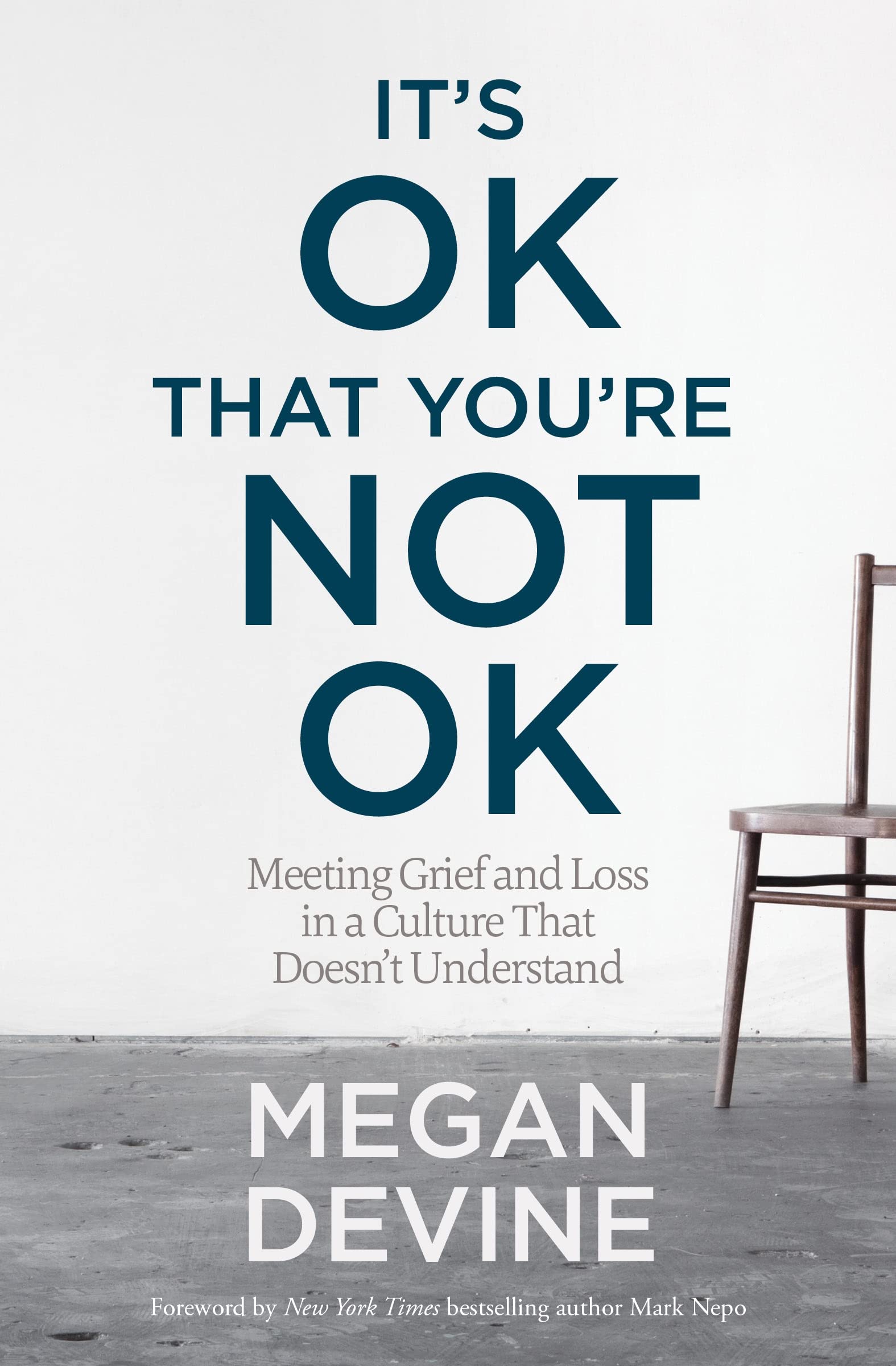
desertcart.com: It's OK That You're Not OK: Meeting Grief and Loss in a Culture That Doesn't Understand: 9781622039074: LPC, Megan Devine, Nepo, Mark: Books Review: Finally .. a book about grief and loss for EVERYONE! - I've been gifted, loaned and purchased many grief books in the two years since my son died. I can honestly say that none of those texts resonated with me and the truth of my grief experience more than Megan Devine's new book. She is a credible source of useful information, bringing not only her educational and occupational background to bear but more importantly her own life experience with deep loss and a broken culture. Above all, she is a truth teller and an advocate you'll want in your grief space. The beauty of this book is the universal insights it offers for EVERYONE who has experienced deep grief or desires to genuinely support another in their loss. The author outlines a refreshing take on grief for the reader's consideration, one where acknowledgment and a desire to love better are critical components in supporting ourselves and each other following a significant loss (ie. death, accident, illness, etc.) She adeptly explains the model's concepts in lay terms, provides numerous examples for better understanding, and recommends practical exercises that one can use to help identify and manage the impact of grief. The quotes from her writing students are especially relevant and poignant. I found Megan's work validating and thought-provoking, especially concepts such as her broader definition of "early grief", common platitudes (and why I feel their adverse affect), the critical distinction between pain and suffering (and how to minimize latter), grief as an experiment rather than a problem to be solved, and the vital role of acknowledgment and companionship in creating a way forward. One of my favorite sections is the appendix, an essay on helping a grieving friend, which offers carefully-crafted and readily shareable ground rules for supporting a loved one. I'd recommend reading this book if you or a loved one are in the midst of deep grief and looking for validation, guidance, and honesty in a post-loss world. This book, and especially the associated resources available at refugeingrief.com, are powerful tools for navigating your grief landscape with love and understanding. It's permission to grieve in your way and in your time ... and this has made all the difference in my own post-loss landscape. Review: A Power And Informative Guide For The Grieving - Excellent. I really enjoy this book. I listened to it in Audiobooks. The Writer was so wonderful. It helps when the person giving advice has actually been through want they are giving advice on. This helped me with my grieving process tremendously and has allowed me to be able to understand that for the last four years while I was grieving my husband‘s death, it was OK not to be OK. And that it is OK to still not be OK. And that I cannot go back and undo what was done and I will neverbe the same person again. However, she gave me Sage advice for how to be able to move forward and continue to live. If I could rate this book higher than five stars, I would because it is a great and helpful and inspiring book. I listened to several chapters repeatedly. The voice was so soothing and peaceful. I LOVE IT. 💯👍🏾👍🏾👍🏾🙏🏾






| Best Sellers Rank | #1,011 in Books ( See Top 100 in Books ) #1 in Love & Loss #3 in Death #4 in Death & Grief (Books) |
| Customer Reviews | 4.7 4.7 out of 5 stars (12,269) |
| Dimensions | 5.2 x 0.75 x 7.95 inches |
| Edition | 1st |
| ISBN-10 | 1622039076 |
| ISBN-13 | 978-1622039074 |
| Item Weight | 2.31 pounds |
| Language | English |
| Print length | 280 pages |
| Publication date | October 1, 2017 |
| Publisher | St. Martin's Essentials / Sounds True |
M**.
Finally .. a book about grief and loss for EVERYONE!
I've been gifted, loaned and purchased many grief books in the two years since my son died. I can honestly say that none of those texts resonated with me and the truth of my grief experience more than Megan Devine's new book. She is a credible source of useful information, bringing not only her educational and occupational background to bear but more importantly her own life experience with deep loss and a broken culture. Above all, she is a truth teller and an advocate you'll want in your grief space. The beauty of this book is the universal insights it offers for EVERYONE who has experienced deep grief or desires to genuinely support another in their loss. The author outlines a refreshing take on grief for the reader's consideration, one where acknowledgment and a desire to love better are critical components in supporting ourselves and each other following a significant loss (ie. death, accident, illness, etc.) She adeptly explains the model's concepts in lay terms, provides numerous examples for better understanding, and recommends practical exercises that one can use to help identify and manage the impact of grief. The quotes from her writing students are especially relevant and poignant. I found Megan's work validating and thought-provoking, especially concepts such as her broader definition of "early grief", common platitudes (and why I feel their adverse affect), the critical distinction between pain and suffering (and how to minimize latter), grief as an experiment rather than a problem to be solved, and the vital role of acknowledgment and companionship in creating a way forward. One of my favorite sections is the appendix, an essay on helping a grieving friend, which offers carefully-crafted and readily shareable ground rules for supporting a loved one. I'd recommend reading this book if you or a loved one are in the midst of deep grief and looking for validation, guidance, and honesty in a post-loss world. This book, and especially the associated resources available at refugeingrief.com, are powerful tools for navigating your grief landscape with love and understanding. It's permission to grieve in your way and in your time ... and this has made all the difference in my own post-loss landscape.
C**Y
A Power And Informative Guide For The Grieving
Excellent. I really enjoy this book. I listened to it in Audiobooks. The Writer was so wonderful. It helps when the person giving advice has actually been through want they are giving advice on. This helped me with my grieving process tremendously and has allowed me to be able to understand that for the last four years while I was grieving my husband‘s death, it was OK not to be OK. And that it is OK to still not be OK. And that I cannot go back and undo what was done and I will neverbe the same person again. However, she gave me Sage advice for how to be able to move forward and continue to live. If I could rate this book higher than five stars, I would because it is a great and helpful and inspiring book. I listened to several chapters repeatedly. The voice was so soothing and peaceful. I LOVE IT. 💯👍🏾👍🏾👍🏾🙏🏾
N**E
I Can't Stop Recommending This Book
I found this book shortly after the unexpected death of my mother and the first "major loss" in my life. I remember hearing time and time again that 'you'll be surprised at who shows up for you in your grief and who doesn't' but I figured I had a pretty good read on the people in my life. Lo and behold I was indeed surprised! In the days after my mom died, I was *shocked* at some of the things that were said to and expected of me by people I thought of as kind and empathetic. I felt extremely alone and also a bit insane that others were pressuring me to feel better and move on mere hours after experiencing the trauma of watching my mom die. This book validated my feelings (including anger!) and made me feel less alone and less crazy. My aunt was struggling with the same loss of her sister and wild things being said to her, so I sent her a copy as well. I've recommended this to others who are struggling with a loss of their own, as well as my friends who want to know, "What does it mean to show up in the face of grief?" I felt a lot of support and love when my friends read this book and we were able to discuss it together. There is an entire section for friends and family on how to support someone going through a loss which I think is extremely needed and helpful. Scrolling through the other reviews for this book, I want to mention a couple of other things. First, the author writes from her perspective of her loss (of her partner) and says she's primarily focusing on out-of-order, unexpected deaths. It seems as though some find this alienating, but it didn't bother me. She also talks about the "Grief Olympics", the hierarchy of grief and writes, "...every loss is valid. And every loss is not the same." This strikes me as inherently true (and perhaps even affirming in the context?) but some have found it off-putting. I think there's a lot to be gained from this book for anyone who is grieving if you can/need to look past that. Second, I saw a few reviews that dismiss the book because of the author's anger which makes me smirk! I didn't find the book to be particularly angry but I also think anger is a pretty healthy and normal reaction to a huge loss in your life?? I have anger around my loss, and again, felt seen and affirmed. Finally, I saw a negative review criticizing the author for her frustration around the (insensitive and unhelpful!) things people say in the wake of grief. This is an experience I too faced so it was helpful for me to hear Devine's perspective and made me feel understood. If you think people are just trying to help and doing their best and you don't think there's room for improvement on how individuals and our culture at large can better respond to grief then you probably don't need this book because you're already being supported! Unfortunately, that's not true for all of us, and if you've been struggling with others' responses to your grief, you might find this book extremely helpful in feeling seen and affirmed.
S**E
Megan articulates much of what I've felt and thought over the past 19 years since losing my first husband. I felt shame & guilt for my revulsion of people's kind words yet deeply hurtful platitudes and toxic positivity. Now I'm reconciled to my emotions & no longer feel alone, ungrateful and so miserable. Megan is a very talented writer tackling the most difficult and taboo of topics with directness, frankness yet compassionately, sensitively and inclusively. Her words bond with the reader and her talent is making difficult writing become easy reading. I'm so sorry if you've come by this book because you're grieving and so heartened if you are supporting someone who is grieving. Megan explores and explains strategies for dealing with life, death, grief - the whole damn gamut of emotions, our inner selves and people, especially dealing with people trying to fix the utterly unfixable. I finished this book feeling less lonely than when I started reading it. I feel validated, hugged and loved by Megan's words. Grief is something we need to make space for, however ugly and uncomfortable. It can't be rubbed out, forgotten or got over with. Thank you Megan & thanks for how to carry what can't be fixed.
A**R
Altamente recomendable.
Á**A
Da en el clavo. Recomiendo.
S**G
This is the best book you will ever read on the topic of grief. It’s non denominational, non judgemental and non preachy. Indeed Megan Devine, herself both a therapist and a grieving young widow, manages to provide the perfect words of support for those who are grieving and excellent tips for those want to better support a griever. When I lost my young adult son, I spiralled into a pit of depression but rather than finding a whole raft of support, I discovered there were very few people who jumped down into that hole and just sat with me; those who did have my heartfelt gratitude for their presence. I searched for books that understood the real experience of grief. Megan’s book was the perfect find; she debunks the social myth of returning to “normal” and invites us to build our lives alongside grief. It’s a powerful message, as so many of us grievers feel judged or dismissed. “It’s OK that you’re not ok” provides much needed comfort and understanding of the world of grief; Megan understands that some things in life cannot be fixed, that ‘grief no more needs a solution than love needs a solution”. If you have ever lost someone or find yourself wanting to support a friend, do yourself a favour and buy this book, the kindness and understanding you find in Megan’s work will touch your broken heart and make you feel heard.
M**A
a book not to be missed, which should be translated into all languages, a guide for grief unique in the world.
Trustpilot
3 weeks ago
2 days ago