
DOWNLOAD THE APP


Customer Services
Copyright © 2025 Desertcart Holdings Limited
DOWNLOAD THE APP
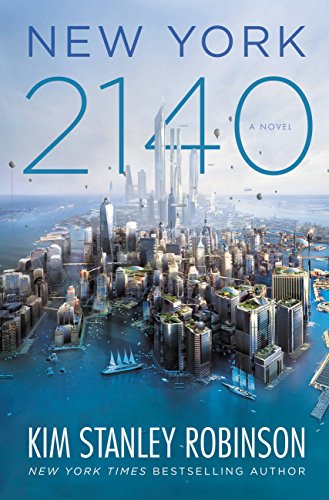

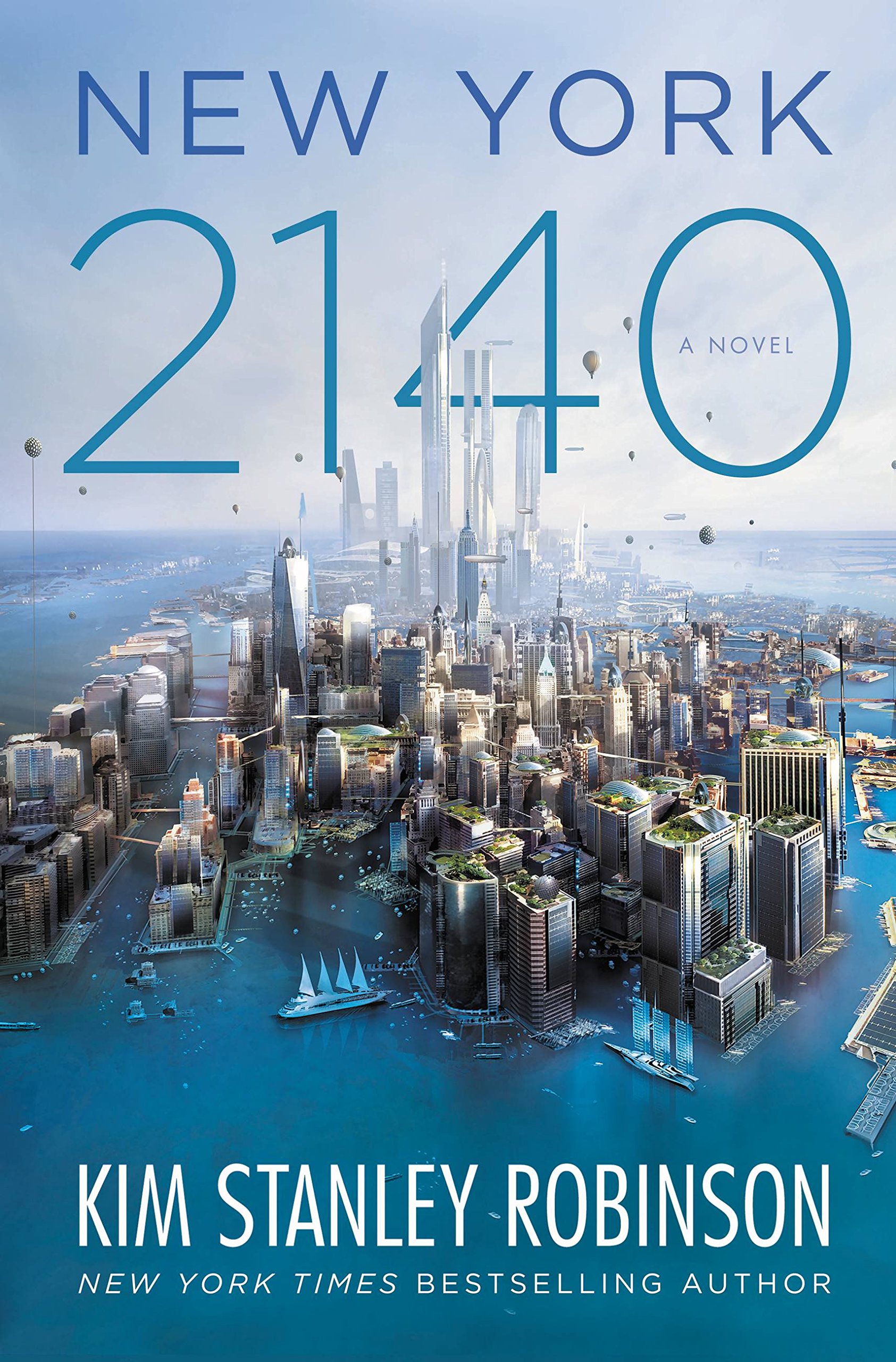
New York 2140 [Robinson, Kim Stanley] on desertcart.com. *FREE* shipping on qualifying offers. New York 2140 Review: Perfect exciting homage to NYC, past, present and future - Such a beautiful homage to NYC from past to present to future! If tryouts love NYC, its people, its aura and its history, you will love this novel. I readcit on Audible. The seven readers were outstanding. My favorite was "The Citizen," whose snarky observations and historical factoids have now made me buy the hard copy of this novel, so i can highlight his pages. Also, the style in which it is written, reminds me of a contemporary John Dos Passos, the characters incorporate economics. government, science, influencers, science and climate change, and societal norms. The novel is largely optimistic. New Yorkers have always been resilient people, and this story imagines what that would look like after the oceans rise 50 feet to put Manhattan under water until about 50th street. It does what I always wished the film "Waterworld" could have done; examined society as it adapts to changes. The plot kept me anxious to continue reading about my new friends everyday. It is one of the few books that I finish, and immediately want to begin over again! Review: and entertaining - the best of the lot come in the sections featuring The ... - After I read Kim Stanley Robinson's Mars Trilogy what seems a half a lifetime ago, I didn't read a novel by him until 2312. I did try to read THE YEARS OF RICE AND SALT, but after 80 or so pages I couldn't go one any further and put it down, never to pick it up again. I returned to Robinson's work with 2312 and AURORA, skipping SHAMAN, which was not my cup of tea. I eyed NEW YORK 2140 with a sideways glance. I wasn't sure that I wanted to read it, thinking that once again it might not be for me, but man did it sound interesting. The deal was sealed when Robinson appeared on The Coode Street podcast; his descriptions of the book and how he went about researching it and putting it together were enough to get me to pick it up and give it a try. NEW YORK 2140 is not a novel in the usual sense. There is no real plot, although there are several events that are strung through the book that actually do have a beginning, middle, and end. There are also characters that the reader follows from the beginning of the novel to the end of the novel, and their lives do intersect because those previously mentioned events do intersect and overlap. And there is conflict, but not the sort of conflict a reader is used to seeing in a novel that is structured in a typical fashion. Even the title is a bit misleading, as the novel starts in 2140 but ends a few years later after the events that are recounted within are complete. What NEW YORK 2140 does provide, as does 2312, is a snapshot, a snapshot of a few characters within one of the largest and most well-known cities in the world as they - and the city - go about their daily lives. You'd be right to ask "why should a care about New York in 2140?". Well, it's under 50 feet of water. To be fair, not all of it is under 50 feet of water, but most of it is. In fact, the book itself answers the question of why you should care about New York instead of any of the other coastal cities that are under water. Back to this in a bit. Or maybe not. It's really a difficult novel to describe. Structurally, the novel is broken into parts, and each part has subsections that follow individual characters - or, in two cases, a couple of characters. There is also an additional subsection for a character called "The Citizen". Robinson is famously known for liberally sprinkling infodumps throughout his books, and NEW YORK 2140 is no exception. While infodumps are spread everywhere throughout the book - and I'll have to say I didn't mind them in the least, as they were in my opinion well done, informative, and entertaining - the best of the lot come in the sections featuring The Citizen. It is in these sections that the reader learns about the two events - The First Pulse and The Second Pulse - that put NYC and the other coastal cities under water. What's more, we learned how the Pulses came about in wondrous detail that should, but won't, convince any climate change denier that we have really screwed up this planet and we'd better do something about it yesterday. The Citizen doesn't just tell us about how NYC got to be in the state it's in ecologically, he tells us about finance as well, how the Pulses affected the global economy, and how current (to the novel) solutions to the problem are no different than what was done in the past. It's very clear throughout the book that Robinson has done his research. As a side note, and in bits that most readers may not enjoy but I found amusing, The Citizen, a snarky resident of NYC, refers to the text of the book itself, letting his audience know that he knows what he's saying is being read, and is giving those same readers permission to skip these sections if they want to, while at the same time letting them know that they're going to be ignorant of many facts if they skim through his parts. The thing that is fresh about this novel is that while it is a post-disaster novel, it doesn't dwell on the disaster (or in this case disasters). The point is not the disasters - the point is how a subsection of society deals with the nasty hand it's been dealt. Robinson also lets us know that it really is all about money. Yes, there is climate change which will lead to disaster. But money, really, makes the world go around. Nearly all of the characters have either something to do with finance or are affected by those that have something to do with finance. A major plot (there's that word here) point involves how to manipulate the global economy in the aftermath of a hurricane that hits New York. The characters here are secondary. I don't think Robinson means for the reader to be enamored of these characters at all. I don't think there's any character that grabbed me by the scruff of the neck and made me pay attention to him or her - although I did feel sorry for the two kids that continually did stupid things and got into trouble for them. This, like 2312, is a story about ideas, but ideas based in reality, ideas that we could find becoming a reality if we're not careful. Back to one point I made earlier, about why we should care about New York and not any other coastal city. Don't skip The Citizen sections. And don't skip any of the rest of the sections either. They're too good to pass up. This is the first audiobook I've listened to that has more than a couple of narrators. There are seven of them, and they are all wonderful. While I haven't taken the time to learn which narrators performed which sections (although it's a safe bet that the female narrators did the sections centering on the females, and the same with the males of course), I'm really partial to the guy that performed The Citizen. This was a great cast performing a great book.
| Best Sellers Rank | #730,658 in Books ( See Top 100 in Books ) #362 in Hard Science Fiction (Books) #1,273 in Post-Apocalyptic Science Fiction (Books) #1,767 in Science Fiction Adventures |
| Customer Reviews | 4.0 4.0 out of 5 stars (3,352) |
| Dimensions | 6.5 x 1.88 x 9.5 inches |
| Edition | First Edition |
| ISBN-10 | 031626234X |
| ISBN-13 | 978-0316262347 |
| Item Weight | 1.96 pounds |
| Language | English |
| Print length | 624 pages |
| Publication date | March 14, 2017 |
| Publisher | Orbit |
P**O
Perfect exciting homage to NYC, past, present and future
Such a beautiful homage to NYC from past to present to future! If tryouts love NYC, its people, its aura and its history, you will love this novel. I readcit on Audible. The seven readers were outstanding. My favorite was "The Citizen," whose snarky observations and historical factoids have now made me buy the hard copy of this novel, so i can highlight his pages. Also, the style in which it is written, reminds me of a contemporary John Dos Passos, the characters incorporate economics. government, science, influencers, science and climate change, and societal norms. The novel is largely optimistic. New Yorkers have always been resilient people, and this story imagines what that would look like after the oceans rise 50 feet to put Manhattan under water until about 50th street. It does what I always wished the film "Waterworld" could have done; examined society as it adapts to changes. The plot kept me anxious to continue reading about my new friends everyday. It is one of the few books that I finish, and immediately want to begin over again!
J**Z
and entertaining - the best of the lot come in the sections featuring The ...
After I read Kim Stanley Robinson's Mars Trilogy what seems a half a lifetime ago, I didn't read a novel by him until 2312. I did try to read THE YEARS OF RICE AND SALT, but after 80 or so pages I couldn't go one any further and put it down, never to pick it up again. I returned to Robinson's work with 2312 and AURORA, skipping SHAMAN, which was not my cup of tea. I eyed NEW YORK 2140 with a sideways glance. I wasn't sure that I wanted to read it, thinking that once again it might not be for me, but man did it sound interesting. The deal was sealed when Robinson appeared on The Coode Street podcast; his descriptions of the book and how he went about researching it and putting it together were enough to get me to pick it up and give it a try. NEW YORK 2140 is not a novel in the usual sense. There is no real plot, although there are several events that are strung through the book that actually do have a beginning, middle, and end. There are also characters that the reader follows from the beginning of the novel to the end of the novel, and their lives do intersect because those previously mentioned events do intersect and overlap. And there is conflict, but not the sort of conflict a reader is used to seeing in a novel that is structured in a typical fashion. Even the title is a bit misleading, as the novel starts in 2140 but ends a few years later after the events that are recounted within are complete. What NEW YORK 2140 does provide, as does 2312, is a snapshot, a snapshot of a few characters within one of the largest and most well-known cities in the world as they - and the city - go about their daily lives. You'd be right to ask "why should a care about New York in 2140?". Well, it's under 50 feet of water. To be fair, not all of it is under 50 feet of water, but most of it is. In fact, the book itself answers the question of why you should care about New York instead of any of the other coastal cities that are under water. Back to this in a bit. Or maybe not. It's really a difficult novel to describe. Structurally, the novel is broken into parts, and each part has subsections that follow individual characters - or, in two cases, a couple of characters. There is also an additional subsection for a character called "The Citizen". Robinson is famously known for liberally sprinkling infodumps throughout his books, and NEW YORK 2140 is no exception. While infodumps are spread everywhere throughout the book - and I'll have to say I didn't mind them in the least, as they were in my opinion well done, informative, and entertaining - the best of the lot come in the sections featuring The Citizen. It is in these sections that the reader learns about the two events - The First Pulse and The Second Pulse - that put NYC and the other coastal cities under water. What's more, we learned how the Pulses came about in wondrous detail that should, but won't, convince any climate change denier that we have really screwed up this planet and we'd better do something about it yesterday. The Citizen doesn't just tell us about how NYC got to be in the state it's in ecologically, he tells us about finance as well, how the Pulses affected the global economy, and how current (to the novel) solutions to the problem are no different than what was done in the past. It's very clear throughout the book that Robinson has done his research. As a side note, and in bits that most readers may not enjoy but I found amusing, The Citizen, a snarky resident of NYC, refers to the text of the book itself, letting his audience know that he knows what he's saying is being read, and is giving those same readers permission to skip these sections if they want to, while at the same time letting them know that they're going to be ignorant of many facts if they skim through his parts. The thing that is fresh about this novel is that while it is a post-disaster novel, it doesn't dwell on the disaster (or in this case disasters). The point is not the disasters - the point is how a subsection of society deals with the nasty hand it's been dealt. Robinson also lets us know that it really is all about money. Yes, there is climate change which will lead to disaster. But money, really, makes the world go around. Nearly all of the characters have either something to do with finance or are affected by those that have something to do with finance. A major plot (there's that word here) point involves how to manipulate the global economy in the aftermath of a hurricane that hits New York. The characters here are secondary. I don't think Robinson means for the reader to be enamored of these characters at all. I don't think there's any character that grabbed me by the scruff of the neck and made me pay attention to him or her - although I did feel sorry for the two kids that continually did stupid things and got into trouble for them. This, like 2312, is a story about ideas, but ideas based in reality, ideas that we could find becoming a reality if we're not careful. Back to one point I made earlier, about why we should care about New York and not any other coastal city. Don't skip The Citizen sections. And don't skip any of the rest of the sections either. They're too good to pass up. This is the first audiobook I've listened to that has more than a couple of narrators. There are seven of them, and they are all wonderful. While I haven't taken the time to learn which narrators performed which sections (although it's a safe bet that the female narrators did the sections centering on the females, and the same with the males of course), I'm really partial to the guy that performed The Citizen. This was a great cast performing a great book.
A**S
Well written but lacks tension.
This book caught my eye because it seemed to be an interesting story about New York in the future. I like his world building about the ‘SuperVenice’ that was the flooded Nee York and the each character was interesting and had a good story to tell but there was no real tension or central plot it seemed. Everyone seemed to have challenges that they talked about but never really seemed to be changed by. Anytime a central character wants something to happen, they’re almost always successful with no serious difficulty. The author seems to gloss over otherwise major events in the book without really diving into them or setting up tension for them. The natural disaster which occurs in the book appears pretty much out of no where and the subsequent events in the book don’t seemed earned or fought for. The entire world economic system changes at the periphery of the storyline and the mystery that sets up the book kind of just ends. I thought it was a very ambitious book but it could have been a lot longer. The characters were interesting enough for me to want to get to know them better and have them interact with each other in more substantial ways. Overall, an ok book that seemed to have been too edited to be great.
T**R
Stan does it again!
Anyone who says SF isn't literature hasn't read anything by KSR. In his usual style, this book has everything you Gould want in a 'main stream' novel. A great story line, a raft of interesting and well drawn characters all with rich histories, New York City in its many past, present and future clothes, and a view of all of humanity as seen from the perspective of regular people. There is plenty of 'hard' SF in how people have adapted to the inevitable flooding from Climate Change as well as wonderful pictures of ways future solutions might also mirror the past. You can care about these people and see how these events change their lives as well as how they understand themselves and those around them. Plus there's history, and politics not to mention lots of economics: another great 'character' in the story. I envy you if you are a KSR newbie. There are lots more books by him just as good waiting for you.
R**H
There was nothing cutting edge about the idea. It went on an on about precious little. The characters were poorly etched. Nothing sci-fi about it.
A**A
El libro llegó en excelentes condiciones. Sabia que estaba pagando un sobrepecio, quizá por temas de mensajeria. Si cubrio la expectativas, ya que mi esposo lo esperaba y se puso feliz.
A**R
This author has been writing great,well researched, well written, believable,science fiction for some years now and this novel reinforces his already high reputation for imagination and quality. His characters are real people and the picture he paints of an almost drowned 2140 New York is absolutely credible.If only some of our short-term focused, one eyed politicians would read his material, they might begin to get some idea of what we are bequeathing to our grand children.
T**.
Spannendes Szenario, aber auch sehr schön geschriebene Charaktere
J**N
"New York 2140" by Kim Stanley Robinson is an insightful glimpse at a mid-term future. This is a character-driven saga of fiction that supposes a massive ice melt and rampant flooding of shoreline cities around the globe. ___Hundreds of port cities like New York have become instant Venices. Southern Manhattan and large portions of Brookline have gone underwater. Real estate owners have written off their flooded buildings. But abandoned tenants have adapted by applying waterproofing, converting lower floors to boathouses and spanning flimsy pedestrian viaducts from skyscraper to skyscraper. ___Robinson presents an eclectic group of characters. They've found amazing ways to eke out lives in the aftermath of ocean inundations. ___Stefan & Roberto are orphan teenagers. They've built a makeshift diving bell, and they're searching for a treasure chest of gold that was lost during the American Revolutionary War. ___Mutt & Jeff are quantum programmers who perform odd jobs in the dark net. As the novel opens, they've embarrassed their employers and gotten themselves imprisoned in a shipping container. ___Franklin Garr is a hedge fund player. He has devised a index model for the intertidal zone, tracking the livelihoods of half-drowned urban survivors. His index seems to parallel the health of the global economy. ___Vlade is the janitor, housekeeper and jack of all trades for the half-drowned highrise where most of the characters live. ___Charlotte is the chairperson of an intertidal cooperative. She suspects there are wealthy investors who want to make hostile takeovers of the dwellings in the intertidal zone. These same financiers abandoned the residents when ocean waves swamped southern Manhattan. Now they want to cash in after the residents have managed to salvage the threatened real estate. ___Inspector Gen is an old school policewoman. She vows to help Charlotte. ___Amelia is a Cloud performer. She streams her adventures in a dirigible. To gather a loyal audience, she started out with scenes that required her to solve issues without her clothes. Now that she has a considerable following, she transports endangered species to places that offer a better chance for survival. ___Robinson weaves an engaging narrative that brings these characters together. Along the way, he demonstrates the futility of governments to curb the financial parasites. Markets add surcharges to everything we buy, yet financial services contribute virtually nothing to the real economy. Central banks create money out of nothing and divvy it out to the largest commercial banks. Worse, if bankers make mistakes, governments bail them out, so bankers have a license to gamble without risk. ___ONE PASSAGE: "The bailout of the 2008 crash, which served as the model for the two that followed it, was calculated by historians at somewhere between 5 and 15 trillion dollars. One careful guess said it was 7.7 trillion dollars, another 13 trillion; both added that this was more than the cost (adjusted for inflation) of the Louisiana Purchase, the New Deal, the Marshall Plan, the Korean War, the Vietnam War, the 1980s savings and loan bailout, the Iraq wars, and the entire NASA space program, combined. Conclusion: wars and land and social programs must not be very expensive. And compared to rescuing finance from itself, they’re not." ___Unfortunately, popular wags try to tell us that business (if left unfettered) is more efficient than government. Sure thing. Any idiot can appear to be efficient if he's pumped with taxpayer money until it pours out of his ears. ___Robinson has written an entertaining narrative with an important message. I recommend this book 100%...
Trustpilot
3 weeks ago
3 weeks ago