
DOWNLOAD THE APP


Customer Services
Copyright © 2025 Desertcart Holdings Limited
DOWNLOAD THE APP
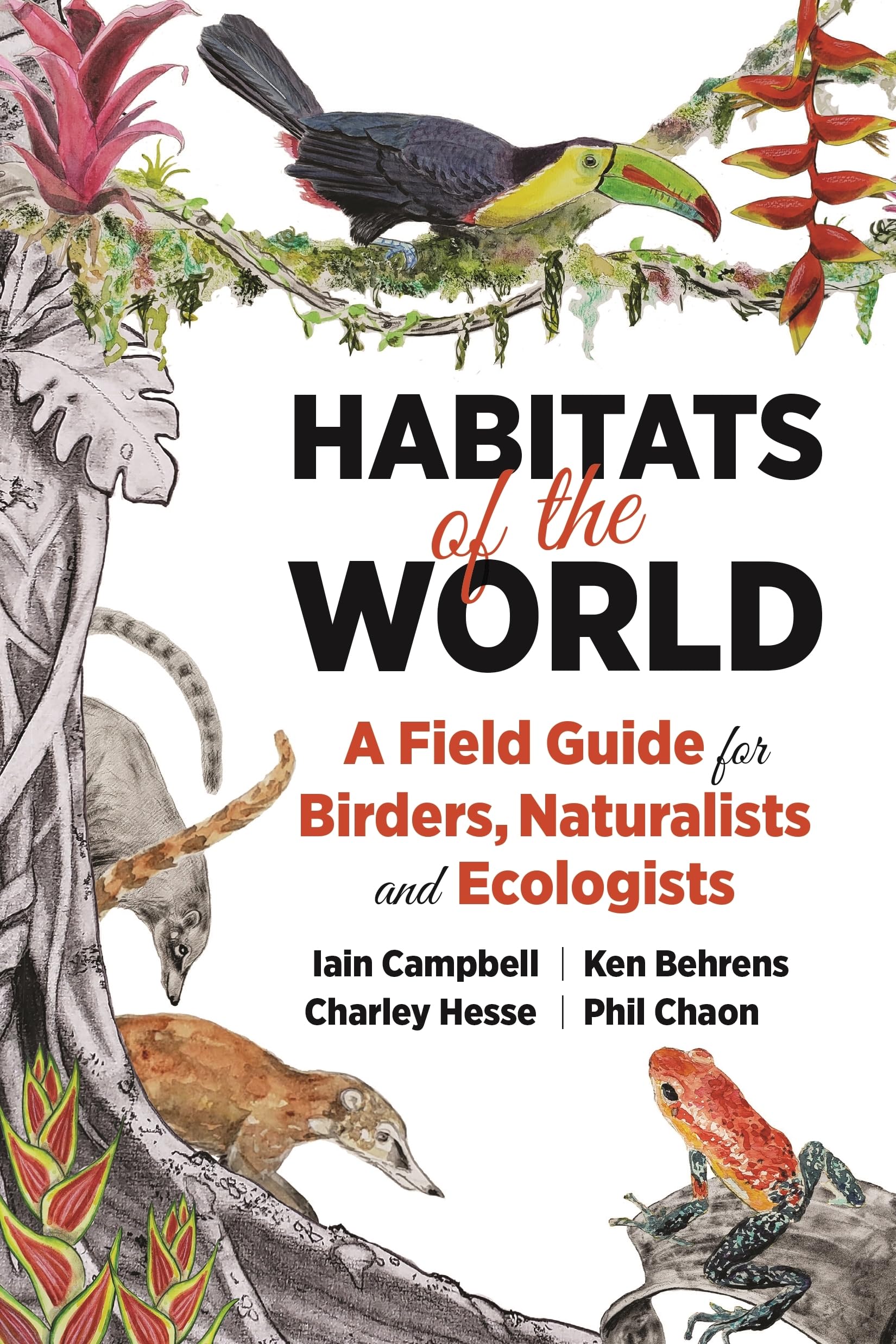
Habitats of the World: A Field Guide for Birders, Naturalists, and Ecologists


M**L
helps you target plant/animal species of interest; great for birders
This is the best book of its type in existence! (But to my knowledge it is the only one). Why should you consider it? This group of authors have devoted their lives (or are lucky to be employed for) the pursuit of finding birds for people like me, a bird-watcher (birder). They are elite bird guides and have birded everywhere. Sometimes it seems like they can magically find a bird in an environment otherwise devoid of birds or bird diversity. Birders know that any location contains birds that are common and birds that are rare. How do you decide whether to put your binoculars on a bird when there is little chance of finding something new? How do we know if we might see an unusual bird/mammal? Hmmm…There are field guides that give maps of bird distribution. Generally these are “big-picture” maps of low resolution with questionable borders. How do you determine (from the map) that you are in the Arizona San Francisco mountains at 7600 feet or the Sonoran Desert only 20 miles away? Well you can look around and see Ponderosa Pines in one and Saguaro Cacti in the other. But what if you are in the unfamiliar areas of the world where Paramo and the Elfin/Stunted Cloud Forest abut in Ecuador? There is obviously a difference but what species utilize these differences? This book helps you both identify the habitat and gives you an idea of which species utilize them. It takes the magic out of bird finding (in addition to helping you determine other aspects of these ecosystems, particularly the biota, which are the prime habitat discriminators).The book is available both as a beautifully (Italian) printed soft-cover cloth-bound 3 lb book (available here) or the much lighter digital version (I got mine on Apple Books). The table of contents is organized by zoogeographical region and within these by color-coded habitat types. These color-coded habitats are used in the section maps of the zoogeographical areas (throughout the book) and a world map shortly after the table of contents. These color-coded habitats are further subdivided by the locations where they are found and then finally into the habitats that are distinctive either due to their appearance or the species they hold.Finally the book is sprinkled with “sidebars” that add interest, context and detail to the habitat descriptions (such as “Why there are no volcanos in the Himalayas” and “Why there are clouds in the cloud forest”). Added to all of the above this book is richly illustrated with maps, descriptive graphs, and photos (of the habitats and the habitat-dwellers). The photos are superlative both in capturing the content and rendering it well in printing.So, if you are planning a trip somewhere you’ve never been you can look up the habitats that you will be visiting. This book will inform you of the distinctive characteristics (including an innovative graph of the temporal relationship of temperatures and precipitation), the indictor plants found there (well documented in the appendix by common and Latin names), and what birds and mammals you might expect to find there.But if you decide not to buy this it will be great for me. By owning this book before a trip I will become familiar with these ecosystems and can predict what species inhabit them. I will appear more aware and seem to have have superior birding skills (an ego booster for sure). But really it is just a better understanding of the natural world we live in. Isn’t that the point of getting outside? Try it.
P**A
Great book but one could change a few things
Very informative and beautiful work. However, as I am not a scientist ( and not a native English speaker ) I find some words a bit too scientific for me. It would be nice to have a glossary of the more special words. And one thing I find irritating is dealing with mm almost all the time. Why write that the wettest forests of Mt Camerroon and Mt Bioko can receive 400 in. or 33 feet ( 10,000 mm ) of rain in a year? 10 m is much easier to relate to. For smaller numbers cm would be easier. But these are just minor issues. I am really enjoying the book.
L**N
Every naturalist needs this book!
This book is brilliant and is an instant must-have for your library, as it will go hand in hand with your collection of field guides. The field guides will often tell you in what habitat a bird is found, but they do not say where these habitats are. Knowing where and how to find the habitat is key. This is the great strength of Habitats of the World, and is powerful information when seeking wildlife. Rather than trying to find a bird species based on locations, with the help of this book, the thought process now flips to looking for the habitat. Once in a specific habitat, you can refer to a list of expected species to find within that habitat. Not only does it clarify the global patterns of habitat types, it helps you understand your local habitat better too.I especially enjoy the Introduction section of the book, where the authors discuss the genesis of the book, the zoogeographic regions of the planet, climate descriptions and graphs for each habitat, and the global habitat key. The text is very well written, blending scientific information with easy to understand explanations. It flows smoothly and I have learned a lot from every page. I have a degree in Ecology, and I feel like I understand the big picture of our world way better after reading this book. Thanks for creating it. Well done!
R**
A Must for All Naturalists
I never write reviews but this book deserves it. I follow some of the authors on various forms of social media because they are tour guides for a nature/birding tour company, and share amazing photos from allover the world. It is also how I found out about the book and their photography prowess continues to be shown throughout the book.To me this book reminds me of The Neotropical Companion an incredible and well known volume on the natural history of the Neotropics by John Kricher. Habitats of the World goes beyond the neotropics, of course, something I had been looking for in a book since reading the Neotropical Companion.As far as I am aware it is the only book that concisely and accurately describes the major and unique habitats from around the world. Perhaps my favorite part of the book is the silhouetted illustrations giving a sense of scale of the habitat with a human figure while also showing what it looks like. The descriptions are wonderfully detailed and often include interesting tidbits on how these habitats formed. If I had one thing to complain about is I wish they would show/point out more of the major plants in the photos. To their credit they do give scientific names for every plant named in the descriptions so it is really only one easy google search a way to find out what they look like. Also they had to save space as this is still very much a book that can be taken into the field which I greatly appreciate! Overall a fantastic work, and I recommend this to any naturalist!
Trustpilot
1 month ago
3 weeks ago