
DOWNLOAD THE APP


Customer Services
Copyright © 2025 Desertcart Holdings Limited
DOWNLOAD THE APP
Full description not available
C**
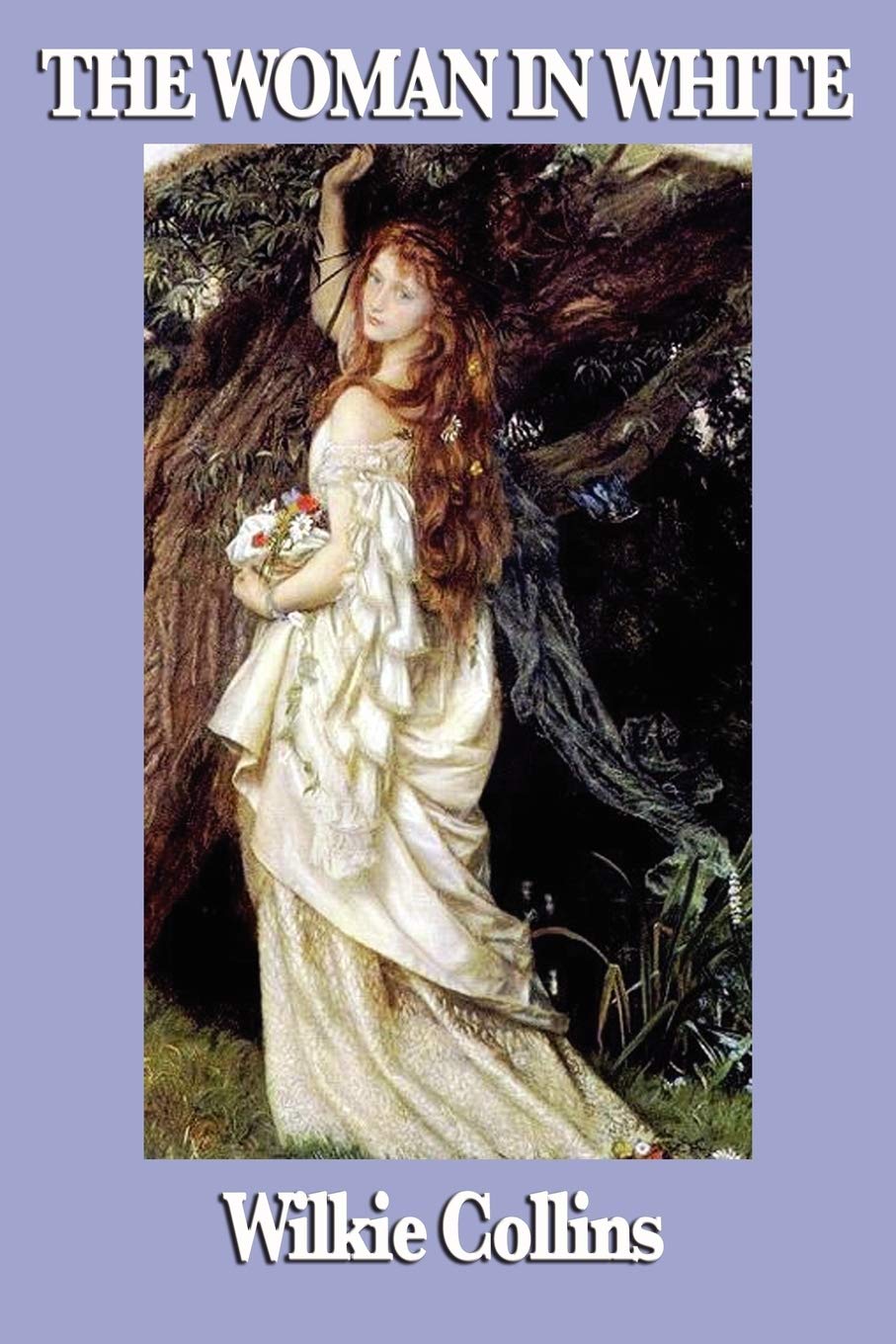
Same story, different cover.
I didn’t get the cover that was advertised but I got the same story lol. I like this cover tho so 5 stars still 💀
R**O
Dickens Lite
All the contrived intrigue and interesting characters of a minor Dickens work, with little of the humor, pacing, or satisfaction, it is still a wonderful insight to the contrived plotting of Victorian literature. Fun to read for a Dickens fan and anyone interested in the era.
P**N
The Woman in White by Wilkie Collins: A review
This is another of those books that I've long intended to read but somehow never got around to. My resolution for 2017 is to rectify some of that neglect.The Woman in White is in the grand tradition of the densely plotted Victorian novel. It is, in fact, downright Dickensian or Jamesian in its wordiness. Modern readers who have not been exposed to the circuitous descriptions and verbiage of such writers may falter over its 600+ pages. But lovers of the language may find themselves drooling, as I did, over its skillful use.The story starts with a young drawing master, Walter Hartwright, encountering a mysterious woman dressed all in white as he walks along a moonlit London road. The woman is in distress and asks for directions which Walter gives her and sends her on her way. Soon after, he hears a policeman asking if anyone has seen the woman, who, he says, has escaped from an asylum. Walter keeps quiet and the policeman's search is unsuccessful.Walter has been engaged to teach drawing to two young ladies at Limmeridge House in Cumberland; Laura Fairlie, fair, gentle, pretty, guileless orphan whose guardian is her uncle, the hypochondriac/narcissist Frederick Fairlie, and Marian Halcombe, Laura's elder half-sister and companion, dark, strong-willed, intelligent and resourceful.Over the next few months, Walter and Laura fall in love, but Laura has already been promised (by her deceased father) to Sir Percival Glyde, Baronet, and she is determined to honor that commitment. Marian, understanding the impossible situation, advises Walter to leave the country to get over Laura. With the help of a friend, he secures a position with an archaeological expedition headed to South America.Laura, much to her sorrow, marries Glyde. It is clear from the beginning that Glyde is a villain, although it isn't certain at first just what his villainy entails.When the honeymooners return from a trip to Italy, they have Count and Countess Fosco in tow. Count Fosco is Glyde's closest friend and his wife - surprise, surprise! - is Laura's aunt, who was estranged from the family over the matter of a bequest.It soon becomes clear that both Glyde and Fosco are "embarrassed" financially and their only hope of redeeming themselves is to call on Laura for a loan from her inheritance. Her husband attempts to pressure her into signing papers that would authorize the funds, but, with Marian supporting her, she refuses.How can the nefarious duo get the funds they need? Well, if Laura were dead...Collins' complicated plot over the next few hundred pages explicates very clearly the inequality in law of women and men at that time. A woman was under the control of her father or her guardian until she married and, once married, she was under the thumb of her husband. A married woman could hardly do anything without her husband's consent. She had little recourse in the courts of the time.Willie Collins was trained in the law and he understood this very well. He created a strong and empathetic female character in Marian Halcombe and yet, resourceful as she was, she had little hope of combating the villainous Glyde and Fosco without the manly assistance of Walter Hartwright. Perhaps I was particularly sensitive to this theme, having just completed reading The Bell Jar, but it seemed to me that this book could be read as a 19th century feminist treatise.Collins effectively uses the multiple narrator strategy of telling his story by offering witness statements from all of the principal characters, much as would happen in a court of law. In spite of its length, its complicated plot and its 19th century verbiage, this is a real page-turner of a book. I found it hard to put down and I could not wait to see where the twists and turns of the plot would take me next.As an early example of the mystery novel, with Walter Hartwright standing in as the everyman detective, this sets a high bar for later writers of such novels to reach. Indeed, this has been included on some lists of the greatest novels of all time, and I would not argue with that assessment.
B**B
Sm print
Small print hard to read
A**D
A rich, absorbing mystery from a true master
The Woman in White opens with a mysterious encounter between artist Walter Hartright and an unnamed woman dressed entirely in white. Hartright runs into her late at night along the dark road from Hampstead Heath to London. The woman is clearly frightened, fleeing some unseen pursuer. She asks Hartright for directions, which he gives. He doesn’t know who she is, but his instinct tells him to help her.In her disconcerted ramblings, she tells him she had spent a brief portion of her youth in the country house he is planning to visit, and she warns him of an evil man he will soon encounter. After helping her on her way, Hartright eavesdrops on her pursuers: wardens from the insane asylum from which she escaped.Although he knows she’s distraught and probably not in her right mind, he can’t entirely dismiss what she’s told him because she has correctly named the inhabitants of the distant house to which he is about to travel.How’s that for a setup?The great thing about Wilkie Collins at his best is that he sets the highest expectations in the reader and then exceeds them on every level. Here, as in The Moonstone, he’s at his best. The breadth, intricacy, and coherence of his plots are extraordinary, the quality of his prose is superb, his characters are vivid and alive, and the worlds he creates are richly textured and utterly absorbing.As in The Moonstone, this story is told from multiple perspectives. In fact, it may be the first novel to be told by multiple narrators. The primary narrator, Hartright, makes a disclaimer up front, saying that the story will not be told in the usual novelistic form, but more in the form of a court case, in which each of the key players testifies in their own words about what they know.Collins shows an extraordinary range of styles as each narrator has a distinctive voice and perspective. Two of the least likable characters, the cunning and evil Count Fosco and the whiny, selfish Mr. Fairlie, offer up the funniest narratives in the book. Before we get to hear their sides of the story, we have seen them both act heartlessly, inflicting cruelty in their various ways on poor, virtuous Laura Fairlie.If these two were given a chapter to narrate in a contemporary mystery, the author would probably have them tell their story in nasty tones and malevolent terms to reinforce the reader’s hatred of them. But what, at bottom, allows one person to treat another heartlessly? In many cases, it’s a sense of arrogance, a sense that one is so far above the person they mistreat that the victim doesn’t matter and that all consideration is due to the perpetrator.This kind of arrogance is ripe for satire, and when Count Fosco and Mr. Fairlie do finally get their turns to narrate, we see the story through their hilariously distorted perspectives. The way they see the world around them is disturbing, to be sure, but they’re so self-absorbed and so colossally egotistical you can’t help but laugh. These chapters are some of the funniest I’ve ever read.The hardest thing about reading Collins is that the next book you read after his feels pale and thin. He truly was a master, and you can see in his works the pattern upon which almost all subsequent mystery and thriller writers built their work.I won’t try to summarize this one. I’ll just say that if you’re looking for a deeply absorbing read in which to immerse yourself, put this on your list.
Trustpilot
1 month ago
3 weeks ago