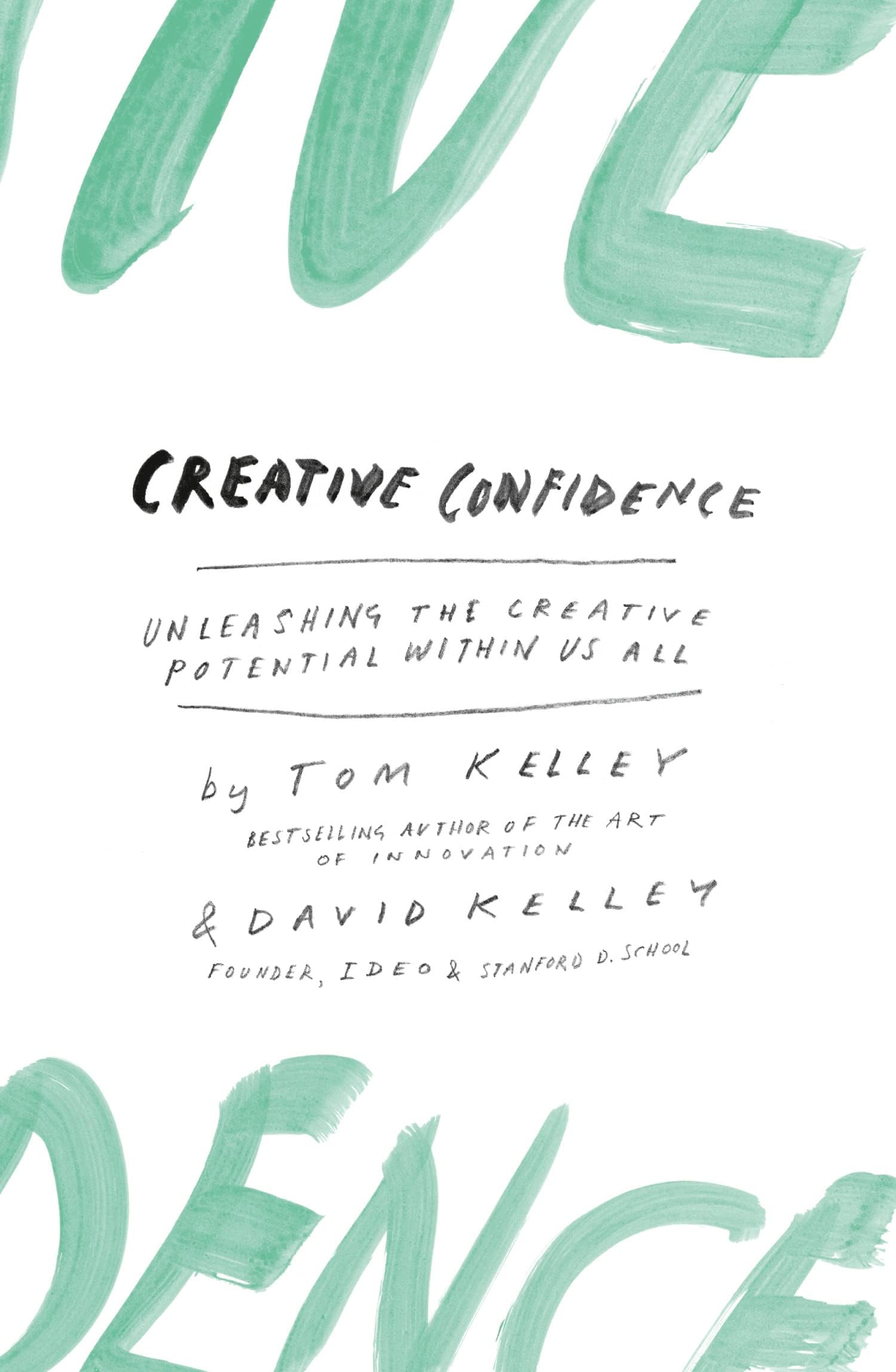
Creative Confidence
Product ID: 338003831
Creative Confidence [David Kelley] on desertcart.com. *FREE* shipping on qualifying offers. Creative Confidence Review: The Power of Creativity is in All of Us - David Kelley, who co-wrote 'Creative Confidence' with his brother Tom, had worked with, and was a close friend of the late Steve Jobs. In the book, we learn that, "Steve had a deep sense of creative confidence. He believed -- he knew -- that you can achieve audacious goals if you have the courage and perseverance to pursue them." The intention of the book is to dispel the notion that only some of us were born with creativity in our genes, when in fact, we all have the ability to be creative, despite what we might have been told and taught over the years. We can all achieve "audacious goals," just like Steve did, or at least to believe in our own ability to change our world in some way. It's explained that we came into the world with creativity and fearlessness, but as time passes we encounter others who shake our confidence by saying we're not creative, including schools where we learn to think too constructively -- that there can only be one right answer. So, we unlearn creativity and lose our confidence, fearful of what others might think. Sir Ken Robinson's TED Talk, "Do Schools Kill Creativity" is mentioned as a must-see and as an example of how traditional education has, well, killed creativity. The book inspires us with examples of people who were overly analytical: accountants, scientists and lawyers who didn't have a bias toward action. Even companies that suffered from inertia; bogged down with data and decisions by committee. But by unleashing their creativity, they have learned to conjure up and consider a myriad of solutions to problems, no matter how absurd, and to learn by doing. There's also an emphasis on empathy and human-centered design. How important it is to observe customers and end-users when designing solutions and products instead of burying heads into spreadsheets and dreaming up things we think will work. The authors share the experiences of many students who've attended their d.school at Stanford University. It's a fast-paced, team-based learning environment where students, young and old, and from diverse backgrounds, are asked to find human-centered solutions. A popular project is figuring out how the experience of a daily train commute from San Francisco to Palo Alto can be improved for passengers, from waiting on the platform to disembarking at their destination. The book not only focuses on inspiring individuals to build their creative confidence, but also delves into the importance of working in teams and provides case studies where entire companies have embraced creative confidence to improve the experience of workers and customers. Written in a friendly conversational tone and filled with real human stories and experiences, 'Creative Confidence' was a pleasure to read, and having finished it, I've realized I've highlighted so many passages to read again. Review: A Paradigm and Perspective Changing Book (but only if you let it) - Whenever IDEO publishes a book or some other sort of media, it is important to take attention. IDEO is one of the companies spearheading the revolution to change traditional business models by focusing on human-centered design. IDEO has been around since 1991 but has been thinking this way since its inception and thus is way ahead of the curve. Their approach to human-centered design has shown multiple times to be one of the surefire ways to guarantee customer loyalty and longevity. In Creative Confidence David and Tom show ways for both consumer and creator to keep their humanity in an otherwise leviathan capitalistic system. The end result is a better product and a more enjoyable time creating the product. The Kelley brothers start off the book offering you a dose of confidence right off the bat by saying "everyone is creative". Yes, fair enough, right? People designated as "creatives" don't have a monopoly on creativity and creativity isn't genetically inbred. It can be learned. Yes, some people will have a greater inclination towards creative thought processes and ideas than others but that does not defeat the fact that creativity can still be exercised and strengthened like a muscle. The book gives a renewed sense of optimism to anyone wishing that they could come up with alternative solutions to problems rather than just copy/pasting from preexisting ideas. Most creative and innovative people fail quite a bit in their lives, its just that their mammoth successes tend to otherwise overshadow many months/years of frustration in the studio/lab. Great book, I definitely recommend it to anyone wishing to approach their work in a new, more optimistic light and mindset. Refreshing and eye-opening book.
| Best Sellers Rank | #180,539 in Books ( See Top 100 in Books ) #414 in Biographies of Business & Industrial Professionals |
| Customer Reviews | 4.5 out of 5 stars 3,196 Reviews |
N**S
The Power of Creativity is in All of Us
David Kelley, who co-wrote 'Creative Confidence' with his brother Tom, had worked with, and was a close friend of the late Steve Jobs. In the book, we learn that, "Steve had a deep sense of creative confidence. He believed -- he knew -- that you can achieve audacious goals if you have the courage and perseverance to pursue them." The intention of the book is to dispel the notion that only some of us were born with creativity in our genes, when in fact, we all have the ability to be creative, despite what we might have been told and taught over the years. We can all achieve "audacious goals," just like Steve did, or at least to believe in our own ability to change our world in some way. It's explained that we came into the world with creativity and fearlessness, but as time passes we encounter others who shake our confidence by saying we're not creative, including schools where we learn to think too constructively -- that there can only be one right answer. So, we unlearn creativity and lose our confidence, fearful of what others might think. Sir Ken Robinson's TED Talk, "Do Schools Kill Creativity" is mentioned as a must-see and as an example of how traditional education has, well, killed creativity. The book inspires us with examples of people who were overly analytical: accountants, scientists and lawyers who didn't have a bias toward action. Even companies that suffered from inertia; bogged down with data and decisions by committee. But by unleashing their creativity, they have learned to conjure up and consider a myriad of solutions to problems, no matter how absurd, and to learn by doing. There's also an emphasis on empathy and human-centered design. How important it is to observe customers and end-users when designing solutions and products instead of burying heads into spreadsheets and dreaming up things we think will work. The authors share the experiences of many students who've attended their d.school at Stanford University. It's a fast-paced, team-based learning environment where students, young and old, and from diverse backgrounds, are asked to find human-centered solutions. A popular project is figuring out how the experience of a daily train commute from San Francisco to Palo Alto can be improved for passengers, from waiting on the platform to disembarking at their destination. The book not only focuses on inspiring individuals to build their creative confidence, but also delves into the importance of working in teams and provides case studies where entire companies have embraced creative confidence to improve the experience of workers and customers. Written in a friendly conversational tone and filled with real human stories and experiences, 'Creative Confidence' was a pleasure to read, and having finished it, I've realized I've highlighted so many passages to read again.
S**P
A Paradigm and Perspective Changing Book (but only if you let it)
Whenever IDEO publishes a book or some other sort of media, it is important to take attention. IDEO is one of the companies spearheading the revolution to change traditional business models by focusing on human-centered design. IDEO has been around since 1991 but has been thinking this way since its inception and thus is way ahead of the curve. Their approach to human-centered design has shown multiple times to be one of the surefire ways to guarantee customer loyalty and longevity. In Creative Confidence David and Tom show ways for both consumer and creator to keep their humanity in an otherwise leviathan capitalistic system. The end result is a better product and a more enjoyable time creating the product. The Kelley brothers start off the book offering you a dose of confidence right off the bat by saying "everyone is creative". Yes, fair enough, right? People designated as "creatives" don't have a monopoly on creativity and creativity isn't genetically inbred. It can be learned. Yes, some people will have a greater inclination towards creative thought processes and ideas than others but that does not defeat the fact that creativity can still be exercised and strengthened like a muscle. The book gives a renewed sense of optimism to anyone wishing that they could come up with alternative solutions to problems rather than just copy/pasting from preexisting ideas. Most creative and innovative people fail quite a bit in their lives, its just that their mammoth successes tend to otherwise overshadow many months/years of frustration in the studio/lab. Great book, I definitely recommend it to anyone wishing to approach their work in a new, more optimistic light and mindset. Refreshing and eye-opening book.
W**S
Worth Your Time.
Creative Confidence by Tom Kelly & David Kelly Score: 6.5/10 Amount of Content 5/10 Value of Content (Usefulness) 7/10 Originality of Content 7/10 Relevance of Content (To a Product Designer) 8/10 Entertainment Level 6/10 Length of Read 6/10 Inspiration 7/10 I’m sitting at gate F10 at the Saint Paul Minneapolis International airport en route to the Los Angeles International Airport. I just finished reading Creative Confidence, by David and Tom Kelly while on my last flight and figured, I should write a book review. The industrial designers out there are likely familiar with David and Tom Kelly, who are known for starting the near-legendary design firm IDEO as well as the Stanford D.School. David and Tom Kelly are brothers as well as respected authorities and advocates of design and innovation. Creative Confidence is all about exposing the creative potential within all of us. It leaves behind conventional ideas like ‘only artists are creative’ and ‘creativity isn’t for corporate settings’. This book first establishes why and how we all have creativity within and then explains what can happen when that creativity is harnessed and utilized. The authors then explain how to tap into our creativity and share exercises to train our creative muscles. This book is not written for or to designers, rather to anyone who is employed and wishes to solve meaningful problems with break-through discoveries as a result of creative confidence. Amount of Content At 256 pages, this book is neither short nor long. It’s a standard paperback book (roughly 8.5” tall and 5.5” wide). The book is broken into 8 chapters, each of which dives into either a different aspect of creative confidence or a different setting or implementation of creative confidence. There are a few illustrations and some artwork on new chapter pages, but the book is primarily all written copy. I scored it 5/10 because as mentioned before, it didn’t seem terribly full of information, but it certainly wasn’t sparse. Value of Content It’s hard to judge a book’s value without actually trying to implement all of the authors’ suggestions and measuring the outcomes. I will say that I perceive the value of this book to be pretty high. This is why I scored it a 7/10. This books is more about big ideas and concepts and the large impacts these ideas have on those who implement them. For example, there are many instances when talented but unfulfilled people found tremendous success and purpose after making drastic career changes thanks to their experiences with finding their creative confidence. There is evidence to support that when a creative and innovative, collaborative approach to problem-solving is set into motion, great things happen in businesses both large and small. David and Tom give plenty of examples in which this happened. I believe the value to be there but it’s entirely based upon the situation of the individual and how he or she chooses to implement the ideas throughout this book. For those who are familiar with many concepts in this book, the anecdotes and examples are great reminders of what happens when we (designers) practice what we preach. Originality of Content Creative Confidence earns a 7/10 for originality. I haven’t read many books that highlight the importance of creative confidence. Furthermore, the success stories highlighted throughout are pretty monumental. To read about real-world results of what IDEO founders believe and teach is a unique piece of insight many designers hunger for. And to those not labeled as a creative professional, I think the ideas in Creative Confidence are big, yet simple enough to grasp to be impactful. Relevance of Content This book scores an 8/10 for relevance, specifically to a product designer. There were plenty of principals I was previously familiar with thanks to my formal industrial design education. Since I was fortunate enough to attend a very successful art and design college, I’d learned about the methods highlighted by David and Tom’s book. Since I’ve worked as a professional for the past 4 years since then, I’ve noticed how easy it is to shrug off the habits and skills learned in school while on the job. This book serves as a good reminder and brought me back to thinking about innovation and creativity on a rudimentary level. Entertainment Unfortunately, this is where Creative Confidence scored the lowest for me. A 6/10 isn’t bad. It’s not a ‘D’ like a 60% is in school. In this case, it means I felt neutral about it. I wasn’t terribly entertained, but I wasn’t bored with it either. The strongest part of the book was the introduction when David’s experience with cancer brought a sobering sense of clarity to the Kelly brothers’ mission and purpose, which in part, fueled the writing of this book. Length of Read Creative Confidence gets a 6/10 for length. The longer it takes me to read a book, the higher it scores in this category. This book is a pretty quick read. I did however put it down for a couple of weeks. I blame the break on it not being as entertaining as it could have been. However, when I did pick it back up, I read large chunks of it quite quickly. I estimate my total time reading this book to be around 6 or 7 hours maximum. Inspiration 7/10 for inspiration. This is due to the concrete and simple stories supplied by the authors that prove the power of unleashing and harnessing creative confidence. It’s not an abstract phenomena that needs to be ‘willed into existence’, but a tool that’s both fun and challenging to use. I felt inspired to examine and write about numerous ideas as they struck me during my reading of Creative Confidence. Final Thoughts Creative Confidence isn’t for designers, but everyone who wants to learn to think differently and gain an edge over their old way of problem solving or their competition if they’re in a business setting. The authors are no-nonsense creatives who understand the psychology of collaboration and groups in a professional environment and make the benefits of having creative confidence clear. A student in any design discipline or young professional will likely feel inspired to challenge the status quo and workplace conventions after reading this book. Anyone in a managerial role will likely find a nugget or two of useful approaches to the challenges they regularly face. The Verdict Buy and read it.
B**H
Fantastic Book
This was a great, quick read. It was a breath of fresh air to know there are others who think outside the box and aren’t afraid to improve their lives and the lives of others as they go ! It takes courage to look at things differently and be willing to make a change for the good of yourself and those around you. Great practical steps and over all calls to action.
J**Y
A new challenge for those who've ideas have long been silenced.
This book is excellently written and is well-evidenced. I appreciated the encouragement and the challenge. We all have inborn creativity that comes from God! We just need confidence to go with it. Or rather, courage.
T**J
It may be great for bosses
I hadn't heard much about this book before I read it, but it sounded interesting and I have been searching for some advice about finding my creativity. I didn't realize this would only offer advice for people already in leadership positions. It may be great for bosses, managers and CEO's, but it doesn't offer much for the average Joe. It was an interesting read, but didn't fit what I was looking for.
A**O
Breakthrough book for people who think they are not creative types!
This book promises a breakthrough for those who think they are not creative types. And this breakthrough on the possibility itself through 'guided mastery', and the detailed steps & examples offered by Kelley brothers, who have selflessly shared to the public all the knowledge & methods employed in IDEO, energizes you with youthful energy. The books reveals that chidren are inherently creative & the fundamentals for learning creativity is overcoming fear of judgement, not comparing oneself with others etc.. The numerous advantages of multiple, quick & cheap prototyping is explained with practical examples. The Kelley brothers reveal their own path to knowledge & inspiration about Creative confidence by referring to leading experts from fields as diverse as Psychology, Education, Technology, Medical, Engineering, Marketing etc.. A must read for persons teaching & influencing creativity and for individuals who think they are not creative types!
A**R
Good template for fostering creativity
I was skeptical. Very skeptical. But the authors Tom and David Kelley developed a sound process for creating a creative team, whether private or public. I came to this work from a higher education perspective. Creative Confidence should be the template for organizational creativity. I was particularly impressed with how the authors dealt with fear. That is what holds so many people back. Fear coupled with a lack of confidence (and a supportive organization) are the killers of creativity. Wonderful book for anyone in any organization.
Trustpilot
5 days ago
1 month ago