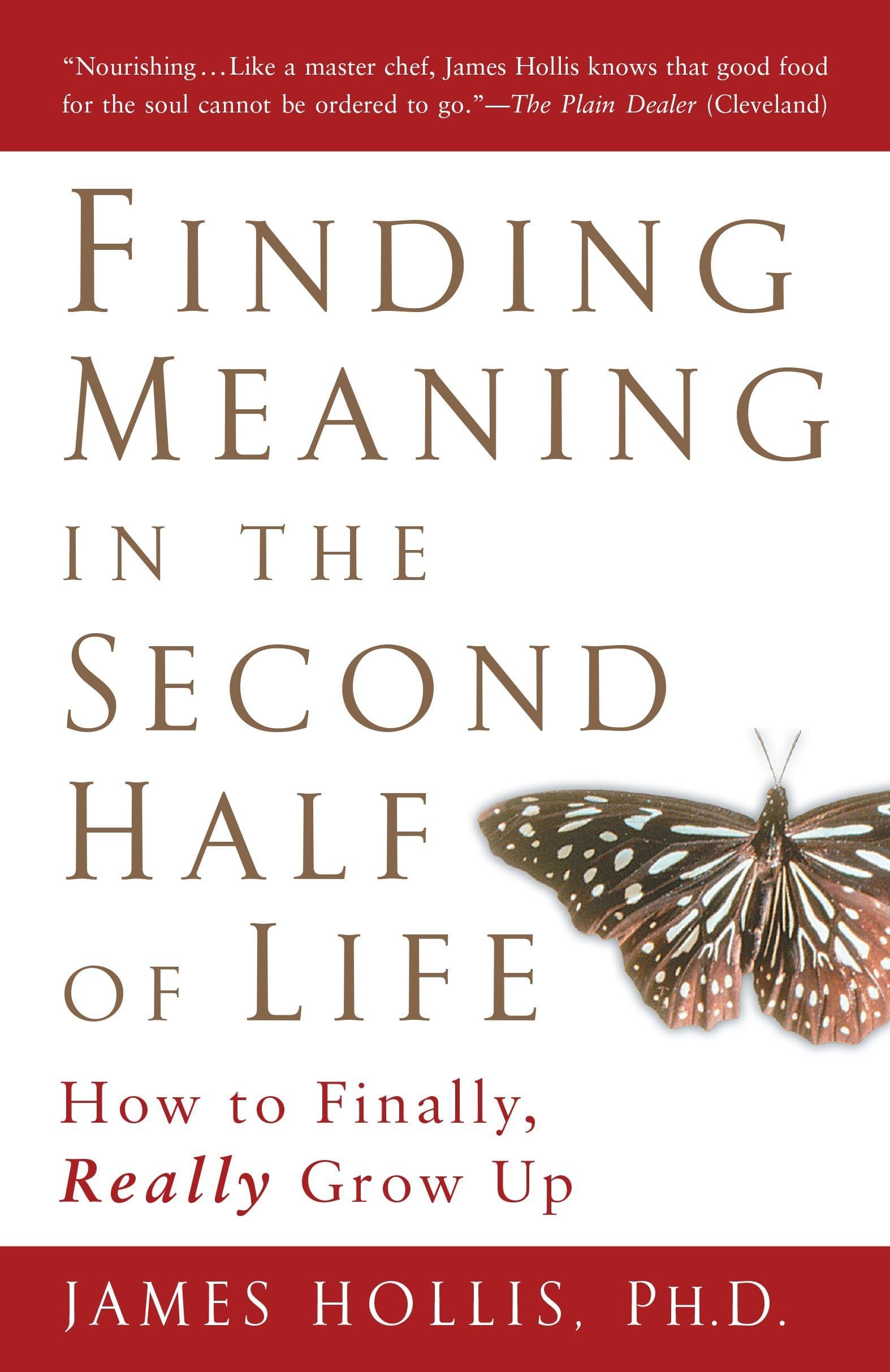
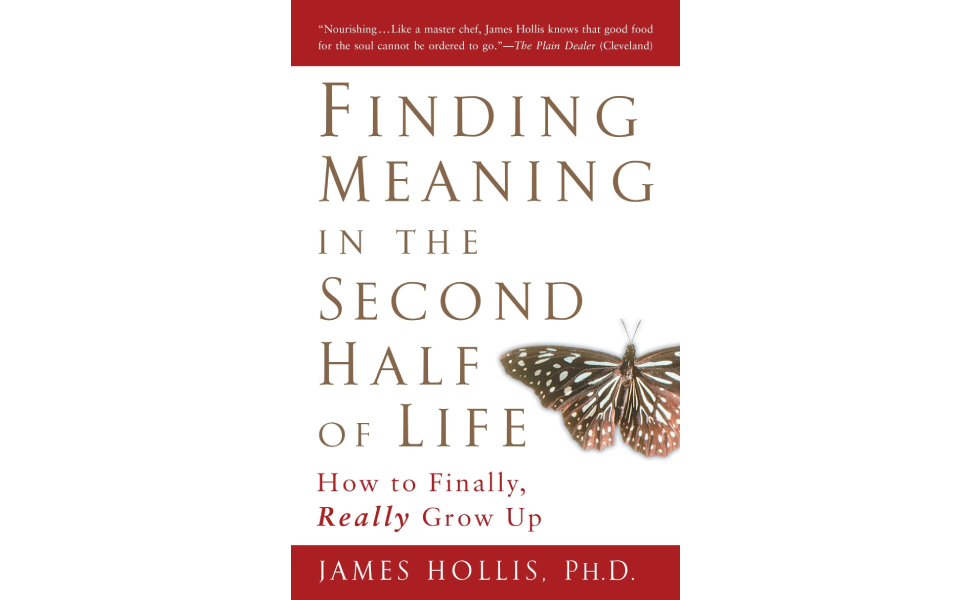
Avery Publishing Group Finding Meaning in the Second Half of Life: How to Finally Really Grow Up
Product ID: 276732973
Desertcart purchases this item on your behalf and handles shipping, customs, and support to Denmark.
Buy Avery Publishing Group Finding Meaning in the Second Half of Life: How to Finally Really Grow Up by Hollis, James online on desertcart.ae at best prices. ✓ Fast and free shipping ✓ free returns ✓ cash on delivery available on eligible purchase. Review: This is an excellent book! You can read the other reviews to see why. I'm going to discuss two criticisms of this 5 star book. If you are looking for a proof that you have an unconscious that is also equivalent to a soul which is linked to God, you won't find it. I'm not sure that you will find that in any book. Evolution theory stipulates that evolution has no goal, no plan, so humans are not destined to raise their consciousness. Synchronicity (S) is an opposite Jungian concept. There is a goal called individuation which is helped by S's. Jung has developed more than one notion of S, and there are several books which attempt to explain it. Hollis mentions S, briefly on page 253, "We have mastered the language of the outer world through physics and chemistry, but the principle of synchronicity acknowledges that there is an inner world of causality as well." The word "acausal" means _not_ having a chain of cause and effect events unfolding in physical reality; it's the opposite of causal. Here are some of Jung's definitions which I don't see as including the Hollis interpretation which is tantamount to describing a miracle manifested by the will of God (constellated through the archetypes) is a causal agency and/or process. I think that "meaning" is not considered by most writers to be causally ordered. Here are various Jung descriptions, "Synchronicity: An Acausal Connecting Principle; "temporally coincident occurrences of acausal events." Jung variously describes an "acausal connecting (togetherness) principle", "meaningful coincidence" and "acausal parallelism" So it seems to me the Hollis description employs a peculiar emphasis. A skeptical agnostic will not find resolution or solace in Jungian theory as being true to reality. But the tools seem to work, at least so far. I became conscious that I had projected my anima on a real woman. Depth psychology recommends approaches to this dilemma. One of the methods is active imagination, or entering into a dialog with my inner, archetypal anima. I had this dream in which I was notified that two missing emails (I'm a retired computer tech) had been discovered. I remembered this dream when I awoke because I don't have any missing emails. Later on I was browsing the Yahoo news and read this article that Amelia Earhart and her pilot -- they think they found remains of where they crashed on some island in the Pacific. So then I read about Amelia, and she is the ideal of what I think my anima should be (I should be so lucky for such a real woman). I thought this event, my search for inner meaning through contact with my anima, and this outer event, discovery of news about Amelia Earhart, who matches what I would like my anima to be like, I thought this could be a coincidence touched by synchronicity. Hollis does a great job of blending in Jungian theory and his actual therapy accounts, which add up to a compelling and intriguing call to explore the Mystery of life. Perhaps the Jungian techniques actually do work and are testable in your own experience. EDIT: I have recalled that the woman I projected my anima upon did have a problem with some missing emails. Review: This is the sort of book you have to read properly - no skimming. The author has an expansive writing style, very readable, but some reviewers have said repetitive. I would disagree with that - The concepts he talks about are complex and important. After reading about 50 pages I came to the conclusion that if he had just explained things once, I wouldn't have fully understood their depth or, if I'm being honest with myself, my ego wouldn't have accepted that I think in the way he is suggesting. The repetition slowly breaks down the barriers. I started my own journey on the "second half of life" about 2 years ago so, from what I've gone through in that time, I can identify with everything he says. The book makes sense, is relevant and, most importantly, really does talk about the things you need to know if you are entering your midlife crisis. Definitely worth buying

| Best Sellers Rank | #19,236 in Books ( See Top 100 in Books ) #39 in Aging #188 in Self-Help for Happiness #737 in Psychology & Counseling |
| Customer reviews | 4.4 4.4 out of 5 stars (573) |
| Dimensions | 13.5 x 1.9 x 20.2 cm |
| Edition | Reprint |
| ISBN-10 | 1592402070 |
| ISBN-13 | 978-1592402076 |
| Item weight | 244 g |
| Language | English |
| Print length | 288 pages |
| Publication date | 16 March 2006 |
| Publisher | Avery |
| Reading age | 18 years and up |
C**N
This is an excellent book! You can read the other reviews to see why. I'm going to discuss two criticisms of this 5 star book. If you are looking for a proof that you have an unconscious that is also equivalent to a soul which is linked to God, you won't find it. I'm not sure that you will find that in any book. Evolution theory stipulates that evolution has no goal, no plan, so humans are not destined to raise their consciousness. Synchronicity (S) is an opposite Jungian concept. There is a goal called individuation which is helped by S's. Jung has developed more than one notion of S, and there are several books which attempt to explain it. Hollis mentions S, briefly on page 253, "We have mastered the language of the outer world through physics and chemistry, but the principle of synchronicity acknowledges that there is an inner world of causality as well." The word "acausal" means _not_ having a chain of cause and effect events unfolding in physical reality; it's the opposite of causal. Here are some of Jung's definitions which I don't see as including the Hollis interpretation which is tantamount to describing a miracle manifested by the will of God (constellated through the archetypes) is a causal agency and/or process. I think that "meaning" is not considered by most writers to be causally ordered. Here are various Jung descriptions, "Synchronicity: An Acausal Connecting Principle; "temporally coincident occurrences of acausal events." Jung variously describes an "acausal connecting (togetherness) principle", "meaningful coincidence" and "acausal parallelism" So it seems to me the Hollis description employs a peculiar emphasis. A skeptical agnostic will not find resolution or solace in Jungian theory as being true to reality. But the tools seem to work, at least so far. I became conscious that I had projected my anima on a real woman. Depth psychology recommends approaches to this dilemma. One of the methods is active imagination, or entering into a dialog with my inner, archetypal anima. I had this dream in which I was notified that two missing emails (I'm a retired computer tech) had been discovered. I remembered this dream when I awoke because I don't have any missing emails. Later on I was browsing the Yahoo news and read this article that Amelia Earhart and her pilot -- they think they found remains of where they crashed on some island in the Pacific. So then I read about Amelia, and she is the ideal of what I think my anima should be (I should be so lucky for such a real woman). I thought this event, my search for inner meaning through contact with my anima, and this outer event, discovery of news about Amelia Earhart, who matches what I would like my anima to be like, I thought this could be a coincidence touched by synchronicity. Hollis does a great job of blending in Jungian theory and his actual therapy accounts, which add up to a compelling and intriguing call to explore the Mystery of life. Perhaps the Jungian techniques actually do work and are testable in your own experience. EDIT: I have recalled that the woman I projected my anima upon did have a problem with some missing emails.
M**S
This is the sort of book you have to read properly - no skimming. The author has an expansive writing style, very readable, but some reviewers have said repetitive. I would disagree with that - The concepts he talks about are complex and important. After reading about 50 pages I came to the conclusion that if he had just explained things once, I wouldn't have fully understood their depth or, if I'm being honest with myself, my ego wouldn't have accepted that I think in the way he is suggesting. The repetition slowly breaks down the barriers. I started my own journey on the "second half of life" about 2 years ago so, from what I've gone through in that time, I can identify with everything he says. The book makes sense, is relevant and, most importantly, really does talk about the things you need to know if you are entering your midlife crisis. Definitely worth buying
U**E
Alles Problemlos, wie gewünscht. Danke
C**A
Questo libro mi ha coinvolto, appassionato, coccolato e consolato. A mesi di distanza dalla prima lettura, riecheggiano in me le sagge e tranquillizzanti parole dell'autore. Aiuta veramente a dare un senso profondo ad una fase della vita in cui non ci si sente più all'altezza di un mondo che corre veloce ed in cui tutto cambia senza riuscire a stare al passo. E' scritto con un linguaggio distensivo, semplice, ma mai banale.
A**R
Precise and crisp step by step guide for self examination and growth
Trustpilot
1 month ago
2 weeks ago