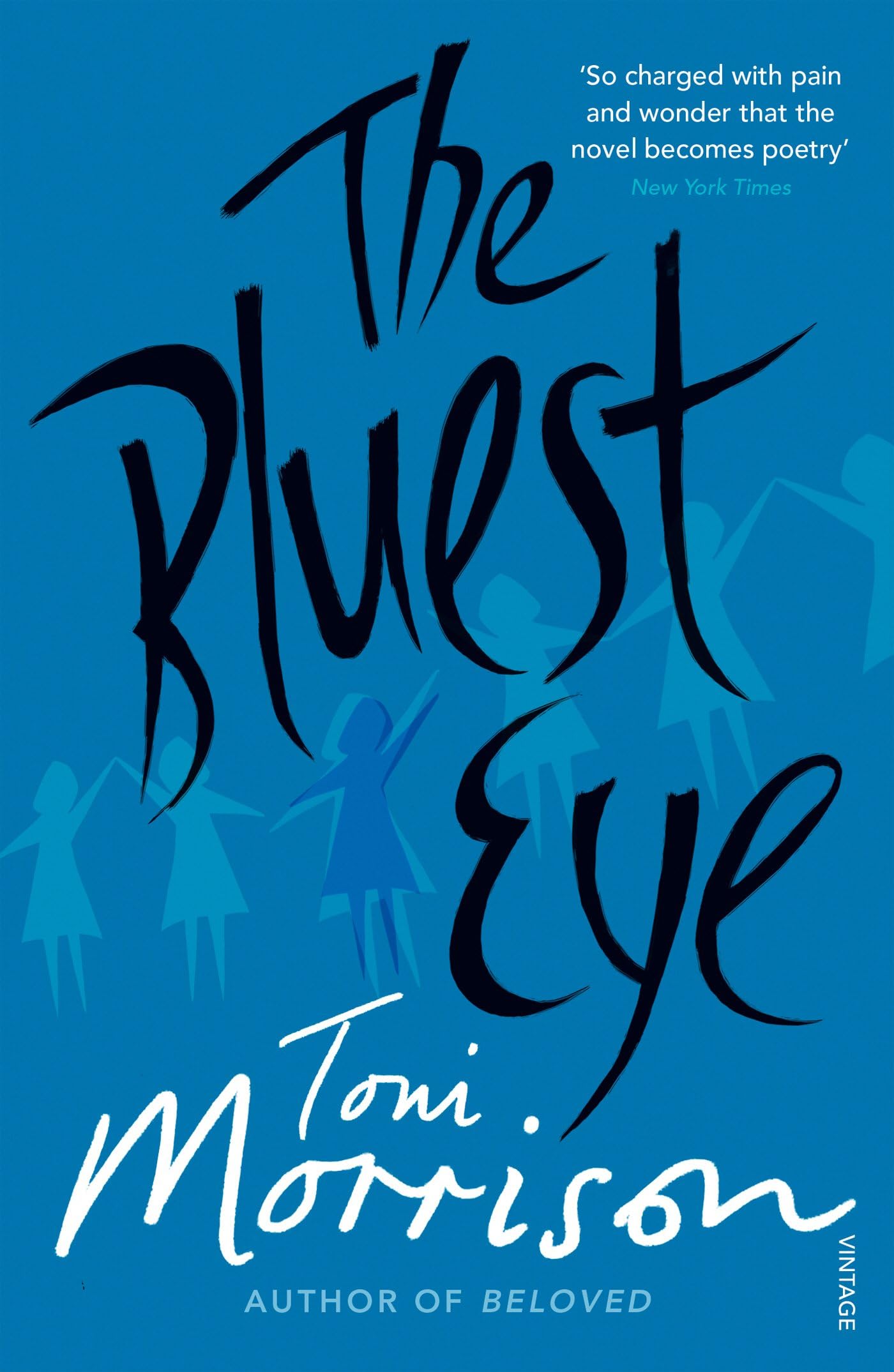


The Bluest Eye : Morrison, Toni: desertcart.ae: Books Review: dramático e pungente Review: Non semplice da apprezzare. Studiarlo per un esame di letteratura l’ha reso più fruibile e alla fine mi è piaciuto molto. Consigliato.
J**O
dramático e pungente
F**A
Non semplice da apprezzare. Studiarlo per un esame di letteratura l’ha reso più fruibile e alla fine mi è piaciuto molto. Consigliato.
S**R
Synopsis: Nine-year-old Claudia lives with her parents and her ten-year-old sister. In her nine-year-old narrative, she remembers Pecola who was placed with them by child care services. Pecola, who becomes a woman from a ten-year-old girl while she lives with them. Pecola's life with her family is shown next, where her brand of life makes her wish that she had the bluest eye thinking that it may have made her more loveable and more acceptable. But life is not that simple, as there are more hardships in the life of that little girl with unimaginable consequences. Review: This is my second Morrison and it doesn't get any easier. But in this case, the first book written by her, the difficult thing was to read it without it devastating me. There's this sense of impending doom even with the little bit of innocence that there is. This one starts with a description of a family, in the midst of war and depression in the 1940s, and its way of narration reminded me of this (which seems quite silly now) children's song in Hindi - Aao Milo Seelo Saalo. We used to clap animatedly, after pairing up with another person, while reciting the rhyme in a complete sing-song voice. Of course, this is a story narrated by a nine-year-old child which at once drips with innocence while carrying a vat of pain. The beginning itself will numb you because it's evident that this story is going to be full of agony. But it is equally interesting to note how such a complex, 'grown-up' story was narrated in part by such a young child. Especially when we often refuse to believe them to be worldly-wise and aware, to the extent of having banned the book then, in schools and libraries. "Jealousy we understood and thought natural – a desire to have what somebody else had; but envy was a strange, new feeling for us." What is beauty? Most of us, in one way or other, can be accused of defining beauty through unnatural standards. I share the blame for being harsh on not only others but myself. And however much we speak about inner beauty is the only thing that matters, some of us also have tried the rub-de-dub once in a while, for that glowing, fairer skin. An unnecessary legacy that resurfaces in almost all the dark-skinned Indian households every once in a while. Was that magical realism when Pecola wished for herself to disappear? How sad I felt for her, even before her major problems began. To be living with constantly feuding parents, to be wishing for death. Either for self or the others. And to feel such an inadequacy that she ended up wanting blue eyes, it was all so heart-breaking. "All were engrossed in early-night reminiscences about dreams, figures, premonitions. Their stuffed comfort was narcotic and had produced recollections and fabrications of hallucinations." Pecola's experience with the White Mr Yacobowski reminded me of Untouchable by Mulk Raj Anand. Quite the same premise, where shame at being less than deserving morphs into anger for the inequality that is there in the world. I was astounded at the way Morrison not only wrote about Pecola's inferiority complex of being an African-American in a White community but also inserted internalised racism in the form of a mixed-race girl and how a scale is brought out to measure who is lighter in the skin and prettier than whom. The overbearing – will do what I want to, others (especially women) be damned – men of this story need to be mentioned too. Pecola's father's childhood doesn't let me hate him, while his deeds do not make me like him! This was a female-dominated story, with a major chunk of the characters being female, especially the three prostitutes who are a major part of the story even after them not being one of the central characters. But will I call it a feminist story? I honestly don't know, since this is such a sad story where women don't seem to understand the plight of a young girl, where apart from men, women are also bringing down others of their kind, be it conditioning or judgement. "He responded to his father's controlled violence by developing hard habits and a soft imagination." Divided into four parts, each a season, the squalor in which them Black people live is described in stark detail. While it is Pecola's story, the weight of the narration falls on young Claudia's shoulders which she does in the first-person. But, interspersed is Cholly (Charlie) and Polly (Pauline) Breedlove's story in third-person narration. (I wonder as to the significance behind their names?) It is followed by a dialogue at the end, the same dialogue that wrecked me. "We looked for eyes creased with concern, but saw only veil." Maybe Sula wasn't it for me since The Bluest Eye hit me right where it hurt. I remember Baishakhi's @thebooklizz Instagram Post where she mentions feeling unsettled after reading a Morrison. That is what I felt too, after reading this one. It made me uncomfortable with its truth. P.S. I read this book as a part of Toni Morrison Book Club by Aayushi @_penandpapers, where we pick up one book by the author every month. This was the February pick. This is also my entry for Prompt 18 of the Reading Women Challenge 2018: A Book by a female Nobel Prize winner. Originally posted on: My Blog @ Shaina's Musings
W**.
I had always wanted to read Toni so I thought I'd begin with her debut novel and was blown away. It is an original story that's insightful, intimate, powerful, tragic but also achingly beautiful.
Z**R
I love the style of writing.
Trustpilot
1 month ago
3 weeks ago