

📐 Measure like a pro, never miss a gap!
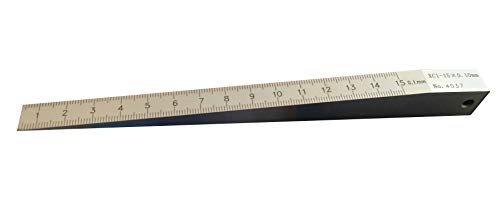
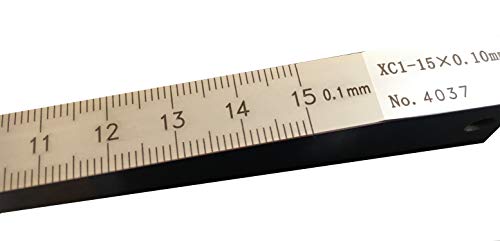
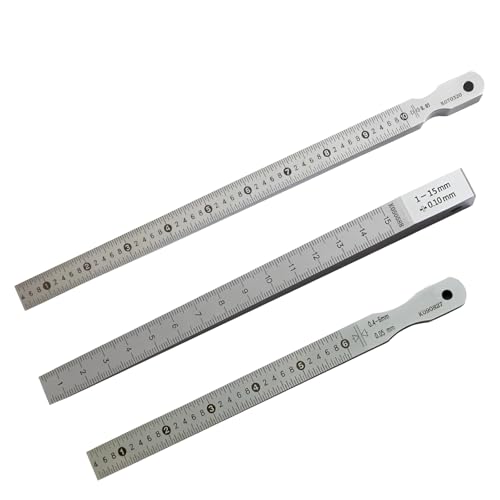
The GLTL Taper Gauge is a precision tool designed to measure gap widths from 1 to 15mm quickly and reliably. Featuring a laser-engraved scale for clear visibility and a chrome-plated stainless steel body for durability and rust resistance, it’s the perfect compact gauge for carpentry, welding, and general gap measurement tasks.

| ASIN | B082HX7RLX |
| Batteries Required? | No |
| Batteries included? | No |
| Best Sellers Rank | 197,174 in Business, Industry & Science ( See Top 100 in Business, Industry & Science ) 725 in Thickness Gauges |
| Customer Reviews | 4.4 4.4 out of 5 stars (17) |
| Date First Available | 10 Dec. 2019 |
| Item Weight | 1 g |
| Item model number | 6565699886 |
| Manufacturer | GLTL |
| Package Dimensions | 24.99 x 3.81 x 2.9 cm; 1 g |
| Part number | 6565699886 |
| Style | 1-15mm |
G**C
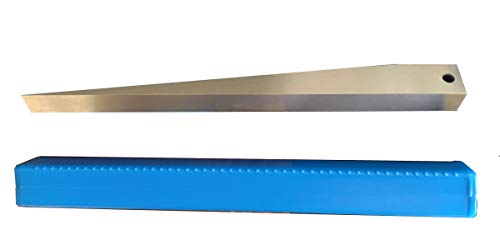
I have a good set of feeler gauges that I have used for decades when I needed to set spark plug and distributor point gaps on my cars (in the days before electronic ignitions), lawnmowers and snow blowers. I would not describe this GLTL tool as a feeler gauge since it is useless for those sorts of precision tasks but I do expect to find it handy for coarser measurements like checking gaps in doors and windows et al in my century-old house and my various carpentry projects. As another reviewer has mentioned, its utility is limited in situations where the tip of the gauge will hit something before the gauge is inserted far enough to take a measurement but you can angle the tool to get at least a rough reading and to check the consistency of the gap around the perimeter. The gauge itself is nicely made and packaged. As the Amazon listing says, it has engraved rather than surface-painted markings I have seen on some cheap tools, and it comes in a reusable plastic storage container, wrapped in an oil paper to limit corrosion.
E**.
Se lo vendí a un cliente nunca me regaló supongo que funciona bien
W**K
I am probably not the right market for this product. I saw it as a way to do what feeler gauges do in a single device. But I failed to recognize that the gap you're measuring has to have significant free space behind it for the pointed end of the gauge to fit into. And that's not the case for what I wanted to do. This is 100% a failure on my part for choosing the wrong tool, but I suppose it's worth it to point that out to others who might have the same mistaken idea. As for correct usage of the gauge, it seems to be well made, with etched markings that won't wear off, and the measurements are accurate. The steel is well polished and is hard enough not to wear with careful use. But it is softer than what I would expect for this type of tool, though, as implied, I am not terribly familiar with this, so maybe non-hardened steel is the norm.
Trustpilot
2 weeks ago
1 week ago


