
DOWNLOAD THE APP


Customer Services
Copyright © 2025 Desertcart Holdings Limited
DOWNLOAD THE APP
Full description not available
A**I
Breakthrough in Change Management
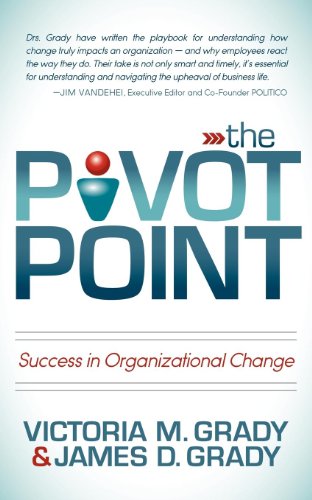
This book is a quick read and an excellent demonstration of where other change management strategies fall short. Drs. Victoria and James Grady focus on people at the center of change - which is where the focus should be. One of my biggest issues as a change management consultant is that the methodologies out there today are so focused on process, and if they address the people who have to deal with change, it is considered an afterthought. Here, the focus is on why people are so resistant to change and how organizations can clearly identify and pinpoint the symptoms, both individual and organizational, and begin to address them.We all have heard it around the water cooler at the office, at lunch, or after work, a colleague who is frustrated with their job, doesn't want to engage in their work anymore, takes "mental health days", etc. All of these are individual symptoms of resistance to change. When enough employees feel resistance you see issues like increased absenteeism and turnover or decreased morale and productivity.The Loss of Effectiveness Index is the tool an organization can use to identify these issues and address them before they become organizational issues.Everyone will be able to identify with at least one or two of the characters in the book and understand what is truly at the center of resistance to change: people.A great breakthrough in change management!
M**L
A Must Read!
Having been through many change management evolutions in both my military and civilian career, I have personally witnessed the negative effects that come with "positive" change for the organization. Although my colleagues and I have frequently discussed the need for change to happen in any organization, we never looked at it from the view of attachment and the individual. The manner at which Dr. Grady approaches the situation and carefully describes the phases in which the employees go through rings an all too familiar tone. Dr. Grady's analysis of this process and the manner in which to combat the negative effects of change management is detailed and easy to understand. If a company is contemplating a change within the organization, key stakeholders need to read this book prior to kick-off.The costs associated with initiating a change mangagement program and driving that program to completion are high. The hidden costs of "non-adopters" will drive that cost even higher and that cost is rarely, if ever, incorporated in initial estimates. Therefore, as a manager, director, VP, C-Suite executive that is considering a change management program, reading this book should be mandatory to ensure the most expeditious and cost effective impementation of the plan.
C**Z
Interesting concepts & useful suggestions
This was a fast read, but is full of good information so truly deserves a second and third read. By using story-telling, the authors introduce situations that keep the reader evaluating and analyzing. I found the concept of workplace attachment and its impact on change very fascinating. Change is a daily occurrence for IT professionals, and I'm hopeful that this understanding will have a major, positive impact on future projects and enterprise roll-outs. This should be required reading before embarking on any major organizational changes.
A**R
Really enjoyed the concepts about change in this book but the ...
Really enjoyed the concepts about change in this book but the presentation took some getting used to. Would have preferred it to cut to the chase more quickly and less of the accompanying 'story'.
L**A
light book, nothing new
Light nice book however, do not buy it if you expect a revelation of the secret of managing organizational changes successfully.
N**S
How to Better Handle the Psychological Challenges Associated with Organizational Change
The Pivot Point by Drs. Victoria and James Grady is a business novel presenting a unique perspective on effectively implementing organizational change based on group and individual psychodynamics. Within their book, Victoria and James examine decades of research into the ways individuals cope with loss and then relate these principles to the business environment. They conclude by providing methods for identifying and dealing with group and individual loss factors and reactions such that the desired organizational change can be implemented with a minimal loss of organizational effectiveness and productivity.I like The Pivot Point for its unique perspective on the group and individual psychology associated with organizational change. Victoria and James’s point of view is deeply rooted in decades of sound academic research and refined by real world experiences. Not only did we find their assertions compelling, they matched our decades of group and individual observations and experiences.The Pivot Point also provides methods for better dealing with these psychological challenges of change. The book prescribes implementable methods to address both the group and individual resistance factor in a constructive manner that is respectful of organizational personnel while at the same time progressive of the needed change. In some instances, however, change tools such as change readiness surveys appeared to lack the detail necessary to be immediately implementable and instead would require the services of Drs. Grady’s organization to complete. I would have preferred to have had the book be more complete in these areas.The Pivot Point provides a refreshingly new perspective on making effective organizational change that is well aligned with the philosophies espoused by StrategyDriven. For this reason, The Pivot Point is a StrategyDriven recommended read.All the Best,Nathan IvesStrategyDriven Principal
D**A
Kurz Knapp Amerikanisch
ein sehr interessantes Buch, kurz/to the point and very american. Wer interesse hat an Organiziational Change und wie man diese managen kann, wird nicht enttäuscht.
Trustpilot
3 weeks ago
5 days ago