
Buy anything from 5,000+ international stores. One checkout price. No surprise fees. Join 2M+ shoppers on Desertcart.
Desertcart purchases this item on your behalf and handles shipping, customs, and support to Denmark.
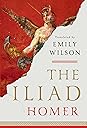
“Wilson’s Iliad is clear and brisk, its iambic pentameter a zone of enchantment.” ―Ange Mlinko, London Review of Books The greatest literary landmark of antiquity masterfully rendered by the most celebrated translator of our time. When Emily Wilson’s translation of The Odyssey appeared in 2017―revealing the ancient poem in a contemporary idiom that was “fresh, unpretentious and lean” (Madeline Miller, Washington Post )―critics lauded it as “a revelation” (Susan Chira, New York Times ) and “a cultural landmark” (Charlotte Higgins, Guardian ) that would forever change how Homer is read in English. Now Wilson has returned with an equally revelatory translation of Homer’s other great epic―the most revered war poem of all time. The Iliad roars with the clamor of arms, the bellowing boasts of victors, the fury and grief of loss, and the anguished cries of dying men. It sings, too, of the sublime magnitude of the world―the fierce beauty of nature and the gods’ grand schemes beyond the ken of mortals. In Wilson’s hands, this thrilling, magical, and often horrifying tale now gallops at a pace befitting its legendary battle scenes, in crisp but resonant language that evokes the poem’s deep pathos and reveals palpably real, even “complicated,” characters―both human and divine. The culmination of a decade of intense engagement with antiquity’s most surpassingly beautiful and emotionally complex poetry, Wilson’s Iliad now gives us a complete Homer for our generation. 5 maps Review: Brutal, Clear, and Uncomfortably Human - Emily Wilson’s translation of The Iliad in hardcover delivers something that a lot of versions miss—it lets the story feel immediate without sanding down its brutality. The first thing that stands out is how controlled and deliberate the language is. Like her Odyssey, the verse is clean and readable, but here it carries a heavier weight. There’s a steadiness to the rhythm that fits the subject matter—war, pride, grief—and it builds a kind of pressure as you move through the text. Nothing feels ornamental for the sake of it. What I appreciated most is how human the characters come across. Achilles isn’t just a legendary warrior; he’s volatile, wounded, and often difficult to sympathize with. Hector feels grounded in responsibility and inevitability. Even smaller characters are given just enough clarity that their deaths don’t blur together. The violence isn’t glorified—it’s specific, physical, and often uncomfortable to sit with. Wilson also does a strong job with the emotional undercurrent of the poem. The grief runs through everything, and it’s not treated as an afterthought. Moments of mourning, rage, and exhaustion feel just as important as the battles themselves. It gives the whole work a kind of gravity that lingers even in quieter scenes. Another thing worth noting is how she handles repetition and epithets. Instead of feeling redundant, they come across as intentional, almost ritualistic, reinforcing the structure of the poem without dragging down the pacing. The hardcover edition itself is solid. Good weight, durable binding, and a layout that supports the verse rather than crowding it. It feels like a book you can sit with for a long time without it becoming physically tiring to read. If you’ve found The Iliad difficult or distant in other translations, this version makes it far more accessible without simplifying it. And if you already know the text, it’s still worth reading for how clearly it brings out the psychological and emotional stakes behind the conflict. Overall, this is a powerful, grounded translation that treats the epic not as a distant legend, but as a deeply human story shaped by anger, loss, and consequence. Review: A great translation! - I read The Iliad annually. It is easily my favorite book and is the one I always choose when people ask questions like, “If you were inexplicably marooned on an island and for some vague reason could only have one book, which one would it be?” I have most of the major translations into English and for a long time gravitated toward Lattimore because it is more poetic than other popular translations like Fagles. This translation does not disappoint. It is more clearly poetic than Lattimore with what are probably better translation choices. I particularly like her use of Iambic Pentameter here. It’s not the same in Greek, but for English readers, it’s great. She really captures the essence of things in new ways that challenged my earlier conceptions—but that could also be a payoff for reading it again, as the Iliad continually rewards me whenever I reread it. The combat is as brutal and heart-wrenching as ever, and this translation lays bare the emotional stakes on both the war front and the domestic front. If you are new to The Iliad, the introduction provides a really good background and discusses the goals of this translation as well as the reasons for stylistic choices. If you’re not new to the Iliad this translation is a rewarding read and provides a fresh perspective.
| Best Sellers Rank | #3,494 in Books ( See Top 100 in Books ) #3 in Ancient & Classical Poetry #3 in Epic Poetry (Books) #148 in Classic Literature & Fiction |
| Customer Reviews | 4.8 out of 5 stars 1,385 Reviews |
R**L
Brutal, Clear, and Uncomfortably Human
Emily Wilson’s translation of The Iliad in hardcover delivers something that a lot of versions miss—it lets the story feel immediate without sanding down its brutality. The first thing that stands out is how controlled and deliberate the language is. Like her Odyssey, the verse is clean and readable, but here it carries a heavier weight. There’s a steadiness to the rhythm that fits the subject matter—war, pride, grief—and it builds a kind of pressure as you move through the text. Nothing feels ornamental for the sake of it. What I appreciated most is how human the characters come across. Achilles isn’t just a legendary warrior; he’s volatile, wounded, and often difficult to sympathize with. Hector feels grounded in responsibility and inevitability. Even smaller characters are given just enough clarity that their deaths don’t blur together. The violence isn’t glorified—it’s specific, physical, and often uncomfortable to sit with. Wilson also does a strong job with the emotional undercurrent of the poem. The grief runs through everything, and it’s not treated as an afterthought. Moments of mourning, rage, and exhaustion feel just as important as the battles themselves. It gives the whole work a kind of gravity that lingers even in quieter scenes. Another thing worth noting is how she handles repetition and epithets. Instead of feeling redundant, they come across as intentional, almost ritualistic, reinforcing the structure of the poem without dragging down the pacing. The hardcover edition itself is solid. Good weight, durable binding, and a layout that supports the verse rather than crowding it. It feels like a book you can sit with for a long time without it becoming physically tiring to read. If you’ve found The Iliad difficult or distant in other translations, this version makes it far more accessible without simplifying it. And if you already know the text, it’s still worth reading for how clearly it brings out the psychological and emotional stakes behind the conflict. Overall, this is a powerful, grounded translation that treats the epic not as a distant legend, but as a deeply human story shaped by anger, loss, and consequence.
U**D
A great translation!
I read The Iliad annually. It is easily my favorite book and is the one I always choose when people ask questions like, “If you were inexplicably marooned on an island and for some vague reason could only have one book, which one would it be?” I have most of the major translations into English and for a long time gravitated toward Lattimore because it is more poetic than other popular translations like Fagles. This translation does not disappoint. It is more clearly poetic than Lattimore with what are probably better translation choices. I particularly like her use of Iambic Pentameter here. It’s not the same in Greek, but for English readers, it’s great. She really captures the essence of things in new ways that challenged my earlier conceptions—but that could also be a payoff for reading it again, as the Iliad continually rewards me whenever I reread it. The combat is as brutal and heart-wrenching as ever, and this translation lays bare the emotional stakes on both the war front and the domestic front. If you are new to The Iliad, the introduction provides a really good background and discusses the goals of this translation as well as the reasons for stylistic choices. If you’re not new to the Iliad this translation is a rewarding read and provides a fresh perspective.
B**Y
Beautiful & highly readable translation !!! Plus a great Audible reading by Audra McDonald !!!
A great read for this first-timer dipping into Homer. Emily Wilson's iambic pentameter moves like "ichor, the liquid that flows through the blessed gods." And I loved switching back and forth between reading the text myself and listening to the marvelous reading by Audra McDonald on the Audible recording. I highly recommend both the book and the audiobook, which I found captivating from beginning to end, unlike other translations which I had attempted to read previously.
J**Z
A wonderful, fluid translation
I read the whole thing aloud. I didn't quite mean to: I read the preface and book 1 the night it arrived, and said to my sweetie 'She urges us to read this aloud, and I probably will inflict bits on you. Hmm. Maybe I should just start over and read the whole thing aloud [the way we did with Circe].' So I did. I'm sure I'll have to read it again - silently - but imho the read aloud did add to the experience. It didn't feel like verse and it felt very easy to avoid the singsong of carelessly read rhymed verse - but it was striking how reading the verse aloud made it very obvious when I transposed words or misread names. Wilson got our attention with her Odyssey which eschewed euphemisms like "housekeeper" or "attendant" and called a slave a slave. That was an amazing translation, and this is a thoroughly worthy successor. She does not convert me to her preference for the Iliad over the Odyssey, but her Iliad is a vital, powerful story told in language that probably does feel as natural and unaffected to a modern audience as the original Greek felt to the original audiences. Eyeballs pop, brains jelly, gods and kings bicker - this is no more a guide to how to live well than its rough contemporary from Palestine, but a heck of a lot more fun to read.
S**G
A great translation that shouldn’t be used to push an agenda
Unfortunate that Emily Wilson’s translations has been coopted into the culture wars going on today. This wonderful new translation can and should be enjoyed by all, no matter your political leaning or sexual politics. Liberal or Conservative. It is a disservice to her work to be used in such reductive way. Like a composition by Mozart there are many wonderful interpretations and performances and they can all contribute valid perspectives. There is no best but there are the better ones. This is one of them.
G**Z
Excellent Classic
Easy to read and understandable. I saw the movie Troy decades ago and now got interested in reading what the movie was all about. I hope to read more Greek story, history, fiction, etc books!
J**F
Epic Bookclub
What can one say about an epic poem? Clearly, The Iliad earns that designation. Emily Watson’s translation is enriched by the thoughtful background information at the front of the book, as well as her detailed notes on the translation process. These elements add meaningful depth to the poem, offering readers valuable insight into both the world of the epic and the choices behind its modern rendering.
J**F
Beautiful Translation - Quality Printing
In my opinion, this is an absolutely beautiful translation by Emily Wilson. The book itself is very nicely printed and contains lots of reference material to aid in study and understanding. I highly recommend this to anyone wanting to read the Iliad. Even if you're just thinking about - go for it! There is no better way to gain insight into our ancient ancestor's minds and hearts.
A**Z
Defectuoso. Imposible que no lo detectarán al empaquetar
Calidad del papel mala, como en estos tipos de libros en inglés, eso me lo esperaba, pero cortado sin guillotina, lleno de rebordes, con varias paginas dobladas que al abrirlas eran más grandes y que el libro cerrado se parecía a la foto de otro que también lo devolvió, como yo. ¿Sería ese el mismo libro que me enviaron después de rechazarlo él por defectuoso?
C**N
Excelente
A leitura é suave, gostosa e muito direta, sem prejudicar o conteúdo e a proposta original da obra. Melhor tradução disponível!
S**R
Tutto perfetto
Tutto perfetto
K**Z
An excellent modern translation beautifully presented.
In the introduction Emily Wilson explains the reasoning behind her translation: “Many modern English translations of Homer use contorted, unnatural language that seems to me quite alien to the experience of the Greek. Many versions create a reading experience that mirrors how first-year language students labor valiantly through each word, but have only a foggy notion of what it all means.” Emily Wilson's Iliad is a translation for the modern reader making it accessible to everyone, especially those who would have loved to read Homer but as she points out been put off by the archaic language of previous versions. There are also extensive notes, a glossary and an introduction well worth reading. It is also beautifully presented with 'French flaps' and 'deckled edging' giving it an antiquarian look and feel. (It isn't as some reviews have presumed just badly cut pages.)
S**S
Bad physical body
Paper quality veryyy bad Unevenly cut
Trustpilot
2 months ago
2 months ago