
Desertcart purchases this item on your behalf and handles shipping, customs, and support to Denmark.
🍞 Elevate your kitchen game—become the bread artisan everyone envies!
The Bread Baker's Apprentice by Peter Reinhart is a definitive guide for aspiring and experienced bakers alike, featuring over 50 master recipes, 12 foundational bread-making stages, and more than 100 step-by-step photos. This acclaimed book combines baking science, culinary history, and expert techniques to help you create extraordinary artisanal breads at home, transforming your baking from routine to remarkable.
| Best Sellers Rank | #219,488 in Books ( See Top 100 in Books ) #10 in Bread Baking (Books) #124 in Culinary Arts & Techniques (Books) #264 in Food Science (Books) |
| Customer Reviews | 4.8 out of 5 stars 4,518 Reviews |
B**D
Very Highly Recommended Source on Artisinal Breads
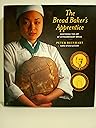
Just when you think you have seen the best possible book on bread, a new volume comes out, generally written by Peter Reinhart, which tops the previous book. This is certainly the case with the author?s ?Crust and Crumb? being trumped by his latest bread volume, ?The Bread Baker?s Apprentice?. Both volumes have won James Beard awards up the wazoo, and both books deserve all the praise they get for how well they address the relatively difficult and arcane corner of gastronomica that is artisinal bread baking. Before you form any impressions that this praise means you simply must get this book, be warned that you will be perfectly capable of making superior bread at home without cracking any one of Reinhart?s books. There are several more accessible sources. My favorite, recommended by Reinhart himself is the bread baking chapters of ?Baking with Julia (Child)? co-authored by baking writer Dorie Greenspan. Another even broader and older source is Bernard Clayton?s ?Complete Book of Breads? which covers over six hundred pages without once using the words ?poolish?, ?biga?, or ?sponge?. Reinhart?s books are for professionals (especially ?Crust and Crumb?) and very serious bread baking enthusiasts and hobbyists (especially ?The Bread Baker?s Apprentice?). If you go back to Reinhart?s very first book ?Brother Juniper?s Bread Book?, you may even say these books are for those people who treat bread as part of their religion. Being true to the derivation of the word ?religion?, it is for people who truly wish to be connected to bread making. ?The Bread Baker?s Apprentice? is no less serious and no less rigorous than Reinhart?s earlier books, but it is clearly more accessible to the lay reader than ?Crust and Crumb?. Aside from having one of the most attractive covers I have seen on a culinary work in a long time, it is glossier and more invitingly designed by Ten Speed Press, the publishers of both volumes. ?Apprentice? opens with a story of the author?s winning a James Beard Bread Baking competition and how that lead him to a trip to Paris and a tour of several of the French Capital?s leading boulangerie. His experiences with the French apprentice system, especially as used by some of the city?s leading bread bakers is the source of the book?s title, as well as being the source of the great pound sign marked boule being held by the very attractive Reinhart apprentice on the cover of the book. ?Apprentice? also devotes close to eighty pages to explaining in great detail the steps of artisinal bread baking. Reinhart?s books, especially this one, are some of the very few I have seen which explain many of the things which go on while making bread. Everyone who uses yeast knows these microorganisms eat sugar or starch and exhale carbon dioxide. What people do not commonly know is that they also exhale ethanol and, in artisinal breads, wild microorganisms that create lactic and acetic acids that give sourdoughs their distinctive flavoring enhance their action. The book also explains that the first rise in bread baking has much more to do with flavor development than it does with creating the airy texture in the bread?s crumb. The only other book which does as good a job of explaining bread baking technique is Joe Ortiz? ?The Village Baker?. ?Apprentice? also has as good or better illustrations of baking techniques than both ?Crust and Crumb? or ?The Village Baker?. ?Apprentice? presents several of the same ?formulas? that appear in ?Crust and Crumb? but in every case, where the same bread is presented, ?Apprentice? goes into greater depth regarding the history of the bread, the special techniques needed, and the variations commonly done with the same basic formula. Both books use the Bakers Percentage Formula presentation of ingredient amounts, but both also present ingredient amounts in very easily measured ounces. I am surprised that neither book includes metric weights, as they are immeasurably easier to scale up or down, especially when you are dealing with such small amounts as in fractions of an ounce of salt or yeast. One complaint I have seen of Reinhart?s books is in the large size of some of the recipes (meaning an implementation of a formula). I sympathize with this comment, but point out that Reinhart is not writing for the occasional home baker, he is writing for the professional and the devoted amateur baker. In the author?s treatment of Brioche, both books deal with this bread as the archetype of a whole family of breads; however ?Apprentice? goes into this family tree to a greater depth than I have seen in any other book. It gives formulas for ?Rich Man?s Brioche? with 88 percent butter, ?Middle Class Brioche? with 50 percent butter, and Poor Man?s Brioche with 24 percent butter. While ?Crust? gives formulas for brioche family members Kugelhopf and Challah, ?Apprentice gives formulas for brioche cousins Casatiello and Challah. If I were a consecrated member of the bread baking fraternity, I would want both of these book. Well, I want both anyway, since my philosophy is that a 35-dollar book has paid for itself if it yields up one good ideas, and both books are goldmines of information and ideas about bread baking. If you must choose between the two and you are not a professional, take ?Apprentice?. The cover alone is worth the price of admission. If you are a professional or professional wannabe, take ?Crust?. It has a more extensive bibliography and list of mail, web, and professional sources. In a culinary publishing niche with lots of excellent sources, Reinhart?s books, especially ?The Bread Baker?s Apprentice? is clearly one of the best for the serious baker.
Z**N
Must Own Book For Any Bread Baker (Beginner to Experienced)
Simply one of the best written bread baking books out there. It's time tested (I ordered the 15th anniversary edition) and approved by hordes of fans. If you already own the original copy you might not need the newest edition. However, it does include 3 new master recipes (on top of the previous 50 or so), and a big new section on sourdoughs (aka wild-yeast starters). The sourdough section is rather simple, but like the rest of the book it's well written in a friendly and understanding tone (you don't ever feel pretentiousness or "my way is the only way"). Below are the reasons you should consider this book based on your baking experience: Beginner baker (little to no experience, but lots of interest): This book teaches you the fundamentals of solid baking and breaks everything down into easy-to-understand steps that can be applied to all baking. These steps are critical knowledge to becoming a good baker and not having to rely as heavily on recipes (and being able to adjust based on variables). The book is written well, easy to understand, has a friendly tone, and very much feels like it's written for the home baker with the understanding that sometimes you have to work with what you have (e.g., not everyone has a la cloche or dutch oven). The book also uses a decent amount of pictures to show you how things should look, and each recipe feels like it is personalized by Reinhart, often times including notes for changing the recipe. By simply following any recipe in this book (and the recommended techniques) you will create a bread that amazes friends and family (and probably yourself). This book represented a major shift in my understanding of the baking process and has helped me (in less than 6 months) go from a simple recipe follower to someone who can create his own bread based on learned knowledge and techniques. Somewhat experienced baker: With some experience you'll be able to use this book to it's fullest extent. The recipes may not blow your mind as an experienced/somewhat experienced baker, but they are all delicious and reliable. The techniques and approach to teaching the recipes and techniques is what makes this book shine for me. If you have felt like you were struggling to take your baking to the next level or to really understand the how/why behind baking techniques and recipes, then this book is for you! This book will help you better understand and combine techniques (provided you have learned others to combine with) as well as improve your understanding of recipes. It sets the stage for a leap into expert level baking. Highly experienced baker: As an experienced baker you won't find this book to be ground breaking, but it could teach you a few tips and tricks you may not have known. Reinhart does a great job of adding notes to recipes that tell you how to adjust/change things up. He also does an amazing job of breaking down all the steps of baking (all 12 of them) and explaining what they are and how they are applied in different bakes (some combine/skip steps). The techniques portion of this book offers interesting professional approaches tried and tested by Reinhart but seems to fully accept (and even occasionally mention) that there are other techniques/recipes/etc. The recipes in this book are solid, and you'll find them to be tasty and appealing (although as an experienced baker you may already have preferences for other recipes). The sourdough section won't blow your mind, but it's a useful refresher. I would not recommend purchasing this book solely for the sourdough section. Wrap-up: Combining this book's recipes and techniques with other books I've read/am reading has allowed me to exponentially improve my baking techniques and understanding. Reinhart's writing style and teaching style come through in this book, you can tell it was written by a teacher and someone who loves baking (not one or the other, but both!), and for that reason I love it.
N**S
Easy enough to follow for the beginner, but really a textbook on bread
Wow. I got in over my head. I understand the words in this book, and I can follow the recipes and the advice; but wow, this is a LOT of information. I bought this book because it has a great recipe for pizza dough and is supposed to teach you the "Zen" of bread (and pizza dough). It does that, but it does so much more. This book is not for the casual user. It is easy to read, but it sucks you in and converts you into a bread snob (something I aspire to be now that I know there is so much cool stuff to know!) The book breaks down like this: A few stories, a whole bunch of bread theory, and recipes. It shows you how, but also why. It really is a book for "the apprentice," and it is written by a master who fearlessly credits his mentors, sources, and even rivals. This is interesting id you have **time** but I just wanted a killer recipe for pizza dough, and having scoured the Internet I found that you have to go to the source: the "bread mastah's." I am VERY happy to have this book, but I am angry that it shows me how much there is to know and challenges me to stop what I am (happily) doing and spend time learning about bread. Bread, it turns out, is like wine. You can drink wine, but there is an endless supply of information about the complexities of wine, and grapes, and how the weather affects grape production, and how soil affects the grape, and how all of this goes into each year's crop (vintage) of wine. Yaaargh!! It is information overload! Look: If you want to make a kick-ass cake, buy a box of mix and go to town, but if you have the insane desire to make the kind of goodies we all pay too much for at cafes and bakeries, this is the book for you. It is NOT hard. The ingredients are in your local store it turns out, and Amazon sells whatever is not, so you are covered. It is not expensive, and this book shows you a lot of cheats, in case you don't have all of the super fancy bread making equipment and specialty ovens (and whatnot). You may have to use a little ingenuity but if you have a toaster oven you can make (very small batches of) GREAT bread, dinner rolls, pastries, pizza, and whatever. This book is not at all "microwave friendly" (just so you know) -- you DO need an old-fashioned "oven" of some sort, but bread making is a passion, and a tasty one! This book is intimidating. It is a brick: big, and thick, and heavy, and written by a guy who really knows his stuff. But I read through it. Hint: you can skip around and STILL get great results. You do want to read the basics though, because by understanding the basics of bread you know how to improvise and use what you have to get great results. It really is a great book, and it has satisfied my need to know about bread. I can stay with this book, and a handful of recipes, and improve EVERY meal I make, all without having to do a lot of study. This is a lifetime skill (just being able to make bread from scratch without a lot of fuss) and it provides instant rewards (you get to eat the bread). I cannot recommend this book highly enough--but just beware that it will try to take over your brain. It is a wealth of information and cunningly seductive in its methods of creating a desire in you to be some kind of ninja baker. Hope this helps. Thanks for reading :-)
G**E
If you're looking for the tastiest,most wholesome bread products look no further
If you're looking for the tastiest,most wholesome bread products look no further this is it. Yes, Reinhart uses starters and the recipes often take 2 days to complete, but trust me, it's worth it. Coming from Brooklyn NY my family has always enjoyed the simplicity and joy of a simple buttered NY seeded Kaiser roll and a good cup of coffee for breakfast. We came across a German Kaiser roll recipe which I've been using and it is really as close as you can get. I'm 85 and we still haven't given up on trying to find more special recipes. Reinhart is the answer with bread and cinnamin buns and sticky buns. We made his Kaiser rolls and everyone in the family who tasted them were ecstatic as you just can't find a tasty seeded Kaiser roll anywhere. When you buy seeded Kaiser roll in any store beit Walmart or Wegman's or whatever. It tastes like a piece of cheap american bread shaped to look like a Kaiser roll with sesame seeds on it. Yuck. We tried Reinhart's Kaiser roll recipe and it is out of this world fantastic. We tried NY bagels today and we made a batch for me. My wife has a gluten problem so we use special flour for her. We use Montana Farms NGM (non-genetically Modified flour). We're amazed as we started mom's recipe for Everything bagels, mine came out fantastic. Hers are looking very promising. Her flour generally comes close. I was busy outside in the garden as the dough was mixing in my Ankarsrum mixer(which is another out of this world machine for kneading dough.) I love Bosch tools and appliances but the Ankarsrum makes the Bosch mixer look like a toy when it comes to kneading dough. It kneaded longer than it should have but when we came in from the garden it was the most fantastic batch of dough we've ever made. The Ankarsum mixer is a new addition got sick and tired of our old Kitchenaid joke. We pulled a piece of dough off to give it the window pane test(on page 58 where you stretch your dough to test its readiness), if it's ready, it will stretch tissue paper thin, without tearing and literally allow light to pass through it like a stained glass window pane.Getting it right on the first shot amazed me as you generally have to add flour or water to adjust the elasticity and smoothness of your dough to get it right. Needless to say the bagels were fantastic, they just ain't nothing like an Everything bagel with garlic,onion cream cheese with chopped scallions on it to start your morning off. All Reinharts recipes offer flavor and texture like no other. Next we're onto English muffins tomorrow and Bavarian soft pretzels next then we hit the breads. This book is a gem full of out of this world recipes.The first time we made the Kaiser rolls we were pleased but not too crazy about making a starter ( Pate)each time. Each time we ate another of his rolls the flavor and texture was so phenomenal it just jumped out at you. We will stay with his recipe and the extra step is more than worth it. The bread makes the sandwich no matter what you put in it. Even as my kids say there's nothing like a good buttered roll and coffee for breakfast. So enjoy this book. It is a treasure trove of flavor packed recipes.
S**S
Advanced bread baking
I like it, it’s not for everyone, but I’m learning the understanding, fermentation and hydration of the dough
B**M
An Amazing Book!
I rarely write reviews. So when I choose too, you know there must be a reason. I had been looking for a book on bread baking, but not just another "cook" book filled with recipes. I wanted the science behind it. I wanted to know the answers to all of the "why"'s. For me, I need to understand how something ticks, what makes it work, in order to fully understand and undertake something new. Chalk it up to the scientist in me. This book delivers all of that, and so much more! Peter Reinhart is a teacher at Johnson and Wales University, and his patient teaching method and expertise as an instructor, comes across in his writing. If I were a student there, his course(s) would be the ones I'd choose. His explanations are clear, concise without getting too deep into the chemistry, and written in such a way that the reader has multiple "ah ha!" moments when reading. To say I learned a tremendous amount would be an understatement. But the proof is in the pudding, as they say, or in this case, the bread. Can the reader take the knowledge imparted in the book and actually make it work?? Let me preface my next comment by saying that I am an average cook. My father lovingly referred to me as a "plain" cook (my mom was gourmet but never passed on the skills). Cooking anything complex or difficult intimidates me, to say the least. However, I not only was able to easily follow the directions, but actually produced a beautiful loaf of bread my first time out of the gate. What was VERY helpful was that I was able to take the information taught in the beginning, and apply it as I was going through the process of bread making. For example, when kneading the dough, you know it is ready when it passes what is called the "windowpane test". Because of the thorough explanation,and corresponding photograph, I was able to see that stage develop and know that I was, indeed, on the correct path. This book has definitely become my bread bible and I am thrilled that I have come across it! I foresee many successful bread-filled moments in my future!! I doubt my family will mind!
K**N
I want to be a SERIOUSLY GOOD BREAD BAKER, and I've found my Mentor!
I have been baking for many years. One of the most frustrating things for me is making great bread, then using the same recipe a few days later, and it's not the same. Consistency has been my big problem. I never knew why because I have no formal training, no theory, and no Mentor. Here comes the Bread Baker's Apprentice. A perfect book for me. Why? Because this book is filled with explanations, theory, ingredient ratios and formulas, and reasons about the how and why of everything that has to do with flour, yeast, liquid, salt, fat, and measurements. Including weighing ingredients, and why. And the recipes have both weights and measures (measuring cups and spoons) for each recipe, so you can choose. I'm going to start weighing though because it's far more accurate and most likely has a lot to do with my inconsistencies. It has information on flours, protein content, hi-gluten/ low gluten, flour moisture, types of salt (flake, granular,etc), and yeast types. I am loving all this information that I have never seen. All I've had are recipes. Now I have technique AND recipes! I'm finally starting to understand reasons behind what went wrong with my last batch and how to correct my bread flops. I sat down last night and nearly read half the book (up to the recipes) before I went to bed. I can see I will have to re-read it again. And probably again. Because I really am going to apprentice myself to this book. It's like a Text and a Mentor speaking out of the pages to me. I have my Sourdough Starter (called "seed culture") in the refrigerator right now. Today, I'm taking it out, will feed it, and get it ready for the first batch of "Barm". After I make the "Barm", I use the "Barm" to make the Sourdough Bread. I never knew that. I am looking to make the San Francisco Sourdough I grew up with. This book (finally I've found something I can sink my teeth and mind into) presents making Sourdough in a logical process for me, that explains step by step how to achieve the real deal. It explains And know how I got there so I can have the same results again. I can't wait!
P**S
Your search is over
The only bread book you need. I rarely write reviews, but I've felt compelled to give one for this book. Peter is a genius and every bread I've tried is better than I could have imagined. His technique brings flavor that you will never find in an online blog. I've stopped googling for recipes and just crack this open. Now I do have an ongoing Gemini chat to help me figure out how to modify my kneading for the Ankarsarum mixer, but as far as recipes and formulas, look no further.
L**S
I will no longer buy bread in the bakery
Pretty much good book with proper explanations. Makes you want to bake bread by yourself and become self-sufficient. Became very useful especially during 2020/2021 lockdown.
F**A
Fascinante
Me encanta este libro. He hecho varias de las recetas y todas han quedado muy ricas. Me gusta mucho que en cada receta dice al inicio las características generales del pan, así como los días que se necesitan para lograr su ejecución. La mayoría de las recetas tienen fotografías muy vistosas que facilitan la elaboración del pan. Este libro, a diferencia de otros, incluye en cada receta los ingredientes en gramos, onzas, tazas o cucharadas y en porcentaje panadero (este último el más útil cuando se quiere escalar la receta). En algún lado de internet alguien se quejó que contenía pocas recetas integrales y aunque es cierto, el libro brinda muchas ideas y conocimientos que permiten que el lector experimente y cree sus propias recetas con gran variedad de semillas y granos. El libro tiene gran cantidad de recetas de pan "salado" (~2% de sal) y muy pocas incluyen azúcar. Me hubiera gustado que incluyera más recetas con mantequilla, azúcar y huevos. Vale mucho la pena conseguir harina panadera, los resultados son muy diferentes. Como no tengo 'Polenta' y no sé dónde se compre siempre la sustituyo por harina nixtamalizada de maíz Amarillo MASECA por su sabor y porque no tiene gomas, colorantes ni saborizantes añadidos.
A**É
Not 100% converted from US Quarts & Pounds to Metric, But gives tables for you to do it
Ordered 13April2023-Delivered 18April2023. Delivery within Australia. The Bread Baker's Apprentice :Mastering the Art of Extraordinary Bread.15th Anniversary Ed. 1st Revised Ed. 2016. Peter Reinhart. ISBN: 9781607748656. Hard cover. w/ Dj. 322pg. mostly sour dough bread, with Pre-ferments, starters. White bread (Pullman loaf). Walks through the ingredients, the process of each stage of making bread, as principle. Then teaches you Bakers Math, Percentages, or rather shows you how it works, (plenty of utubes online show if you don't know what bakers Math is). Any recipe that has FLOUR can use math (%) as scaling, eg 25 x 800g multigrain bread loaf's to 1 loaf. Each recipe is set out with the timeframe for making each component, like Pre-Ferments (Biga, Poolish, Pâte Fermentée), Dough, Mixing, Resting, Shaping, ..... to Baking times & cooling. The book reads like the original 2001 Ed, was written for the USA market & then updated with metric in this 2016 Ed. though not Perfectly. References to products or services direct you to back page which then says because things change so often it's better to just search the internet for it. (chainbaker. bakewithjack). Great Bread recipe & Reference book for keeping. I've had this book on my want list for ages, Not disappointed I now have it.
A**R
Expert's knowledge within the novice's reach
Glad I ordered the hardcover instead of buying the Kindle version. This is a book that will still be in my kitchen 10 years from now, stained from use and well loved. Every aspect of bread making is explained, every tool described, it's not pretentious (it won't make you buy tools you won't use, and the recipes are in both weight and scoops/spoons, it puts an expert's knowledge within the novice's reach. All that being said, being a book lover, it's just a beautiful book that I love owning.
S**D
WOW
Bought it after reading great reviews on Amazon. Get it if you love baking
Trustpilot
1 week ago
4 days ago