We remain fully operational. Our teams are working around the clock to ensure your deliveries continue safely.

DOWNLOAD THE APP


Copyright © 2025 Desertcart Holdings Limited
DOWNLOAD THE APP
Buy anything from 5,000+ international stores. One checkout price. No surprise fees. Join 2M+ shoppers on Desertcart.
Desertcart purchases this item on your behalf and handles shipping, customs, and support to Denmark.
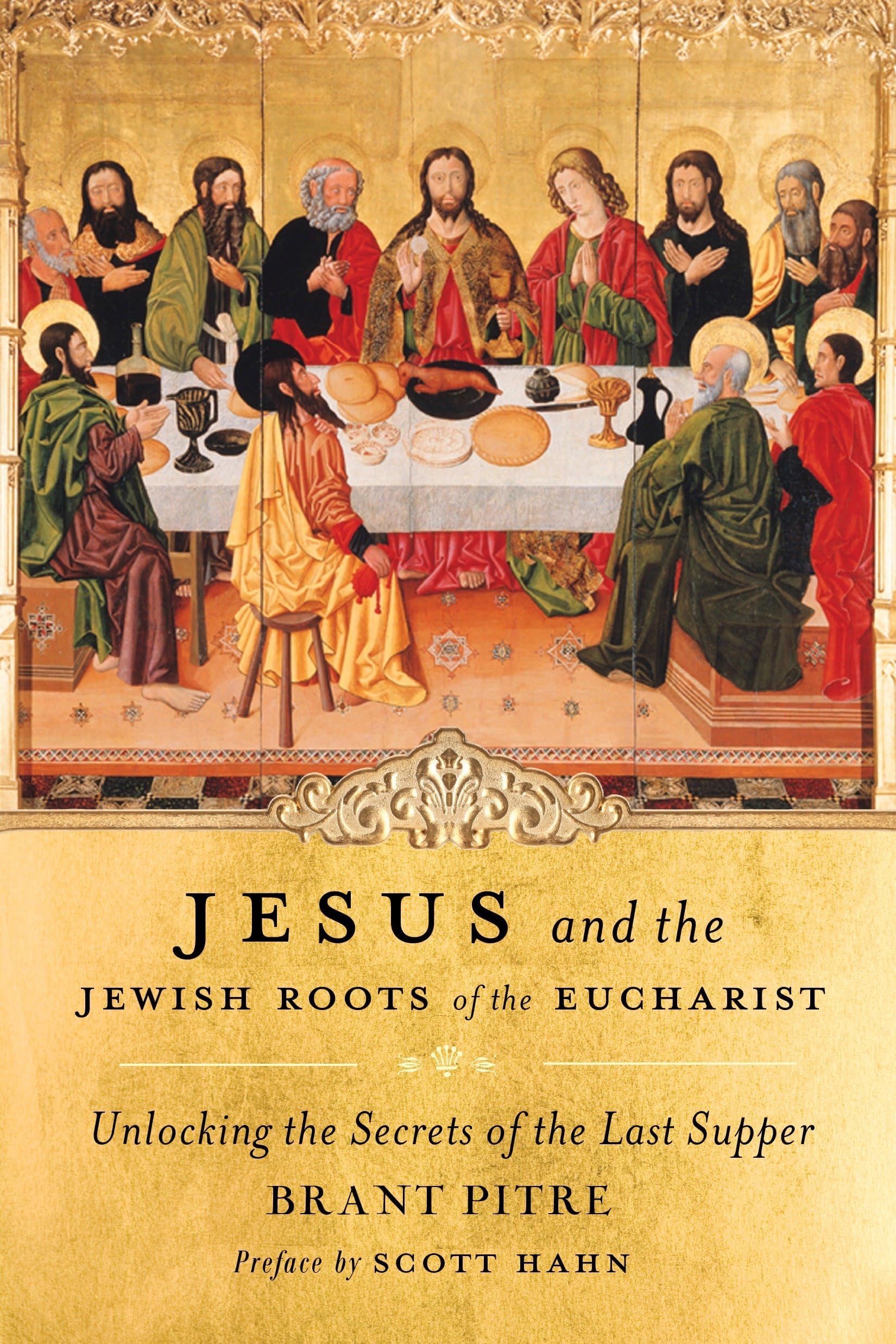
Jesus and the Jewish Roots of the Eucharist: Unlocking the Secrets of the Last Supper [Brant Pitre, Scott Hahn] on desertcart.com. *FREE* shipping on qualifying offers. Jesus and the Jewish Roots of the Eucharist: Unlocking the Secrets of the Last Supper Review: Behold, God's Love for You! - Jesus and The Jewish Roots of the Eucharist by Dr. Brant Pitre Review by Christine Calabrese “Behold, God’s love for you!” This book is a scholarly work, bringing us back to the cultural, liturgical and seasonal traditions of Judaism when Jesus of Nazareth graced the earth. I learned that there was a tradition handed down by Melchizedek, offering bread and wine as a sacrifice to the Lord God. The Ark of the Covenant contained bread (manna) from the exodus along with other important relics. This bread was brought out three times a year by the priests and held before the congregation with the words, “Behold, God’s love for you.” The manna during the Jewish exodus never lasted more than a day. Yet, as Catholics, we enjoy the Eucharist daily in every Mass we celebrate. Strikingly interesting! I knew from my protestant background that Jesus is the Passover Lamb, but the details escaped me. The lambs slain for Passover in Jesus’ time were tied to a cross. Passover was a big feast day for the Jews and thousands of spotless lambs were slain on the altar, which Jesus must have seen over his lifetime as He celebrated Passover annually. He knew exactly what lay ahead of Him. I also didn’t know that Jesus never finished the Passover meal with the disciples in the Upper Room – the last cup of wine was not drunk at that meal because it was His sacrifice. “By refusing to drink of the fruit of the vine until He gave up His final breath, He joined the offering of himself under the form of bread and wine to the offering of Himself on Calvary.” * Furthermore, the concept that Jesus is the new manna, and that the Jews were looking for the new manna, had escaped me prior to reading this book. To embrace the full meaning of this, one must truly understand Jewish historical culture: This bread was called, “The Bread of the Presence” and also “The Bread of the Face,” the tangible and physical sign of God’s presence on earth. The exodus from Egypt was truly a miraculous occurrence, and the Jews carried this hope of the new manna in their liturgy and hearts. Even though other religions believed in an afterlife, what separated them from the Jews was how the latter believed in the resurrection of the body. The Eucharist is closely tied to the resurrected body of our Lord. Jesus in His resurrected body is not limited by space and time and form. He can and will appear under any form He pleases, and He instituted and willed to appear under the form of the Eucharist. The author, Dr. Brant Pitre, captured my attention immediately upon describing an intense interview from a well-meaning Baptist pastor at a pre-marital interview. Dr. Pitre’s wife was a Baptist, and the marriage of a Baptist to a Catholic with strong beliefs can cause debate and conflict. Here, as a young man, he was questioned about the validity of the Eucharist, and this challenge spurred him on to deeper study and comprehension of his Catholic faith. Clearly Dr. Pitre has surpassed his goal because he now travels the country and lectures regarding the Eucharist and its incredibly beautiful history. Dr. Pitre makes it plain that none of his discoveries are new, and that in fact, they are clearly written in the Catholic Catechism. Unfortunately, an unstudied and unschooled Catholic can be caught off-guard by well-meaning protestants who question without understanding. This book, therefore, is a great accompaniment to any apologetic library. After reading the entire book, I discovered a lovely study guide supplied in the back! I’d recommend using this study guide in a bible study or book club, as it would help tremendously digging deeper into your faith. “Behold, God’s love for you!” *Jesus and the Jewish Roots of the Eucharist, p. 169 Review: Highly Recommended to Understand Jesus, His Jewishness, and His Teachings and Actions Surrounding the Eucharist - I highly recommend the book Jesus and the Jewish Roots of the Eucharist to anyone who wants to understand who Jesus was in His Jewish context, especially regarding His astonishing and probably most controversial statement that we must eat His flesh and drink His blood (John 6:53). One thing that excites me the most about Dr. Pitre's work is that he takes the knowledge gained by years of scholarly research and presents it in a clear, concise way that any ordinary reader can follow. In my opinion he has a real gift of making complex things easy to understand. In this book he begins with a fascinating question. The ancient Jews had a very strict prohibition against drinking blood. So how was it that a first-century Jew like Jesus and all those who followed Him could go from believing that drinking blood was an abomination to believing that drinking the blood of Jesus was necessary? How could Jesus, as a first-century Jew, have commanded such a thing? Wouldn't such a commandment have been directly against the Law of Moses? Beginning here and throughout the book Dr. Pitre proposes that it was actually because of (and not in spite of) His Judaism that Jesus made the astounding statements He did about His own flesh and blood--and it was also because of their Jewish beliefs that the early Christians of Jewish descent could so easily and universally accept this teaching after His resurrection. In each chapter Dr. Pitre goes to the Old Testament to show the Biblical roots of Jesus' teaching. Then he quotes from a number of non-Biblical ancient Jewish sources to show how the Jewish religion was lived and practiced at the time of Jesus. These ancient Jewish writings also describe the expectations Jews of the first century had about the coming Messiah. These ancient sources give us a better understanding of the words and actions of Jesus written in the New Testament: they put the New Testament writings into the Jewish context in which they were written. All of this is done in a clear and eloquent style. This is a book I will pick up again and again not just for study, but for prayerful reflection and meditation. I should add that although the book is written for a general audience, he does provide information at the end for people who want to dig deeper and study this more. I also learned from Dr. Pitre's blog (thesacredpage.com if anyone wants to check it out) that he is currently working on what he calls "another longer academic monograph on Jesus and the Last Supper" which will be published by Eerdmans. So if this book leaves you hungry for more (it does me) stay tuned.


| Best Sellers Rank | #25,158 in Books ( See Top 100 in Books ) #4 in Worship Sacraments #7 in Christology (Books) #16 in History of Judaism |
| Customer Reviews | 4.8 4.8 out of 5 stars (2,817) |
| Dimensions | 5.67 x 0.94 x 8.54 inches |
| Edition | First Edition |
| ISBN-10 | 0385531842 |
| ISBN-13 | 978-0385531849 |
| Item Weight | 13.2 ounces |
| Language | English |
| Print length | 240 pages |
| Publication date | February 15, 2011 |
| Publisher | Image |
| Reading age | 1 year and up |
C**R
Behold, God's Love for You!
Jesus and The Jewish Roots of the Eucharist by Dr. Brant Pitre Review by Christine Calabrese “Behold, God’s love for you!” This book is a scholarly work, bringing us back to the cultural, liturgical and seasonal traditions of Judaism when Jesus of Nazareth graced the earth. I learned that there was a tradition handed down by Melchizedek, offering bread and wine as a sacrifice to the Lord God. The Ark of the Covenant contained bread (manna) from the exodus along with other important relics. This bread was brought out three times a year by the priests and held before the congregation with the words, “Behold, God’s love for you.” The manna during the Jewish exodus never lasted more than a day. Yet, as Catholics, we enjoy the Eucharist daily in every Mass we celebrate. Strikingly interesting! I knew from my protestant background that Jesus is the Passover Lamb, but the details escaped me. The lambs slain for Passover in Jesus’ time were tied to a cross. Passover was a big feast day for the Jews and thousands of spotless lambs were slain on the altar, which Jesus must have seen over his lifetime as He celebrated Passover annually. He knew exactly what lay ahead of Him. I also didn’t know that Jesus never finished the Passover meal with the disciples in the Upper Room – the last cup of wine was not drunk at that meal because it was His sacrifice. “By refusing to drink of the fruit of the vine until He gave up His final breath, He joined the offering of himself under the form of bread and wine to the offering of Himself on Calvary.” * Furthermore, the concept that Jesus is the new manna, and that the Jews were looking for the new manna, had escaped me prior to reading this book. To embrace the full meaning of this, one must truly understand Jewish historical culture: This bread was called, “The Bread of the Presence” and also “The Bread of the Face,” the tangible and physical sign of God’s presence on earth. The exodus from Egypt was truly a miraculous occurrence, and the Jews carried this hope of the new manna in their liturgy and hearts. Even though other religions believed in an afterlife, what separated them from the Jews was how the latter believed in the resurrection of the body. The Eucharist is closely tied to the resurrected body of our Lord. Jesus in His resurrected body is not limited by space and time and form. He can and will appear under any form He pleases, and He instituted and willed to appear under the form of the Eucharist. The author, Dr. Brant Pitre, captured my attention immediately upon describing an intense interview from a well-meaning Baptist pastor at a pre-marital interview. Dr. Pitre’s wife was a Baptist, and the marriage of a Baptist to a Catholic with strong beliefs can cause debate and conflict. Here, as a young man, he was questioned about the validity of the Eucharist, and this challenge spurred him on to deeper study and comprehension of his Catholic faith. Clearly Dr. Pitre has surpassed his goal because he now travels the country and lectures regarding the Eucharist and its incredibly beautiful history. Dr. Pitre makes it plain that none of his discoveries are new, and that in fact, they are clearly written in the Catholic Catechism. Unfortunately, an unstudied and unschooled Catholic can be caught off-guard by well-meaning protestants who question without understanding. This book, therefore, is a great accompaniment to any apologetic library. After reading the entire book, I discovered a lovely study guide supplied in the back! I’d recommend using this study guide in a bible study or book club, as it would help tremendously digging deeper into your faith. “Behold, God’s love for you!” *Jesus and the Jewish Roots of the Eucharist, p. 169
S**S
Highly Recommended to Understand Jesus, His Jewishness, and His Teachings and Actions Surrounding the Eucharist
I highly recommend the book Jesus and the Jewish Roots of the Eucharist to anyone who wants to understand who Jesus was in His Jewish context, especially regarding His astonishing and probably most controversial statement that we must eat His flesh and drink His blood (John 6:53). One thing that excites me the most about Dr. Pitre's work is that he takes the knowledge gained by years of scholarly research and presents it in a clear, concise way that any ordinary reader can follow. In my opinion he has a real gift of making complex things easy to understand. In this book he begins with a fascinating question. The ancient Jews had a very strict prohibition against drinking blood. So how was it that a first-century Jew like Jesus and all those who followed Him could go from believing that drinking blood was an abomination to believing that drinking the blood of Jesus was necessary? How could Jesus, as a first-century Jew, have commanded such a thing? Wouldn't such a commandment have been directly against the Law of Moses? Beginning here and throughout the book Dr. Pitre proposes that it was actually because of (and not in spite of) His Judaism that Jesus made the astounding statements He did about His own flesh and blood--and it was also because of their Jewish beliefs that the early Christians of Jewish descent could so easily and universally accept this teaching after His resurrection. In each chapter Dr. Pitre goes to the Old Testament to show the Biblical roots of Jesus' teaching. Then he quotes from a number of non-Biblical ancient Jewish sources to show how the Jewish religion was lived and practiced at the time of Jesus. These ancient Jewish writings also describe the expectations Jews of the first century had about the coming Messiah. These ancient sources give us a better understanding of the words and actions of Jesus written in the New Testament: they put the New Testament writings into the Jewish context in which they were written. All of this is done in a clear and eloquent style. This is a book I will pick up again and again not just for study, but for prayerful reflection and meditation. I should add that although the book is written for a general audience, he does provide information at the end for people who want to dig deeper and study this more. I also learned from Dr. Pitre's blog (thesacredpage.com if anyone wants to check it out) that he is currently working on what he calls "another longer academic monograph on Jesus and the Last Supper" which will be published by Eerdmans. So if this book leaves you hungry for more (it does me) stay tuned.
P**.
Be a Berean- Challenge your assumptions. Gain knowledge of the Holy Eucharist.
I am an average lay person. Not a theologian or Pastor. I really recommend this book for anyone seeking a better understanding of the Holy Eucharist. I strongly feel that in the Catholic and Christian faiths, there must be a return to the focus and explanation of the Holy Eucharist. This is the most important part of the Catholic Mass. Most Christian churches downplay this as well and refer to the body and blood of Jesus Christ as "the elements". Why? Author Brent Pitre explains all of this in clear language. You do not need a degree in divinity or theology to understand his message. This book itself can make a good Bible Study group exercise. Continue to be a Berean- Eager to study the scriptures. Stay strong in faith my friends.
O**U
This is a GREAT book! It’s well written, very informative, really makes the reader understand the Eucharist so much better so now when you attend Mass, it has much deeper meaning. It’s one thing to go to Church and follow along or feel like a spectator, but it’s something much different (and better!) to actually participate with great meaning. I highly recommend this as it makes such a difference in how we understand the importance of Mass and receiving Communion. God bless this author!
P**O
As a Protestant Christian, I found this book to be deeply enriching and insightful. It offered countless eye-opening moments that challenged and expanded my understanding. The wisdom and knowledge shared within these pages will undoubtedly deepen your faith and enhance your worship of Christ.
S**A
à lire pour comprendre ( découvrir je dirais en ce qui me concerne ) les racines dans le judaïsme de l'institution de l'Eucharistie : mieux comprendre la passion , la cène , les gestes et le projet de Jésus : vraiment une révélation +++ et cela malgré la non traduction( regrettable ) en français - l'anglais y est très facile à lire ( avec un lien "reverso" à portée de souris et c'est impeccable)
A**O
Simplemente va uno quedando maravillado cada que el libro toca un elemento de la cena pascual y lo ilumina con su contexto judío y bíblico. Después de leerlo gusta uno más el rito, la significación y el misterio de la Eucaristía. Su autor fundamenta su opinión con razones percisas, cosa que hace también y más en otros de sus libros.
A**A
Dr. Brant pitre is just awesome...
Trustpilot
3 weeks ago
3 weeks ago