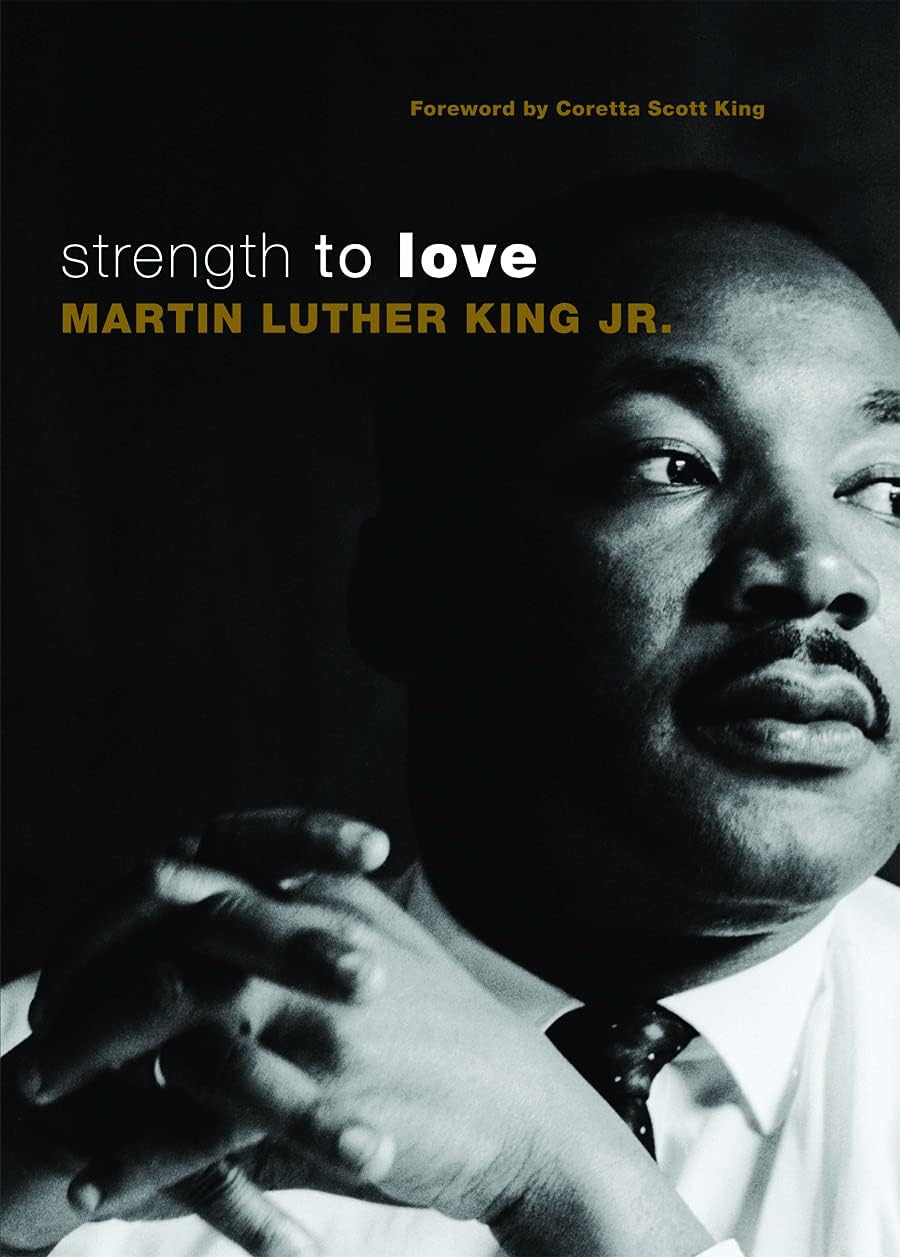
Strength to Love: Gift Edition
Product ID: 1527449
Desertcart purchases this item on your behalf and handles shipping, customs, and support to Denmark.
Explore Dr. Martin Luther King's always relevant wisdom in this comprehensive, must-read narrative addressing civil rights and social justice. "If there is one book Martin Luther King, Jr. has written that people consistently tell me has changed their lives, it is Strength to Love." So wrote Coretta Scott King. "I believe it is because this book best explains the central element of Martin Luther King, Jr.'s philosophy of nonviolence," she continued. "His belief in a divine, loving presence that binds all life." It is impossible to separate King's religious views from his views on societal change, which makes this a timely read when religious discussion is often left out of the public square. Strength to Love is more than a blueprint, it is a template for personal authenticity in a time when social and economic change depend on personal integrity. The insight, luminously conveyed in this classic text hints at a personal transformation at the root of social justice. Dr. King states, "By reaching into and beyond ourselves and tapping the transcendent moral ethic of love, we shall overcome these evils." In these short meditative and sermonic pieces, some of them composed in jails and all of them crafted during the tumultuous years of the civil rights struggle, Dr. King articulated and espoused in a deeply personal compelling way his commitment to justice and to the intellectual, moral, and spiritual conversion that makes his work as much a blueprint today for Christian discipleship as it was then. Individual readers, as well as church groups and students will find in this work a challenging yet energizing vision of God and redemptive love. Review: A Summary of the Message to Hook You on Buying the Whole - Perhaps a generation that has eschewed the values of the Civil Rights Movement in their own pursuit of racial justice might be interested in reviewing what Doctor Martin Luther King Jr. himself said led him to the success they have not yet achieved. And a generation that saw his results would be interested in his strategy, if one could call it that. If you will read this review you will know pretty well what is in the book. I have quoted representative passages. The page numbers are from the Fortress 2010 edition. The first quote is from Martin’s wife, the rest are from the text. The text was developed by Martin from sermons that he had given over time. Forgive him gently his use of words used no longer such as “negro.” Although I must say that any taint that belonged to it has been removed for me, since Martin is the first person I think of when I hear it. Is there such a thing as “unbearable dignity?” I remember him sitting with Johnny Carson on the Tonight Show calmly sharing his expectancy of an early, violent death. An extraordinary man. Forgive him his plethora of masculine pronouns and absence of feminine ones. That is the way we were. Even in this enlightened movement women struggled for equality. That is another story. Coretta Scott King quoted from the Foreword: If there is one book Martin Luther King Jr. has written that people consistently tell me has changed their lives, it is Strength to Love. I believe it is because this book best explains the central element of Martin Luther King Jr.’s philosophy of nonviolence, his belief in a divine, loving presence that binds all life. Page 50: There will be no permanent solution to the race problem until oppressed men develop the capacity to love their enemies. The darkness of racial injustice will be dispelled only by the light of forgiving love. …Forced to live with …shameful conditions, we are tempted to become bitter and to retaliate with a corresponding hate. But if this happens, the new order we seek will be little more than a duplicate of the old order. We must in strength and humility meet hate with love. Page 97: …as Paul testified, in life, or in death, in Spain or in Rome, “all things work together for good to them that love God, to them who are the called according to his purpose.” Page 101: Destructive means cannot bring constructive ends, because the means represent the ideal in the making and the-end-in-progress. Immoral means cannot bring moral ends, for the ends are preexistent in the means. Page 112: But Christianity contends that evil contains the seed of its own destruction. History is the story of evil forces that advance with seemingly irresistible power only to be crushed by the battering rams of the forces of justice. There is a law in the moral world---a silent, invisible imperative, akin to the laws in the physical world---that reminds us that life will work only in a certain way. The Hitlers and Mussolinis have their day, and for a period they may wield great power, spreading themselves like a green bay tree, but soon they are cut down like the grass and wither as the green herb. Page 125: If our white brothers are to master fear, they must depend not only on their commitment to Christian love, but also on the Christ-like love that the Negro generates towards them. Only through our adherence to love and nonviolence will the fear in the white community be mitigated. A guilt ridden white minority fears that if the Negro attains power, he will without restraint or pity act to revenge the accumulated injustices and brutality of the years. A parent who has continually mistreated his son, suddenly realizes that he is now taller than the parents. Will the son use his new physical power to repay for all of the blows of the past? …The Negro must show them that they have nothing to fear, for the Negro forgives and is willing to forget the past. The Negro must convince the white man that he seeks justice for both himself and the white man. (I recognize that a white person would have no right to say these words.) Page 127: Abnormal fears and phobias that are expressed in neurotic behavior may be cured by psychiatry; but the fear of death, non-being, and nothingness, expressed in existential anxiety, may only be cured by a positive religious faith. Page 130: On a particular Monday evening, following a tension-packed week that included being arrested and receiving numerous threatening telephone calls, I spoke at a mass meeting. I attempted to convey an overt impression of strength and courage, although I was inwardly depressed and fear-stricken. At the end of the meeting, Mother Pollard (a well loved elderly parishioner) came to the front of the church and said, “Come here, son.” I immediately went to her and hugged her affectionately. “Something is wrong with you,” she said. “You didn’t talk strong tonight.” Seeking further to disguise my fears, I retorted, “Oh no, Mother Pollard, nothing is wrong. I am feeling fine as ever.” But her insight was discerning. “Now you can’t fool me,” she said. “I know something is wrong. Is it that we ain’t doing things to please you? Or is it that the white folks is bothering you?” Before I could respond, she looked directly into my eyes and said, “I done told you we is with you all the way.” Then her face became radiant and she said in words of quiet certainty, “But even if we ain’t with you, God’s going to take care of you.” As she spoke these consoling words, everything in me quivered and quickened with the pulsing tremor of raw energy Page 162: Due to the struggle for the freedom of my people, I have known very few quiet days in the last few years. I have been imprisoned in Alabama and Georgia jails twelve times. My home has been bombed twice. A day seldom passes that my family and I are not the recipients of threats of death. I have been the victim of a near fatal stabbing. So in a real sense I have been battered by the storms of persecution…. Recognizing the necessity for suffering I have tried to make of it a virtue. I have attempted to see my personal ordeals as an opportunity to transfigure myself and heal the people involved in the tragic situation that now obtains. I have lived these last few years with the conviction that unearned suffering is redemptive. There are some who still find the cross a stumbling block, others consider it foolishness, but I am more convinced than ever before that it is the power of God unto social and individual salvation. So like the Apostle Paul I can now humbly, yet proudly, say “I bear in my body the marks of the Lord Jesus.” This is what Martin Luther King and the Southern Christian Leadership Conference meant when they said they were ”nonviolent. “ Now you can buy and read the book! Review: Dr. King’s timeless words of advice, encouragement, and admonition are more relevant than ever - This collection of Dr. King’s sermons and meditations touches on themes that are more relevant than ever. Dr. King talks about the importance of having “a tough mind and a tender heart,” of being brave enough not to conform to majority opinion when that opinion is wrong and dangerous, and of loving your enemies (“Far from being the pious injunction of a Utopian dreamer,” he asserts, “the [biblical] command to love one’s enemy is an absolute necessity for our survival.”). He also talks about how to work through fear and shattered dreams. All of these topics are universally relevant and of lasting, timeless importance. However, what really stand out to me are Dr. King’s strong admonitions to the Christian church regarding its failure to stand up for the marginalized and oppressed. “Nowhere is the tragic tendency to conform more evident that in the church,” he declares, “an institution that has often served to crystallize, conserve, and even bless the patterns of majority opinion. The erstwhile sanction by the church of slavery, racial segregation, war, and economic exploitation is testimony to the fact that the church has hearkened more to the authority of the world than to the authority of God. Called to be the moral guardian of the community, the church at times has preserved that which is immoral and unethical. Called to combat social evils, it has remained silent behind stained-glass windows. Called to lead men on the highway of brotherhood and to summon them to rise above the narrow confines of race and class, it has enunciated and practiced racial exclusiveness.” Sadly, this admonition—as well as his numerous other criticisms of the Christian church—still rings very true today. As a human institution striving to represent the love of Jesus Christ, the Christian church will never be perfect, but that is no excuse for turning a blind eye to—much less sanctioning—injustices done to groups marginalized by race, class, gender identity, sexual orientation, nationality, immigration status, or faith. And yet the church has done so again and again. In these admonitions, I also recognize and confess my own failure as a Christian to advocate for the marginalized. I need to do better. The Christian church needs to do better. Despite all the shortcomings of the Christian church and of humanity, however, Dr. King still had optimism for the future, because he believed in a God who “is able to conquer the evils of history. His control is never usurped. If at times we despair because of the relatively slow progress being made in ending racial discrimination and if we become disappointed because of the undue cautiousness of the federal government, let us gain new heart in the fact that God is able. In our sometimes difficult and often lonesome walk up freedom’s road, we do not walk alone. God walks with us.” As a black man who received daily death threats because of his determination to continue the work he started for the 1960s Civil Rights Movement, whose daughter asked, “Daddy, why do you have to go to jail so much?” and who often felt tempted to give up in the face of so much opposition, Dr. King most certainly did not write these words without cost or care. It both pains and comforts me that his words of advice, encouragement, and admonition speak so clearly to the divisive political and social climate we’re facing today.




| Best Sellers Rank | #35,878 in Books ( See Top 100 in Books ) #88 in Christian Social Issues (Books) #89 in Discrimination & Racism #1,393 in Christian Spiritual Growth (Books) |
| Customer Reviews | 4.8 out of 5 stars 1,877 Reviews |
J**N
A Summary of the Message to Hook You on Buying the Whole
Perhaps a generation that has eschewed the values of the Civil Rights Movement in their own pursuit of racial justice might be interested in reviewing what Doctor Martin Luther King Jr. himself said led him to the success they have not yet achieved. And a generation that saw his results would be interested in his strategy, if one could call it that. If you will read this review you will know pretty well what is in the book. I have quoted representative passages. The page numbers are from the Fortress 2010 edition. The first quote is from Martin’s wife, the rest are from the text. The text was developed by Martin from sermons that he had given over time. Forgive him gently his use of words used no longer such as “negro.” Although I must say that any taint that belonged to it has been removed for me, since Martin is the first person I think of when I hear it. Is there such a thing as “unbearable dignity?” I remember him sitting with Johnny Carson on the Tonight Show calmly sharing his expectancy of an early, violent death. An extraordinary man. Forgive him his plethora of masculine pronouns and absence of feminine ones. That is the way we were. Even in this enlightened movement women struggled for equality. That is another story. Coretta Scott King quoted from the Foreword: If there is one book Martin Luther King Jr. has written that people consistently tell me has changed their lives, it is Strength to Love. I believe it is because this book best explains the central element of Martin Luther King Jr.’s philosophy of nonviolence, his belief in a divine, loving presence that binds all life. Page 50: There will be no permanent solution to the race problem until oppressed men develop the capacity to love their enemies. The darkness of racial injustice will be dispelled only by the light of forgiving love. …Forced to live with …shameful conditions, we are tempted to become bitter and to retaliate with a corresponding hate. But if this happens, the new order we seek will be little more than a duplicate of the old order. We must in strength and humility meet hate with love. Page 97: …as Paul testified, in life, or in death, in Spain or in Rome, “all things work together for good to them that love God, to them who are the called according to his purpose.” Page 101: Destructive means cannot bring constructive ends, because the means represent the ideal in the making and the-end-in-progress. Immoral means cannot bring moral ends, for the ends are preexistent in the means. Page 112: But Christianity contends that evil contains the seed of its own destruction. History is the story of evil forces that advance with seemingly irresistible power only to be crushed by the battering rams of the forces of justice. There is a law in the moral world---a silent, invisible imperative, akin to the laws in the physical world---that reminds us that life will work only in a certain way. The Hitlers and Mussolinis have their day, and for a period they may wield great power, spreading themselves like a green bay tree, but soon they are cut down like the grass and wither as the green herb. Page 125: If our white brothers are to master fear, they must depend not only on their commitment to Christian love, but also on the Christ-like love that the Negro generates towards them. Only through our adherence to love and nonviolence will the fear in the white community be mitigated. A guilt ridden white minority fears that if the Negro attains power, he will without restraint or pity act to revenge the accumulated injustices and brutality of the years. A parent who has continually mistreated his son, suddenly realizes that he is now taller than the parents. Will the son use his new physical power to repay for all of the blows of the past? …The Negro must show them that they have nothing to fear, for the Negro forgives and is willing to forget the past. The Negro must convince the white man that he seeks justice for both himself and the white man. (I recognize that a white person would have no right to say these words.) Page 127: Abnormal fears and phobias that are expressed in neurotic behavior may be cured by psychiatry; but the fear of death, non-being, and nothingness, expressed in existential anxiety, may only be cured by a positive religious faith. Page 130: On a particular Monday evening, following a tension-packed week that included being arrested and receiving numerous threatening telephone calls, I spoke at a mass meeting. I attempted to convey an overt impression of strength and courage, although I was inwardly depressed and fear-stricken. At the end of the meeting, Mother Pollard (a well loved elderly parishioner) came to the front of the church and said, “Come here, son.” I immediately went to her and hugged her affectionately. “Something is wrong with you,” she said. “You didn’t talk strong tonight.” Seeking further to disguise my fears, I retorted, “Oh no, Mother Pollard, nothing is wrong. I am feeling fine as ever.” But her insight was discerning. “Now you can’t fool me,” she said. “I know something is wrong. Is it that we ain’t doing things to please you? Or is it that the white folks is bothering you?” Before I could respond, she looked directly into my eyes and said, “I done told you we is with you all the way.” Then her face became radiant and she said in words of quiet certainty, “But even if we ain’t with you, God’s going to take care of you.” As she spoke these consoling words, everything in me quivered and quickened with the pulsing tremor of raw energy Page 162: Due to the struggle for the freedom of my people, I have known very few quiet days in the last few years. I have been imprisoned in Alabama and Georgia jails twelve times. My home has been bombed twice. A day seldom passes that my family and I are not the recipients of threats of death. I have been the victim of a near fatal stabbing. So in a real sense I have been battered by the storms of persecution…. Recognizing the necessity for suffering I have tried to make of it a virtue. I have attempted to see my personal ordeals as an opportunity to transfigure myself and heal the people involved in the tragic situation that now obtains. I have lived these last few years with the conviction that unearned suffering is redemptive. There are some who still find the cross a stumbling block, others consider it foolishness, but I am more convinced than ever before that it is the power of God unto social and individual salvation. So like the Apostle Paul I can now humbly, yet proudly, say “I bear in my body the marks of the Lord Jesus.” This is what Martin Luther King and the Southern Christian Leadership Conference meant when they said they were ”nonviolent. “ Now you can buy and read the book!
A**R
Dr. King’s timeless words of advice, encouragement, and admonition are more relevant than ever
This collection of Dr. King’s sermons and meditations touches on themes that are more relevant than ever. Dr. King talks about the importance of having “a tough mind and a tender heart,” of being brave enough not to conform to majority opinion when that opinion is wrong and dangerous, and of loving your enemies (“Far from being the pious injunction of a Utopian dreamer,” he asserts, “the [biblical] command to love one’s enemy is an absolute necessity for our survival.”). He also talks about how to work through fear and shattered dreams. All of these topics are universally relevant and of lasting, timeless importance. However, what really stand out to me are Dr. King’s strong admonitions to the Christian church regarding its failure to stand up for the marginalized and oppressed. “Nowhere is the tragic tendency to conform more evident that in the church,” he declares, “an institution that has often served to crystallize, conserve, and even bless the patterns of majority opinion. The erstwhile sanction by the church of slavery, racial segregation, war, and economic exploitation is testimony to the fact that the church has hearkened more to the authority of the world than to the authority of God. Called to be the moral guardian of the community, the church at times has preserved that which is immoral and unethical. Called to combat social evils, it has remained silent behind stained-glass windows. Called to lead men on the highway of brotherhood and to summon them to rise above the narrow confines of race and class, it has enunciated and practiced racial exclusiveness.” Sadly, this admonition—as well as his numerous other criticisms of the Christian church—still rings very true today. As a human institution striving to represent the love of Jesus Christ, the Christian church will never be perfect, but that is no excuse for turning a blind eye to—much less sanctioning—injustices done to groups marginalized by race, class, gender identity, sexual orientation, nationality, immigration status, or faith. And yet the church has done so again and again. In these admonitions, I also recognize and confess my own failure as a Christian to advocate for the marginalized. I need to do better. The Christian church needs to do better. Despite all the shortcomings of the Christian church and of humanity, however, Dr. King still had optimism for the future, because he believed in a God who “is able to conquer the evils of history. His control is never usurped. If at times we despair because of the relatively slow progress being made in ending racial discrimination and if we become disappointed because of the undue cautiousness of the federal government, let us gain new heart in the fact that God is able. In our sometimes difficult and often lonesome walk up freedom’s road, we do not walk alone. God walks with us.” As a black man who received daily death threats because of his determination to continue the work he started for the 1960s Civil Rights Movement, whose daughter asked, “Daddy, why do you have to go to jail so much?” and who often felt tempted to give up in the face of so much opposition, Dr. King most certainly did not write these words without cost or care. It both pains and comforts me that his words of advice, encouragement, and admonition speak so clearly to the divisive political and social climate we’re facing today.
M**N
Good book
Excellent read
L**S
Philanthropy Redefined: Dr. Martin Luther King, Jr.'s Wisdom Echoes in “Strength To Love
"Strength To Love" by Dr. Martin Luther King, Jr. is an absolute masterpiece that delves deep into the core of social responsibility and the true essence of philanthropy. The eloquence with which Dr. King articulates his thoughts is nothing short of inspiring. The quote, "Philanthropy is commendable, but it must not cause the philanthropist to overlook the circumstances of economic injustice which make philanthropy necessary," encapsulates the book's essence. Dr. King challenges the conventional notion of philanthropy by urging us to look beyond charity and address the root causes of social issues. The book is a beacon of wisdom, providing profound insights into the interconnectedness of philanthropy and economic justice. Dr. King's perspective challenges us to question our approach to benevolence and compels us to consider the systemic issues perpetuating inequality. Each sermon in the book is a powerful call to action, inviting readers to reflect on their roles in creating a more just and equitable society. Dr. King's words resonate across time, serving as a timeless guide for those seeking to make a meaningful impact. "Strength To Love" is not merely a collection of sermons but a blueprint for societal transformation. Dr. King's ability to articulate complex issues with clarity and compassion makes this book a must-read for anyone committed to creating positive change. In a world where philanthropy often addresses symptoms rather than causes, Dr. King's teachings offer a profound and enduring message that challenges us to be catalysts for genuine social transformation. This book is a treasure trove of wisdom and a testament to Dr. King's enduring legacy. It deserves nothing less than a five-star rating for its timeless relevance and the transformative power of its message. ~ Linsey Mills
S**E
Against the Beast: Resisting the Slave Paradigm of Big Brother Government
Reading Martin Luther King is like a breath of fresh air, and "A Strength to Love" is a book worthy to be read. King's place in American history is well known, but the struggle he fought has been purposely convoluted by the perpetuators of the false system and masked to hide their sin. They lump King in with the likes of Malcolm X and Stokely Carmichael, nothing could be further form the truth. King fought against the Democratic Party machine in this nation, the party of southern slavery, KKK, which institutionalized racism through Jim Crow, segregation, and resistance to the civil rights act; this is a matter of fact that cannot be ignored if we are to fully grasp and understand the struggle of King and the civil rights movement. King wrote: "Through nonviolent resistance we shall be able to oppose the unjust system and at the same time love the perpetrators of the system" (MLK, 8), and "forgiveness is not an occasional act, it is a permanent attitude" (MLK, 33). These are defining statements as King fought against the slave masters who wanted no freedom for blacks but instead wanted a continuation of their own racist policies. King knew he had to resist and wrote concerning his unwillingness to adjust "I never intended to become adjusted to the evils of segregation and the crippling effects of discrimination, to the moral degeneracy of religious bigotry and the corroding effects of narrow sectarianism, to economic conditions that deprive men of work and food, and to the insanities of militarism and the self defeating effects of physical violence" (MLK, 18). King was himself a "transformational reformer" (MLK, 18) not a militant, but a true Christian who sought to project Christ rather than himself. King supported the party of Lincoln, as his was indeed a continuation of the Civil War, he knew that Christ loved the slaver and wanted to see them repent rather than die. King's struggle against the slave paradigm did not end with him, the Civil War rages today in many forms, like a multi-tentacled beast infecting society with racist and anti-human welfare state policies, unjust taxation and a bloated bureaucracy that enslave the human person rather than liberate them. Jesus came to forgive sinful humanity, he did not come to destroy but to do the will of the Father. Jesus came to liberate people from the grasp of sin, and to echo his Fathers message of repentance. When King took up the call of repentance and the "tough minded" approach to "casting out evil" and the need for repentance from the evils of segregation et al. he was participating in the will of God, he was acting like the Son by submitting to the will of the Father, he was truly participating in the nature of God. When we, as individuals, take up the cause of crying out against totalitarian government structures that enslave the human person and which remove from the individual the tools of life and liberty through "economic conditions that deprive men of work and food" (such as is taking place in our nation today), we, too, enter into the will of God and become participants in His nature. ~All quotes from "A Strength to Love" By Martin Luther King.
J**E
A great look at the spiritual and intellectual side of MLK
Dr. King is perhaps the most recognizable figure in 20th Century American History and in American History in general. We have all seen the iconic images of the March on Washington and of the I Have a Dream Speech. I vividly remember having the honor of reciting Dr. King's speech in fourth grade. I didn't do the speech justice, but I was still honored nonetheless. So I really enjoyed sitting down and reading Dr. King's words to get his perspective on Christianity, racism and society in general. The result is a powerful, inspiring, motivational book, which demands that we all live under the principles of love, no matter how hard this task may be at times. I must confess that I did not fully agree with all of Dr. King's arguments. In particular, Dr. King's chapter on Love in Action left me confused as to my own views on the race struggle in America. In particular Dr. King argues that the Supreme Court Justice who made the despicable Dred Scott decision in 1857, Robert Taney, was not a wicked man, but merely an ignorant man who didn't know what he was doing. I disagree. I feel that Dr. King's explanation almost excuses Taney's reprehensible actions. I believe that the white racists during the slavery era were fully aware of their actions, and their actions were a result of selfishness and greed as well as ignorance and lack of education. We all know right from wrong, and I don't believe ignorance is an excuse. I bring this up not to be disrespectful to Dr. King, to whom I owe a great debt to for his sacrifice and his commitment to peace and love. I bring this up because while I have the utmost respect for Dr. King, I don't necessarily agree with all of his philosophy. Nonetheless, I greatly admire Dr. King and I do agree with the majority of his views. I am not a religious person, but I am someone who respects history and the great men who made it. Therefore, Strength to Love is a great historical document and a great lesson in love, compassion and the need to fight for what we think is right. I look forward to reading more about this iconic figure who helped make positive changes for all of us. One more thing that I learned was how intellectual Dr. King was. In reading these words, I really got an idea of the depth and richness of Dr. King's intellectual ability. Dr. King was studying complex subjects such as liberalism, neo-orthodoxy and existentialism. He read the works of great thinkers and philosophers, most notable among them, Mahatma Gandhi. In addition to being one of the greatest civil rights leaders ever, Dr. King was one of the great thinkers of the 20th Century. Dr. King was the forefather of Cornell West and Michael Eric Dyson.
E**N
Good
The book condition is as described.
A**U
Powerful messages we need today!
This collection of sermons is a treasure for all who want to understand the underlying beliefs that guided Martin Luther King Jr., an unassailable voice in the civil rights movement. His prose is vibrant, his insights are poignant, and his message is relevant. These sermons demonstrate that Jesus Christ’s teachings are powerful, practical, and timeless. While this book addresses a variety of issues, his voice is most persuasive when he speaks of the efficacy of love. Consider the following insights: “Why should we love our enemies? The first reason is fairly obvious. Returning hate for hate multiplies hate, adding deeper darkness to a night already devoid of stars (47). “Another reason why we must love our enemies is that hate scares the soul and distorts the personality” (47). “There will be no permanent solution to the race problem until oppressed men develop the capacity to love their enemies. The darkness of racial injustice will be dispelled only by the light of forgiving love.” (50). “Love is the most durable power in the world” (51) “Hatred and bitterness can never cure the disease of fear; only love can do that. Hatred paralyzes life; love releases it. Hatred confuses life; love harmonizes it. Hatred darkens life, love illumines it” (126). “You must continue to work passionately and vigorously for your God-given and constitutional rights. It would be both cowardly and immoral for you patiently to accept injustice. You cannot in good conscience sell your birthright of freedom for a mess of segregated potage. But as you continue your righteous protest always be sure that you struggle with Christian methods and Christian weapons. Be sure that the means you employ are as pure as the end you seek. Never succumb to the temptation of becoming bitter. As you press on for justice, be sure to move with dignity and discipline using love as your chief weapon” (150). This book provided one of the most compelling arguments I have read of why we must “love our enemies” if we truly want to achieve racial equality and lasting social progress.
M**R
Five Stars
A brilliant, deep and awe-inspiring work! Explained the true meaning of christianity. Highly recommended!!
S**O
A gift to humanity
Excellent Read. Deeply reflective and challenging. A gift to humanity.
A**E
Kann man weiter empfehlen
Gutes Buch, kam unbeschädigt an.
I**E
"over-used" condition
A wonderful book, but its "used" condition was too bad: yellow and stained pages.
V**D
GOOD
get it
Trustpilot
2 weeks ago
2 weeks ago