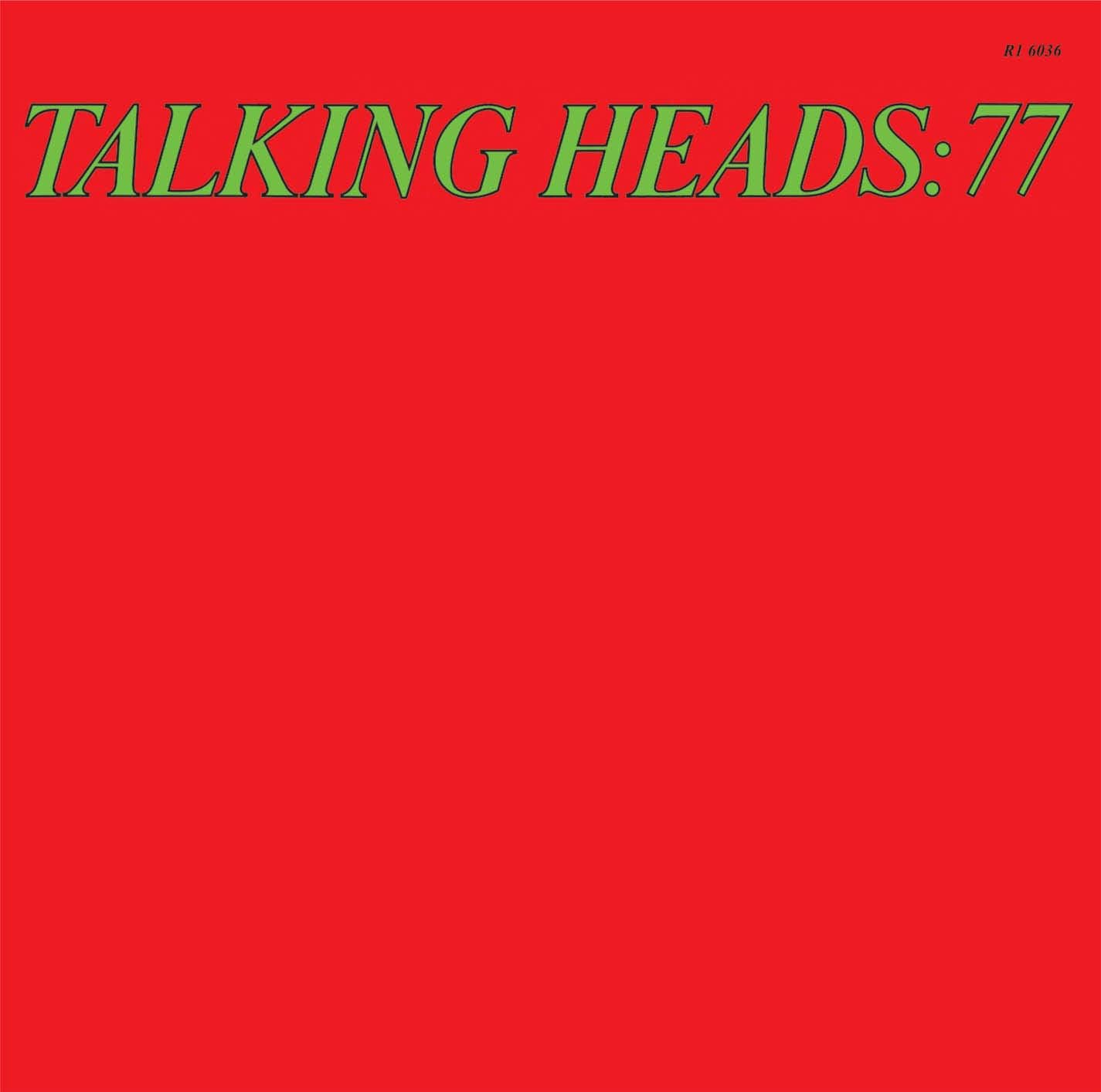
Talking Heads: 77
Product ID: 13919214
Desertcart purchases this item on your behalf and handles shipping, customs, and support to Denmark.
The debut album from New York-based Talking Heads is a slice of brilliant schizophrenic pop. David Byrne (guitar and vocals), Tina Weymouth (bass), Chris Frantz (drums), and Jerry Harrision (keyboards and guitar) create their own unique sound on classic TH tracks like "Psycho Killer" and "Uh-Oh, Love Comes To Town." The urgency of the music heralds in the beginnings of the new wave era. Talking Heads: 77 shows a band at the forefront of a movement, unwilling to conform while making a statement with their sound. Review: What a hidden gem - It’s been a minute. Walked into a bar on Michigan Avenue in Chicago, The Listening Room, and this was playing. I stayed just to listen to both sides. Revelry, bought this great album, so happy Review: Talking Heads, A Band About Nothing - “I love talking about nothing,” wrote Oscar Wilde. “It is the only thing I know anything about.” And in fourteen words, the Irish playwright and novelist had condensed the entire discography of Talking Heads to a single witty aphorism. Under the direction of David Byrne, the Heads’ lead prophet of triviality, the New York band seemed to milk these fourteen words vigorously, discovering in the process not just a career but also a healthy understanding of human nature via simplicity. Their 1977 debut, the aptly titled Talking Heads: 77, is a quirky collection of eleven easily-digestible new wave songs that simultaneously unpack nothing and celebrate everything. In regards to the album’s musical technicality, 77 isn’t anything to marvel at, yet this works to Talking Heads’ advantage. The hooks, catchy though they may be, are elementary in structure, allowing for Byrne’s lunatic vocals to catapult to the record’s forefront without compositional flourishes blocking the way. Bassist Tina Weymouth especially triumphs in this department. Her contributions to “Don’t Worry About the Government,” for instance, are no more complex than what is expected of most junior-high band students, but they are in no way childish. If anything, the restraint demonstrated by Weymouth, percussionist Chris Frantz, and guitarist/keyboardist Jerry Harrison is fundamental to Talking Heads’ aesthetics. Then there’s David Byrne, whose love of mundanity, of vocal inflection, and of general gobbledygook rages with the superfluity of a kudzu plant, who brilliantly juxtaposes 77’s unadorned instrumentation with his characteristic sense of excess. Ironically, the lyrical fixations that comprise Byrne’s hyperactive delivery aren’t matters of great importance. “I wish I could meet everyone all over again, bring them up to my room,” he fantasizes in “New Feeling,” a song centered on the basic observation that “It’s not yesterday anymore.” And when he’s not musing on happy days, or personifying books (or, perhaps, objectifying people), he’s going off on surreal tangents that make about as much sense as that drinking-out-of-cups video. Call him a madman if you want, but don’t fail to realize one crucial aspect: David Byrne as appears on tape isn’t real. That David Byrne is a character. A ventriloquist dummy in the shape of a human head. The methods of the living, breathing, and very sane David Byrne are best likened to those of Seinfeld creator Larry David: both route frivolity through their respective artistic mediums for the purpose of touching audiences on a personal level. As down-to-earth as Jerry, as shallow as Elaine, as neurotic as George, and as bizarre as Kramer, Byrne the character embodies the conflicting extremes of the common man, of you. You. His maniacal yelps that conclude “Pulled Up” aren’t his yelps, they’re yours. His realization in “Tentative Decisions,” that women and men speak different languages, is also yours. He’s not making fun of you; well, maybe a little bit. But for the most part, David Byrne is singing in your honor. He loves doing it. For all its contradictions and inconsistencies, Talking Heads: 77 proves itself a token of clarity from the most humanly inhuman band of all time. Although far from perfect, the album works not unlike the pilot episode for a certain TV show, the genius of which wouldn’t be recognized immediately, nor would it realize fully its own potential until a later time. I think you know quite well what show I’m referring to.















P**G
What a hidden gem
It’s been a minute. Walked into a bar on Michigan Avenue in Chicago, The Listening Room, and this was playing. I stayed just to listen to both sides. Revelry, bought this great album, so happy
C**E
Talking Heads, A Band About Nothing
“I love talking about nothing,” wrote Oscar Wilde. “It is the only thing I know anything about.” And in fourteen words, the Irish playwright and novelist had condensed the entire discography of Talking Heads to a single witty aphorism. Under the direction of David Byrne, the Heads’ lead prophet of triviality, the New York band seemed to milk these fourteen words vigorously, discovering in the process not just a career but also a healthy understanding of human nature via simplicity. Their 1977 debut, the aptly titled Talking Heads: 77, is a quirky collection of eleven easily-digestible new wave songs that simultaneously unpack nothing and celebrate everything. In regards to the album’s musical technicality, 77 isn’t anything to marvel at, yet this works to Talking Heads’ advantage. The hooks, catchy though they may be, are elementary in structure, allowing for Byrne’s lunatic vocals to catapult to the record’s forefront without compositional flourishes blocking the way. Bassist Tina Weymouth especially triumphs in this department. Her contributions to “Don’t Worry About the Government,” for instance, are no more complex than what is expected of most junior-high band students, but they are in no way childish. If anything, the restraint demonstrated by Weymouth, percussionist Chris Frantz, and guitarist/keyboardist Jerry Harrison is fundamental to Talking Heads’ aesthetics. Then there’s David Byrne, whose love of mundanity, of vocal inflection, and of general gobbledygook rages with the superfluity of a kudzu plant, who brilliantly juxtaposes 77’s unadorned instrumentation with his characteristic sense of excess. Ironically, the lyrical fixations that comprise Byrne’s hyperactive delivery aren’t matters of great importance. “I wish I could meet everyone all over again, bring them up to my room,” he fantasizes in “New Feeling,” a song centered on the basic observation that “It’s not yesterday anymore.” And when he’s not musing on happy days, or personifying books (or, perhaps, objectifying people), he’s going off on surreal tangents that make about as much sense as that drinking-out-of-cups video. Call him a madman if you want, but don’t fail to realize one crucial aspect: David Byrne as appears on tape isn’t real. That David Byrne is a character. A ventriloquist dummy in the shape of a human head. The methods of the living, breathing, and very sane David Byrne are best likened to those of Seinfeld creator Larry David: both route frivolity through their respective artistic mediums for the purpose of touching audiences on a personal level. As down-to-earth as Jerry, as shallow as Elaine, as neurotic as George, and as bizarre as Kramer, Byrne the character embodies the conflicting extremes of the common man, of you. You. His maniacal yelps that conclude “Pulled Up” aren’t his yelps, they’re yours. His realization in “Tentative Decisions,” that women and men speak different languages, is also yours. He’s not making fun of you; well, maybe a little bit. But for the most part, David Byrne is singing in your honor. He loves doing it. For all its contradictions and inconsistencies, Talking Heads: 77 proves itself a token of clarity from the most humanly inhuman band of all time. Although far from perfect, the album works not unlike the pilot episode for a certain TV show, the genius of which wouldn’t be recognized immediately, nor would it realize fully its own potential until a later time. I think you know quite well what show I’m referring to.
L**P
It was a great decision. This is my favorite album of all ...
I regularly go record hunting at flea markets for my vinyl collection, but I could never seem to find a copy of 77(or one that was worth buying). So I had to resort to going online. It was a great decision. This is my favorite album of all time and is truly amazing to hear the full sound on vinyl. It was shipped quickly and in perfect condition. I am beyond satisfied with my purchase. I broke into a dance once the needle hit and "Uh-Oh, Love Comes to Town" came over the speakers.
A**Y
Talking Heads
It’s the Heads—but it.
D**K
5 STARS FOR MUSIC ONLY - PHYSICAL ALBUM HAS SEVERAL MANUFACTURING FLAWS
Obviously Talking Heads: 77 is the best debut album by the best band ever. Okay. We all agree and can move on. The manufacturing quality of this album, however, is obscene. There were vinyl 'threads' everywhere which required a thorough cleaning lest I damage my stylus and the outer edge of the album felt like a saw it was so jagged. Really sad to see such a great album receive such a poor pressing.
A**E
Four Stars
Good album!
A**O
Vinyl
Sounds fantastic. No skips.180 grams.
J**H
Classic Lp
Received in perfect condition. I have all the songs but bought the LP in memory of the day I actually met this band when they were promoting this album in our local mall. It is a perfectly frame-able and displayed piece of memorabilia for my collection.
M**.
Amazon Amazing AA.
Exceptional vinyl album well worth it.
D**T
David Byrneの声が若々しい
傑作Psycho Killerを収録した1st LP
M**M
Du son Léon
1er album des Talking Heads incluant le titre phare "Psycho Killer". Cet Album n'est que le prémisse d'un groupe qui influencera Duran Duran, Radiohead (qui tient son nom d'un morceau du groupe) et Arcade Fire. ;)
A**R
Talking Heads 77
A fabulous debut album. Great to hear it on vinyl again.
J**R
Sehr gute Platte
Sehr gute Platte, sehr gute Pressqualität.
Trustpilot
2 months ago
1 month ago