We remain fully operational. Our teams are working around the clock to ensure your deliveries continue safely.

DOWNLOAD THE APP


Copyright © 2025 Desertcart Holdings Limited
DOWNLOAD THE APP
Buy anything from 5,000+ international stores. One checkout price. No surprise fees. Join 2M+ shoppers on Desertcart.
Desertcart purchases this item on your behalf and handles shipping, customs, and support to Denmark.
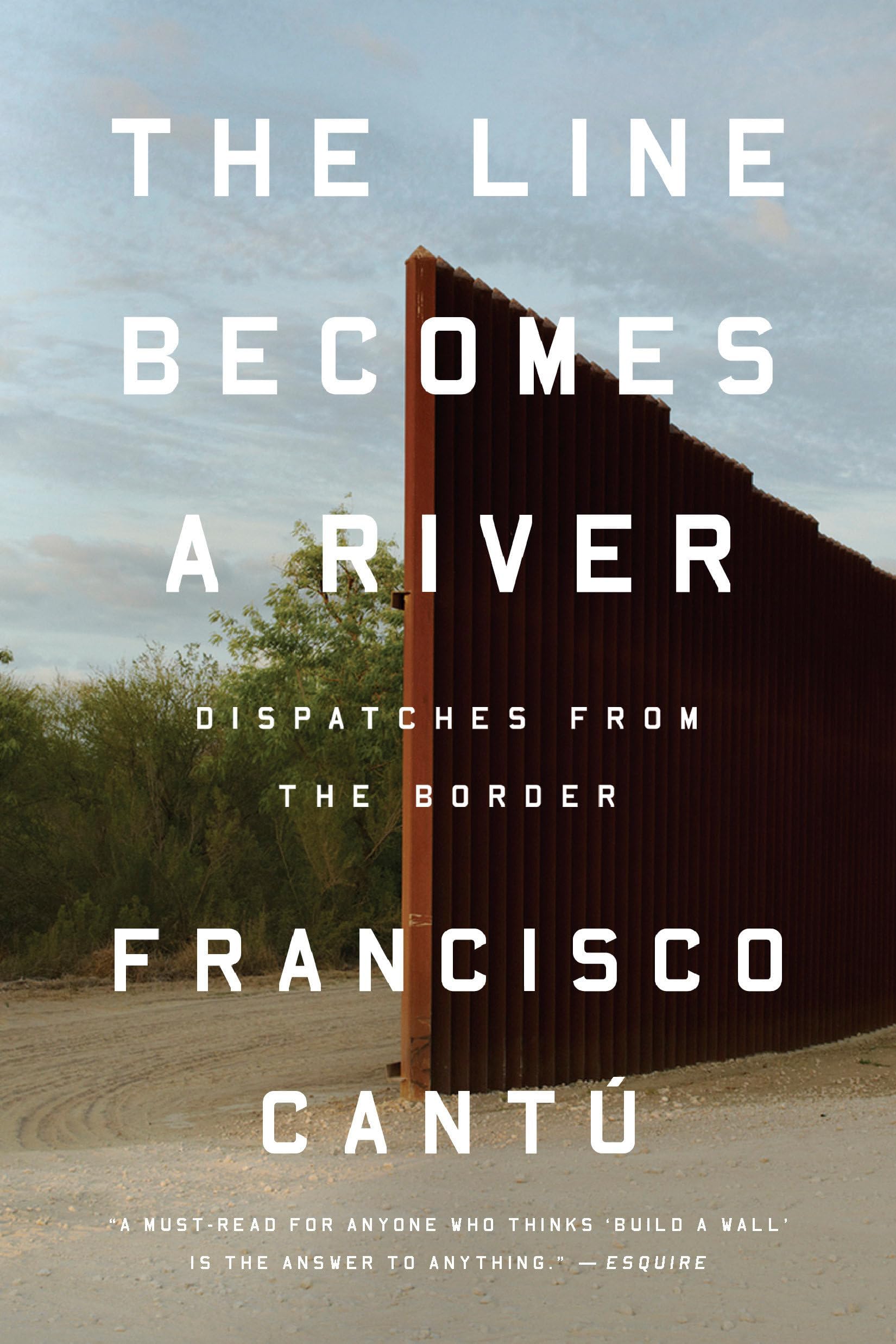
desertcart.com: The Line Becomes a River: Dispatches from the Border: 9780735217737: Cantú, Francisco: Books Review: Simply Brilliant! - Living in the shadow of the border for many years, I was anxious to see what Mr. Cantú had to say. His book exceeded my greatest expectations. He cut through contemporary stereotypes to craft a beautiful and compelling story of the human condition. His story is factual. It is a multifaceted presentation about the real conditions faced by Border Patrol agents on the front lines and by the illegal immigrants themselves. After reading the book, I came away a bit more understanding of the agents who are often driven into hardened shells by the realities of their jobs and the cold dictates of a political system where there’s little room for humanity. Cantú’s writing style is refreshing. An air of spirituality permeated the book; to an extent, it was reminiscent of the writing of Carlos Castaneda. Cantú crafted a fabulous book that was easy to read, but hard to put down. The story didn’t end as I would have liked, but reality rarely accommodates my personal wishes. Such is the nature of the real world. I can’t recommend this book highly enough. Review: Easy read, empathetic tale of people caught up in an impersonal system. An honest report by someone with his boots on the ground - I picked up this book because the subject is topical and my local news suggested it contained some politically controversial material. The only thing that makes this book controversial is the presently vocal anti-immigrant hysteria of the American political Right. If the book had come out two years ago, no one would be declaring it controversial. An autobiographical story told in first person and covering a roughly 10 year period from the author's college graduation with a political science degree through and beyond his four year stint in the U.S. border patrol serving the south western United States. The author, being of Mexican heritage and raised in the South West, was drawn to the international border between the U.S. and Mexico, joining the border patrol to, as he put it, bring the theory he studied down to earth. There are a few flash backs to his earlier life, and some history of the border region, the 1860s war with Mexico that added the South West territories, Texas, and the southern half of California to the U.S. map, and also the impact of the Mexican Revolution of 1911. Much of the emotional conflict is revealed through dreams he had while serving on the border and later as his life never let him forget what he experienced. This is the story of a compassionate man in an in-compassionate job. He relates incidences of drug seizures, but notes that most of what he had to do was capture and return to Mexico people who wanted nothing more than to do some honest work and in many cases reunite with wives and in particular children born in the U.S. and so citizens. Many of these people die trying. Unlike a generation back, when crossing the border was relatively easy whether for work or criminal activity, it is now much more difficult and only the criminals have the resources to assure themselves of making the trip alive. The rest take their chances and thousands do not make it. The cruelty of criminal groups escorting migrants is on full display. People who cannot keep up in the many miles long trek across stony and water-less desert are simply left behind to die. The border patrol itself is complicit in some of these deaths destroying water and food, meant to sustain these people, where ever they find it. After four years the author cannot take more and quits the border patrol. The remainder of the book relates a friendship he develops with an undocumented Mexican immigrant who becomes trapped in the system, torn from his wife and children simply because he returns to Mexico to be with his dying mother and bury her. From there, he cannot get back and every attempt to do so traps him deeper and deeper in a system that cares nothing for compassionate people. This book is not political. Cantu avoids even mentioning much of politics, but merely reports what he experiences of an indifferent system and those trapped by it. He is most surely not opposed to interdicting drugs and deporting real criminals, but the vast majority of the migrant people involved are neither drug runners or criminals, but only criminalized by their desire to work and share a life with their spouses and children. If you are a compassionate person the book might bring you to tears. It is an honest report of the impact of an impersonal system on the lives of thousands of individuals who want nothing more than a life for themselves and their families. The political is mostly notable for its absence as the author tries, likely in vain for these times, to personalize these stories. There is nothing more controversial about it than that.
| Best Sellers Rank | #40,854 in Books ( See Top 100 in Books ) #5 in Immigration Policy #14 in Emigrants & Immigrants Biographies #860 in Memoirs (Books) |
| Customer Reviews | 4.4 4.4 out of 5 stars (2,676) |
| Dimensions | 5.4 x 0.8 x 8.2 inches |
| Edition | Reprint |
| ISBN-10 | 0735217734 |
| ISBN-13 | 978-0735217737 |
| Item Weight | 8.5 ounces |
| Language | English |
| Print length | 288 pages |
| Publication date | February 5, 2019 |
| Publisher | Riverhead Books |
H**S
Simply Brilliant!
Living in the shadow of the border for many years, I was anxious to see what Mr. Cantú had to say. His book exceeded my greatest expectations. He cut through contemporary stereotypes to craft a beautiful and compelling story of the human condition. His story is factual. It is a multifaceted presentation about the real conditions faced by Border Patrol agents on the front lines and by the illegal immigrants themselves. After reading the book, I came away a bit more understanding of the agents who are often driven into hardened shells by the realities of their jobs and the cold dictates of a political system where there’s little room for humanity. Cantú’s writing style is refreshing. An air of spirituality permeated the book; to an extent, it was reminiscent of the writing of Carlos Castaneda. Cantú crafted a fabulous book that was easy to read, but hard to put down. The story didn’t end as I would have liked, but reality rarely accommodates my personal wishes. Such is the nature of the real world. I can’t recommend this book highly enough.
M**T
Easy read, empathetic tale of people caught up in an impersonal system. An honest report by someone with his boots on the ground
I picked up this book because the subject is topical and my local news suggested it contained some politically controversial material. The only thing that makes this book controversial is the presently vocal anti-immigrant hysteria of the American political Right. If the book had come out two years ago, no one would be declaring it controversial. An autobiographical story told in first person and covering a roughly 10 year period from the author's college graduation with a political science degree through and beyond his four year stint in the U.S. border patrol serving the south western United States. The author, being of Mexican heritage and raised in the South West, was drawn to the international border between the U.S. and Mexico, joining the border patrol to, as he put it, bring the theory he studied down to earth. There are a few flash backs to his earlier life, and some history of the border region, the 1860s war with Mexico that added the South West territories, Texas, and the southern half of California to the U.S. map, and also the impact of the Mexican Revolution of 1911. Much of the emotional conflict is revealed through dreams he had while serving on the border and later as his life never let him forget what he experienced. This is the story of a compassionate man in an in-compassionate job. He relates incidences of drug seizures, but notes that most of what he had to do was capture and return to Mexico people who wanted nothing more than to do some honest work and in many cases reunite with wives and in particular children born in the U.S. and so citizens. Many of these people die trying. Unlike a generation back, when crossing the border was relatively easy whether for work or criminal activity, it is now much more difficult and only the criminals have the resources to assure themselves of making the trip alive. The rest take their chances and thousands do not make it. The cruelty of criminal groups escorting migrants is on full display. People who cannot keep up in the many miles long trek across stony and water-less desert are simply left behind to die. The border patrol itself is complicit in some of these deaths destroying water and food, meant to sustain these people, where ever they find it. After four years the author cannot take more and quits the border patrol. The remainder of the book relates a friendship he develops with an undocumented Mexican immigrant who becomes trapped in the system, torn from his wife and children simply because he returns to Mexico to be with his dying mother and bury her. From there, he cannot get back and every attempt to do so traps him deeper and deeper in a system that cares nothing for compassionate people. This book is not political. Cantu avoids even mentioning much of politics, but merely reports what he experiences of an indifferent system and those trapped by it. He is most surely not opposed to interdicting drugs and deporting real criminals, but the vast majority of the migrant people involved are neither drug runners or criminals, but only criminalized by their desire to work and share a life with their spouses and children. If you are a compassionate person the book might bring you to tears. It is an honest report of the impact of an impersonal system on the lives of thousands of individuals who want nothing more than a life for themselves and their families. The political is mostly notable for its absence as the author tries, likely in vain for these times, to personalize these stories. There is nothing more controversial about it than that.
E**Y
Very insightful and thoughtful book that helps humanize and understand the complex nature of immigration issues today.
As a strongly conservative person, I was ready to delve into this book anticipating a strong liberal bias that would label me a bigot. I was ready to feel outraged as yet another person would, in print no less, tell me how I just don’t understand what is going on with regards to the immigration issue. While I know that I can’t fully understand Jose’s plight, I can surely empathize and sympathize with him and for him. It was a relief to me to be surprised by Francisco Cantu’s book. I lived in the Rio Grande Valley for 47 years and have seen firsthand the complexities involved in this issue. My brother was killed when a group of Mexican teenagers and their polleros were evading the police. The car they were in T-boned my brothers car at an intersection and cut him in two. A very good friend of mine, Hispanic as well, is a Border patrol agent. He qualified himself to work on the Rio Grande River in boats, on ATV out in the field and has also worked at the US Border Patrol sector headquarters. We spoke often, way before this book, about the things he has seen and done throughout his years as a CBP agent. How they are always being watched by lookouts from the south side of the river as they patrol the US side. He described the smell of decomposing bodies left behind in the brush land, or finding people under the full effect of heat stroke. He has told me about the taunts they receive as the polleros just escape back across the river. Cantu’s book reminded me a lot of my friend’s recollections. It also help me understand a little more of why he won’t speak too much about his feelings. I sense he is empathetic towards those he has stopped and believe he has genuine sympathy for them, but he also insists that what he is doing needs to be continued. He feels that even if stopping 1000 crossers only yields a few really dangerous people, he has improved life for His family on the US side. Living in Dallas for 3 1/2 years now, I have seen how much of it is being built by undocumented people. I know people, who like Jose stay under the radar by working and going home, day after day, and strive to live in peace. Some of them submitting themselves to unjust treatment because it is a better alternative than going back to their home country. I have been surprised at this treatment because it comes, many times, at the hands of Latinos who are fortunate enough to have legal status. This issue is very complex, and it angers me when people and politicians distill it down to platitudes. This has been done for far too long by people on every side of the argument. Usually, it has been done for personal gain and without any real knowledge of what it is like to live in an area affected by this, or any real knowledge of the people living through this. Thank you Mr. Cantu for writing this book, I wept through many sections and it has given me some resolve to help where I can. If anyone has strong feelings on either side of the immigration and citizenship problems of the US, I urge you to add this book to your references on the subject.
E**C
The Border Without Politics
Cantu gives a first hand account of the experiences of both border agents and migrants that shows us the moral and human costs of US border policy. The book is a series of mostly short vignettes that grab and keep your attention. His writing is engaging and at times moving as we see the human tragedies that regularly unfold along our border. He also weaves in history and an appreciation for the stark beauty of the desert and mountains along the border. The stories are populated by both innocents and predators, so no one with a blind ideological agenda will come away from this work feeling totally vindicated.
F**A
De entrada, dos sorpresas para destrozar mitos: Un ex-policía compasivo, un ex-policía que sabe escribir y lo hace muy bien. Recomendable para usamericanos y para mexicanos pues su lectura nos acerca un poco más al conocimiento de lo que nos divide y de lo que nos une.
A**R
Excellent story about the struggles on the southern US border. Coming from a former Border agent grounds the story with personal experiences. Well worth a read.
D**N
A well written and thought provoking book about the US Mexican border. A very personal, sometimes harrowing, but satisfying account of living on either side of this line that divides people physically and emotionally.
P**A
--Estamos ante las vivencias de un agente de fronteras estadounidense de 23 años origen hispano, culto y, especializado en relaciones internacionales, el cual quiso conocer de manera empírica la frontera con México. -- Por ello el libro nos ofrece las duras experiencias personales del autor, el racismo, la muerte en la carretera, la caza del pobre, su hacinamiento y la inexcusable defensa del estado, mostrando claramente la pléyade de perfiles que están implicados, pudiendo trasladar estas experiencias al caso europeo. -- Lo que queda claro es que con las medidas actuales NO se va a solucionar un problema que está ya en nuestras narices ante el cual los populistas poco o nada pueden hacer. El autor no deja de lado el explicar el rostro humano bueno/malo de todos aquellos que cruzan el borde. Algo digno de agradecer son las explicaciones de los tratados de los que extraeremos la idea clara del atropello cometido contra México y, la belleza en la descripción de los paisajes, del malpaís, llamado así por los Españoles -- Las cosas que podrían mejorarse en el libro son las siguientes: Con mapas hubiera sido un libro muy acertado, en ocasiones el autor cansa debido al intentos de explicar sus emociones y sin duda alguna, está mucho mejor la versión en inglés que la versión traducida al español. -- First of all, I prefer this English Version than the Spanish version, It is better portrayed. This cronics near us to the frontier life, showing up life and death, misery, criminals and the human tragedy across the borders. The experience can be usefull for any border in the world, specially those who split a rich country from a poor country. -- I enjoyed this cronics yet so, at the middle of the book It takes me an efford for finish it. perhaps all the ninth surround the officer caused it. Anyway, Its a worth read if you want to know more about the border, and based in experience, what it is to be appreciated.
K**E
This book is beautifully written and gives the reader more context and understanding for the issues on the US border with Mexico from the viewpoint of a Latino border patrol agent. Francisco Cantú tells the story of his time working on the border and the history of it in such a deeply personal and poetic way it makes the book more than a political exploration of a current issue and turns it almost into poetry.
Trustpilot
2 weeks ago
2 weeks ago